

Maddy summaryHR 6201, the Iranian Sanctions Enforcement Act of 2023, creates the Iran Sanctions Enforcement Fund to cover costs related to seizing and forfeiting property from Iran or its designated proxies (like Hezbollah or the Revolutionary Guard Corps) that violate U.S. sanctions. The fund, initially $150 million, pays for investigative costs, property management, informant rewards, and equipment for federal, state, and local agencies involved in enforcement. It also establishes an Export Enforcement Coordination Center within Homeland Security to improve interagency cooperation on enforcing export controls targeting Iran. The bill requires annual reports on fund usage and mandates repayment of the initial $150 million by 2034, unless waived for national security reasons.
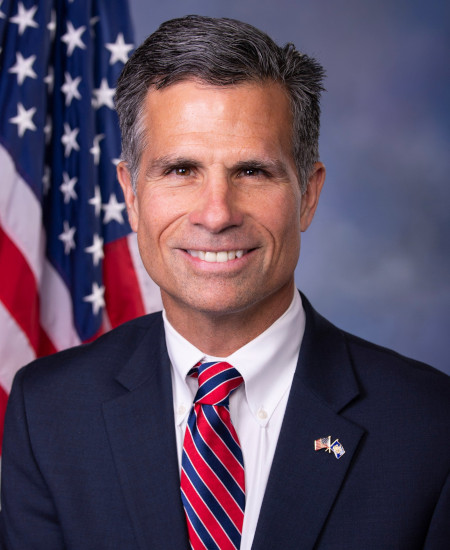
Rep. Daniel Meuser
Sponsored bills
Maddy summaryThe 21st Century School Protection Act amends a federal grant program to allow schools to use funds for purchasing and installing gunshot detection systems. This change applies directly to schools participating in the matching grant program under the Omnibus Crime Control and Safe Streets Act of 1968, making these systems an eligible expense. The bill adds a specific provision (paragraph (9)) to the program, explicitly permitting the acquisition and installation of gunshot detection technology. As a result, schools can now include this technology in their security plans when applying for these grants, expanding existing options for school safety funding.
This resolution expresses the House of Representatives' support for the goals and ideals of National Veterans Small Business Week, celebrates the millions of people in the United States—especially veterans and their spouses—who benefit from Small Business Administration programs, and expresses appreciation for the continued service to the United States by the nation's veterans through small business ownership and entrepreneurship.
Maddy summaryThis bill reimposes U.S. sanctions targeting foreign entities that engage in significant oil transactions with Iran. It requires the President to block property and interests of foreign persons involved in buying, selling, or transporting Iranian oil or oil products, directly affecting international energy companies and financial institutions doing business with Iran. Exceptions include waivers for countries significantly reducing Iranian oil purchases (with congressional notification) and exemptions for humanitarian goods like food and medicine. The bill also adds financial sanctions on foreign banks aiding Iran’s nuclear program or terrorism, and mandates regular reports to Congress on Iran’s compliance and terrorism support. It expires once the President certifies Iran has ceased financing terrorism.
This resolution urges the President to demand the release of all hostages in Gaza. The resolution also urges the President to maintain all applicable sanctions on Iran and to use all other coercive and diplomatic resources to secure the release of Americans wrongfully detained in Gaza.
Maddy summaryHRES 771 is a non-binding resolution expressing the U.S. House of Representatives' support for Israel following Hamas' October 7, 2023, attack. It condemns Hamas' actions, affirms Israel's right to self-defense, and calls for the immediate release of hostages. The resolution also urges enforcement of existing laws restricting aid to terrorists and sanctions against Iran for supporting Hamas. It does not create new policies or allocate funds, as it is a symbolic statement of congressional support.
Maddy summaryHRES 768 is a symbolic House Resolution expressing congressional support for Israel following Hamas' October 7, 2023 attacks. It condemns Hamas' actions, reaffirms Israel's right to self-defense, and calls for the immediate release of hostages. The resolution references the U.S. commitment to Israel's security through existing military aid programs, including the 2016 U.S.-Israel Memorandum of Understanding, and emphasizes enforcement of laws like the Taylor Force Act to prevent U.S. aid from reaching terrorist groups. As a symbolic resolution, it does not create new policy but serves as a statement of congressional support for Israel.
Maddy summaryThis bill authorizes a one-time $40,000 payment to former Air America employees who served at least five years during 1950-1976, or to their survivors (widows/widowers, dependents, or children). Additional $8,000 payments are provided for each full year of service beyond five years. The total funding is capped at $60 million, with claims due within two years of regulations being finalized. It does not create ongoing benefits or change Air America’s legal status, and payments are issued as a single lump sum.
Health Care Practitioner Disaster Protection Act This bill extends certain liability protections available for health care practitioners who provide voluntary health care services in declared emergencies through a community health center other than the one that initially sponsored them. Current law makes the liability protections available to volunteer practitioners that are sponsored by a particular community health center. This bill maintains the liability protections for a volunteer practitioner who provides services through a different community health center if the center (1) seeks the assistance of the volunteer practitioner to respond to a declared emergency, and (2) promptly notifies the Department of Health and Human Services that the volunteer practitioner will be providing services.
Maddy summaryHR 5110, the Protecting Hunting Heritage and Education Act, amends the Elementary and Secondary Education Act of 1965 to clarify that federal education funds cannot be used for certain weapons - but this restriction does not apply to archery, hunting, or other shooting sports training programs. The bill directly affects schools and educational programs seeking to use federal funds for these specific activities, such as archery clubs or hunting safety education. It adds an explicit exception to the existing prohibition, allowing funds to support "educational instruction or enrichment activities" in these sports under authorized programs. This change removes ambiguity about funding eligibility for such educational initiatives in K-12 schools.