

Maddy summaryHRES 965 is a non-binding resolution calling for the immediate release of Ryan Corbett, a U.S. citizen wrongfully detained by the Taliban in Afghanistan since August 2022. It directly affects Corbett (held in poor conditions without charges) and other Americans detained by the Taliban. The resolution demands the Taliban release Corbett unconditionally, urges respect for his human rights, commends Qatar’s role as U.S. protecting power, and condemns the Taliban’s practice of detaining U.S. citizens. It does not create new law but formally expresses congressional support for Corbett and other wrongfully detained Americans.
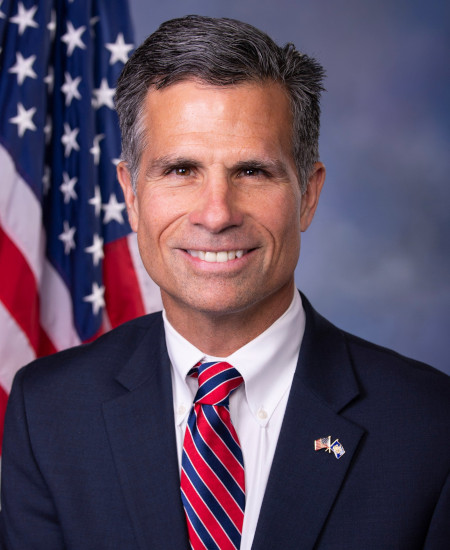
Rep. Daniel Meuser
Sponsored bills
Maddy summaryThis bill updates financial reporting thresholds to reflect inflation, primarily affecting banks and other financial institutions that file currency transaction reports and suspicious activity reports. It raises the $10,000 threshold for large cash transactions to $60,000, the $5,000 threshold for suspicious activity reports to $10,000, and the $1,000 threshold for money services businesses to $3,000. All thresholds will now automatically adjust annually based on the Consumer Price Index to prevent future inflation-related outdated values. The changes aim to modernize reporting requirements while reducing unnecessary paperwork for institutions handling routine transactions.
Maddy summaryHR 8653 authorizes the posthumous award of a Congressional Gold Medal to Major Thomas D. Howie, a U.S. Army officer who died during the Battle of Normandy in WWII. The bill specifies the medal will be presented to his nephew, Tom Howie, or his next of kin, and then permanently displayed at The Citadel Museum. It also permits the U.S. Mint to produce and sell bronze duplicates to cover costs. This is a commemorative measure honoring Major Howie's military service and sacrifice, with no substantive policy changes.
Maddy summaryThis resolution (HRES 1272) calls on the Biden Administration to seek symbolic censure of Iran at the International Atomic Energy Agency (IAEA) for violating nuclear nonproliferation agreements and to refer Iran's case to the United Nations Security Council. It urges diplomatic action to prevent Iran from acquiring nuclear weapons, citing Iran's enrichment of uranium to 60% purity, obstruction of IAEA inspections, and development of advanced centrifuges. The resolution does not create new law but formally requests specific international diplomatic steps from the U.S. government.
Maddy summaryHR 5403, the CBDC Anti-Surveillance State Act, prohibits the Federal Reserve from issuing or facilitating central bank digital currency (CBDC) directly or indirectly to individuals through financial institutions. It specifically bans Federal Reserve banks from offering digital products to individuals, maintaining individual accounts, or using CBDC for monetary policy implementation. The bill also clarifies that its restrictions do not apply to existing physical cash or private, permissionless digital payment systems. This bill directly affects the Federal Reserve's ability to develop or deploy a government-run digital dollar. The law aims to prevent the Federal Reserve from creating a digital currency that could enable transaction tracking or government oversight of personal financial activity.
Maddy summaryThis bill requires the Federal Reserve System to provide more detailed public reporting about its spending and operations. Specifically, it mandates that the annual report include breakdowns of expenditures and staff by category (like supervision, legal work, payment services, research, and international engagement) for each Federal Reserve bank, plus details on top research areas and spending on specific rules or policies. The bill directly affects the Federal Reserve Board of Governors and all 12 Federal Reserve banks by imposing new transparency requirements. It does not change the Fed's policy decisions but increases public visibility into its financial operations. The new reporting requirements would take effect two years after the bill's enactment.
Maddy summaryHJRES 152 is a congressional resolution seeking to block an Environmental Protection Agency (EPA) rule on managing coal ash waste from power plants, specifically for older disposal ponds (legacy CCR surface impoundments). The rule, published on May 8, 2024, established requirements for electric utilities to handle coal ash, including safety standards for existing disposal sites. If passed, this resolution would prevent the EPA rule from taking effect, removing the compliance requirements for utilities. This directly affects electric utilities that manage coal ash and the EPA's regulatory authority over waste disposal practices.
Maddy summaryThis bill reauthorizes the National Alzheimer's Project Act through 2035 (extending the previous deadline of 2025) and adds new requirements to promote healthy aging and reduce Alzheimer’s risk factors. It mandates the program to provide information on healthy behaviors that may lower cognitive decline risk and expands the advisory group to include representatives from agencies like the Department of Justice, FEMA, and Social Security Administration, plus experts with diverse clinical trial experience. The bill directly affects Alzheimer’s research, care programs, and the federal advisory group overseeing national efforts. Key changes include requiring annual evaluations instead of initial ones and adding a focus on reducing health disparities in Alzheimer’s initiatives.
Maddy summaryHRES 1255 is a non-binding House resolution introduced on May 23, 2024, that calls on all Americans to observe Memorial Day 2024 as a day of remembrance for military personnel who died in service. The resolution specifically honors "the men and women of the Armed Forces who have died in the pursuit of freedom and peace" and urges the public to demonstrate appreciation for their sacrifices. It does not create new laws or policies but serves as a symbolic expression of national gratitude, emphasizing respect for those who died while defending democratic values. The resolution was co-sponsored by multiple House members and aligns with the traditional observance of Memorial Day.
Maddy summaryHR 895, the Combating Organized Retail Crime Act of 2023, expands federal law to better prosecute organized retail theft by amending sections 2314 and 2315 of Title 18. It clarifies that crimes involving stolen goods valued at $5,000 or more over 12 months - including retail theft - can be prosecuted under existing federal statutes, and broadens definitions to include goods taken via "any facility of interstate or foreign commerce." The bill also creates a new Organized Retail Crime Coordination Center within Homeland Security, requiring it to coordinate federal, state, and local law enforcement efforts, share threat information with retailers, and produce annual public reports on trends. This directly affects law enforcement agencies, retailers, and criminal justice systems by standardizing prosecution thresholds and enhancing interagency collaboration.