More Homes on the Market Act This bill increases the amount of gain from the sale of a principal residence that an individual may exclude from gross income (for federal tax purposes). Under the bill, an individual may exclude from gross income gain from the sale of a principal residence of up to $500,000 (currently $250,000), and taxpayers who are married and file a joint federal income tax return may exclude up to $1 million (currently $500.000). The bill also requires these amounts to be adjusted annually for inflation.
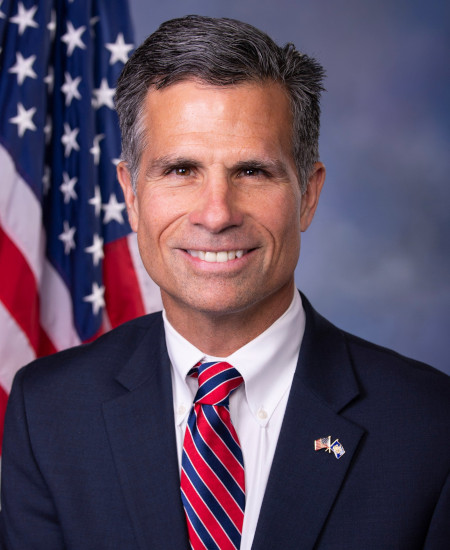
Rep. Daniel Meuser
Sponsored bills
Maddy summaryHR 1341, the DRILL Now Act, prevents three regional river basin commissions (Susquehanna, Delaware, and Potomac) from creating or enforcing their own regulations on hydraulic fracturing. The bill amends existing law to require these commissions to rely solely on state-level regulations for fracking, overriding their previous authority under basin compacts. This directly affects the commissions and states within the Susquehanna, Delaware, and Potomac River basins by shifting regulatory control from regional bodies to individual states. The key provision prohibits the commissions from finalizing, implementing, or enforcing any fracking-related rules issued under their own authority.
Maddy summaryHR 35, the Agent Raul Gonzalez Officer Safety Act, creates a new federal crime for operating a motor vehicle while intentionally fleeing U.S. Border Patrol agents or assisting law enforcement officers within 100 miles of the U.S. border. It imposes penalties of up to 2 years in prison for the basic offense, 5-20 years if serious injury occurs, and 10 years to life if death results. The bill also makes individuals convicted of this crime inadmissible to the U.S., deportable, and ineligible for immigration relief like asylum. Additionally, it requires annual reports from the Attorney General and Homeland Security Secretary detailing arrests, charges, and penalties related to this offense.
United States-Israel Defense Partnership Act of 2025 This bill requires or authorizes certain actions to increase defense-related cooperation between the United States and Israel. Specifically, the bill requires the Department of Defense (DOD) to establish a cooperative program, with the concurrence of Israel's Ministry of Defense (MOD), to develop and deploy advanced technologies for countering unmanned systems that threaten the United States and Israel; establish in Israel an office of the Defense Innovation Unit (an organization that focuses on rapidly fielding and scaling commercial technology across the U.S. military); and seek to engage Israel's MOD on the ascension of Israel into the national technology and industrial base (currently defined in law as the persons and organizations engaged in research, development, production, integration, services, or information technology activities conducted within the United States, the United Kingdom, Australia, New Zealand, and Canada). The bill authorizes DOD, upon request of Israel's MOD, to jointly conduct research, development, test, and evaluation (RDT&E) of emerging technologies such as artificial intelligence and robotics to meet defense challenges. Additionally, the bill extends the authority for DOD to (1) carry out RDT&E on a joint basis with Israel to establish anti-tunnel and counter unmanned aerial systems capabilities through 2028, and (2) transfer defense articles intended for use as reserve stocks for Israel through January 1, 2029.

Maddy summaryHR 1269, the Honoring Our Fallen Heroes Act of 2025, expands benefits for public safety officers (like police and firefighters) who develop certain cancers linked to their work. It adds 22 specific cancers - including lung, mesothelioma, and breast cancer - to the list of conditions presumed to be "exposure-related" and sustained in the line of duty. This presumption applies if the officer served at least 5 years, was diagnosed with the cancer within 15 years after last active duty, and the cancer directly caused death or permanent disability. The bill also establishes a process for adding new cancers every 3 years based on medical evidence from agencies like NIOSH, and allows claims to be filed within 3 years of the law's enactment.
Maddy summaryThe USA Batteries Act (HR 1264) eliminates federal excise taxes on lead oxide, antimony, and sulfuric acid - key chemicals used in domestic lead battery manufacturing. This change directly affects U.S. battery manufacturers, particularly those producing lead-acid batteries, by removing a tax burden not applied to imported batteries. The bill amends the Internal Revenue Code to strike these chemicals from the Superfund tax table, aiming to reduce production costs for American manufacturers. This policy shift targets a specific tax provision to improve competitiveness in the domestic lead battery industry.
Rural Obstetrics Readiness Act This bill creates and expands federal grant programs within the Health Resources and Services Administration (HRSA) to increase capacity to provide emergency obstetric health services in rural areas or areas without practitioners or facilities specializing in obstetric services. Specifically, HRSA must establish a program for providing grants to certain hospitals or consortiums that include hospitals in rural areas or areas with maternal health care professional shortages for training, developing a workforce, and purchasing equipment relating to obstetric emergencies. In addition, the bill requires HRSA’s Alliance for Innovation on Maternal Health Capacity program to provide grants for training on emergency obstetric services for practitioners in rural health care facilities without dedicated obstetric units. HRSA must also establish a pilot program to provide grants to government entities for developing or improving telehealth access programs to support urgent maternal health care in rural facilities without a dedicated obstetric unit.
Maddy summaryHR 1184, the "Stop CCP Land Act," requires states to ban purchases of agricultural land by entities from designated countries (like China and Russia) to receive certain federal agricultural and environmental funds. It mandates states to prohibit such foreign purchases and require annual reporting from existing foreign landholders. The bill also directs the Agriculture Secretary to update federal reporting rules for foreign agricultural investment and the GAO to assess national security impacts and suggest safeguards. This directly affects states receiving specific federal programs and foreign entities from listed countries.
Maddy summaryHR 965, the Housing Unhoused Disabled Veterans Act, amends the U.S. Housing Act of 1937 to exclude certain disability benefits from income calculations for housing assistance. Specifically, it removes benefits received under Chapters 11 or 15 of Title 38 (veterans' disability compensation) from income counts for the Section 8 supported housing program and eligibility for other housing assistance. This change directly helps disabled veterans receiving these benefits by making them more likely to qualify for HUD-administered housing programs. The bill applies to veterans renting residential units on Department property under HUD housing assistance programs established after the bill's enactment.
Credit Union Board Modernization Act This bill reduces the required frequency of meetings held by the board of directors of certain credit unions. Under the bill, new credit unions and credit unions with a low soundness rating must meet monthly, as required under current law. All other credit unions must hold at least six meetings annually, with at least one meeting held during each fiscal quarter.