

Maddy summaryHR 1551, the Protect and Serve Act of 2025, creates a new federal criminal offense for intentionally harming law enforcement officers under specific circumstances. It imposes harsher penalties, including up to 10 years in prison for serious injury or life imprisonment if death occurs, kidnapping is involved, or a firearm is used. The law applies when the crime crosses state lines, involves interstate weapons, occurs on federal property, or targets federal officers. Prosecutions require the Attorney General’s written certification, considering factors like prior state convictions and public safety impact. The bill directly affects law enforcement officers and federal prosecutors by expanding federal jurisdiction for certain violent crimes against them.
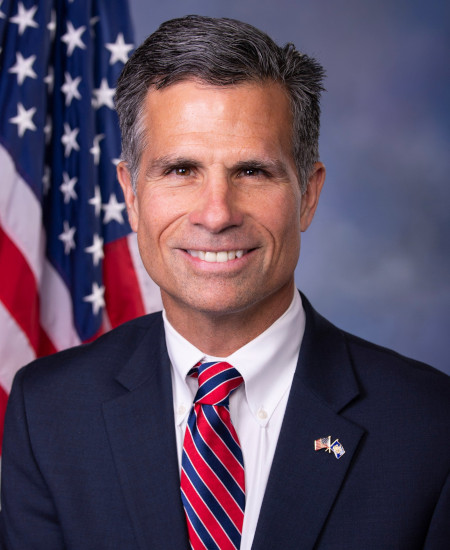
Rep. Daniel Meuser
Sponsored bills
Maddy summaryThe Conrad State 30 and Physician Access Reauthorization Act extends and reauthorizes a program that allows foreign medical graduates to work in underserved U.S. communities after completing their training. It extends the program through 2021 (with retroactive effect), adds protections for physicians who have completed service requirements, and makes changes to visa requirements to better support physicians working in underserved areas. The bill requires states to maintain a 90% utilization rate of waivers to keep receiving the full allocation, and adds reporting requirements for the program. This bill directly affects foreign physicians seeking to work in underserved areas and the health care facilities that employ them.
Maddy summaryHR 1575, the "No American Land for Communist China Act," prohibits the People's Republic of China government and businesses with 25% or more Chinese government ownership from purchasing real estate adjacent to specific federal lands. The bill directly affects Chinese government agents and Chinese-affiliated businesses seeking to buy property near lands managed by the Departments of Interior, Defense, Agriculture (Forest Service), and Energy, as well as Indian country. Key provisions require the President to take necessary actions to block such purchases, defining "covered Federal lands" broadly to include national parks, military bases, and tribal lands. The law aims to prevent foreign government influence over land near sensitive U.S. properties through a clear purchase restriction.
Maddy summaryHR 818 (the SPUR Act) updates federal tracking requirements for small business contracts. It requires agencies to report annually on new small business contract awards, specifically tracking new entrants from categories including service-disabled veteran-owned, HUBZone, women-owned, and disadvantaged-owned businesses. This change modifies existing scorecard reporting under the Small Business Act to include these new metrics and compare annual numbers. The bill is procedural, making no new spending authorizations.
Maddy summaryHR 1548, the "Leveling the Playing Field 2.0 Act," amends U.S. trade laws to strengthen enforcement of antidumping and countervailing duty regulations. The bill creates new rules for handling multiple investigations on the same merchandise (successive investigations), addresses market distortions in foreign countries that affect production costs, and improves mechanisms to prevent companies from circumventing existing duties. It also establishes procedures for investigating currency undervaluation as a form of subsidy and strengthens requirements for importers to certify compliance with trade laws. These changes primarily affect U.S. importers of foreign goods, foreign exporters, and the Department of Commerce, which administers these trade enforcement mechanisms.
Maddy summaryThe PIIA Reform Act establishes a new "Overpayment Czar" within the Office of Federal Financial Management to identify, prevent, and mitigate improper payments across federal programs. It requires federal agencies to develop plans reducing improper payments (defined as payments made in error) exceeding $100 million in the first three years of operation for new programs, and mandates states receiving funds for programs like Medicaid, TANF, and food assistance to use specific payment integrity tools. Agencies failing to comply face budget cuts of 5-10% for persistent noncompliance, while states failing to use required tools must repay overpayments to the Treasury. The bill targets payment integrity in high-risk federal programs, focusing on concrete reporting and enforcement mechanisms without advocating for outcomes.
Maddy summaryThe American Victims of Terrorism Compensation Act amends the Justice for United States Victims of State Sponsored Terrorism Act to increase funding for victims of terrorism. It directs the transfer of approximately $1.5 billion from the Binance Holdings Limited case, plus 50% of excess unobligated balances from Department of Justice and Treasury forfeiture funds, into the Victims Fund. The bill establishes deadlines for agencies to deposit funds (within 30 days of receipt or 15 days after enactment), requires annual reports on fund activity, and authorizes annual payments to eligible claimants starting in 2026. This legislation directly affects terrorism victims who receive compensation from the fund and federal agencies that handle forfeited assets from terrorism-related cases.
Maddy summaryHR 1502 authorizes the creation of a Congressional Gold Medal to honor the volunteers and communities (primarily from Nebraska, Colorado, and Kansas) who supported the North Platte Canteen during World War II. The bill directs the Treasury Secretary to design and strike the medal, which will be presented to the individuals who contributed to the canteen’s operations and then permanently displayed at the Lincoln County Historical Museum in North Platte, Nebraska. It also permits the sale of bronze duplicates to cover production costs, with proceeds going to the U.S. Mint. This is a commemorative measure recognizing historical service, not a policy change affecting current laws or programs.
Maddy summaryHR 1505, the Public Safety Employer-Employee Cooperation Act, establishes federal standards for collective bargaining rights for public safety officers (including police, firefighters, and emergency medical personnel) in states that do not meet minimum requirements. The Federal Labor Relations Authority (FLRA) will determine after 180 days whether a state law "substantially provides" key rights, such as forming unions, negotiating wages/hours, and using binding arbitration to resolve disputes. If a state fails this assessment, federal bargaining rules apply within two years, but existing state laws with stronger protections remain valid. The bill explicitly respects state laws that exceed its standards and exempts small jurisdictions (under 5,000 population or 25 full-time employees).
Maddy summaryThe Rare Earth Magnet Security Act of 2025 creates a tax credit for U.S. manufacturers producing rare earth magnets domestically. The credit pays $20 per kilogram for magnets with less than 90% of component materials sourced in the U.S., and $30 per kilogram if at least 90% of materials are domestically produced. The bill restricts the credit for magnets using components from "non-allied foreign nations" (with a temporary exception for certain materials until 2027) and phases out the credit after 2034 (reducing to 70% in 2035, 35% in 2036-2037, and 0% after 2037). The credit applies to taxable years beginning after December 31, 2024.