

Maddy summaryHRES 492 is a congressional resolution condemning the Iranian government's systematic persecution of the Baha'i minority, which directly affects Baha'is in Iran facing arrests, property confiscation, and imprisonment. The resolution specifically calls for Iran to immediately release Baha'is detained for their faith, end state-sponsored hate propaganda against them, and reverse discriminatory policies denying equal access to education, employment, and religious freedom. It urges the U.S. President and Secretary of State to demand Iran’s compliance with international human rights treaties and to use existing sanctions authorities (under the 2010 and 2012 Iran sanctions laws) against officials responsible for these abuses. The resolution does not impose new legal requirements but serves as a formal U.S. government statement of condemnation and a call for diplomatic and sanctions action.
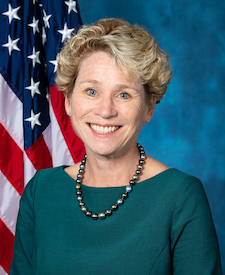
Rep. Chrissy Houlahan
Sponsored bills
Women's Business Centers Improvement Act of 2023 This bill reauthorizes the Women's Business Center Program through FY2027, raises the cap on individual center grants, establishes an accreditation program for grant recipients, and revises the duties of the Office of Women's Business Ownership. Specifically, the bill modifies the Women's Business Center Program to enable the Small Business Administration (SBA) to provide initial and continuation grants to eligible entities to operate women's business centers for the benefit of women-owned small businesses. The SBA must also publish standards for a program to accredit entities that receive grants from the Women's Business Center Program, and such entities' receipt of continuation grants shall be contingent upon their obtaining accreditation.
Maddy summaryHRES 668, the BUDS Resolution, amends House rules to allow bipartisan joint sponsorship of public bills and resolutions by one majority-party and one minority-party member. This change directly affects House members seeking to co-sponsor legislation with cross-party support, updating the existing rules for naming cosponsors and submitting constitutional authority statements. The key mechanism requires that for joint sponsorship, one sponsor must represent the majority party and the other the minority party, with both sponsors sharing responsibility for related procedural steps. This procedural adjustment streamlines the process for bipartisan co-sponsorship without altering legislative policy.
Maddy summaryThis bill creates a new $0.20 per credit system (adjustable for inflation) for conventional biofuel waivers under the Clean Air Act, directly affecting refiners and fuel producers with renewable fuel obligations. Credits must be used immediately for that year's compliance and cannot be resold or applied toward other biofuel requirements. Revenue from credit sales is split equally: one-third funds advanced biofuel investments, one-third supports agricultural diversification programs, and one-third flows into the Habitat and Wildlife Restoration Fund. This fund targets conservation in areas impacted by corn/soy expansion since 2007, managed with the National Fish and Wildlife Foundation.
Maddy summaryThe Sustaining Our Democracy Act creates a federal program to provide states with annual funding to improve election administration and increase voting access. It allocates $2 billion each year from 2024-2033 through the State Election Assistance and Innovation Trust Fund to support activities like upgrading voting equipment, training election workers, and expanding voting access for underserved communities, people with disabilities, and voters on Indian lands. States must submit detailed plans for using funds, which cannot be used for activities that restrict voting access or target election officials. The Act establishes an Office of Democracy Advancement and Innovation to administer the program, monitor fund usage, and oversee compliance with its requirements.
Maddy summaryHR 5262, the DoD PFAS Cleanup Transparency Act of 2023, requires the Department of Defense to publicly post annual updates on the status of environmental cleanup efforts at military sites contaminated with PFAS chemicals. Starting one year after the law takes effect, the Defense Secretary must publish timely, regularly updated information on a specific public website about cleanup progress where funds have been allocated for environmental restoration. This law directly affects DoD sites with PFAS contamination and makes the public, including affected communities, the primary audience for this transparency. The key mechanism is the mandatory annual reporting requirement on cleanup status, rather than altering cleanup standards or funding.
Maddy summaryThe ACES Act directs the Department of Veterans Affairs to fund a National Academies study examining cancer rates among active-duty military aircrew members (including pilots and navigators in fixed-wing aircraft). The study will identify potential military-related exposures linked to specific cancers - such as lung, prostate, melanoma, and others - and analyze existing VA, Defense, and CDC health data. It requires the National Academies to report findings to Congress on cancer prevalence and mortality among these service members. This bill focuses on gathering scientific data to inform future policy, not on immediate benefits or changes.
Maddy summaryThis bill amends the Exceptional Family Member Program (EFMP) to protect transgender dependents of military members. It prohibits assigning service members to locations where local laws restrict medically necessary treatment for transgender dependents, including gender dysphoria, and allows members to request reassignment within 30 days of such a law taking effect. The bill explicitly adds "gender dysphoria" to the list of conditions qualifying as a "medical special need" under the EFMP. This directly affects transgender dependents (spouses or children) and their military-affiliated service members, ensuring access to required care without forced relocation to restrictive jurisdictions.
Maddy summaryThe TREATS Act amends the Controlled Substances Act to allow healthcare providers to use telehealth for the initial evaluation when prescribing certain medications for opioid use disorder. Specifically, it replaces the requirement for an in-person medical evaluation with an option for a telehealth evaluation for medications in schedules III, IV, or V (excluding methadone) that are FDA-approved to treat opioid use disorder. The telehealth evaluation must be conducted via real-time audio or video communication meeting federal and state requirements, as defined by the bill. This change directly affects providers prescribing these medications and patients seeking treatment for opioid use disorder in these categories.
Maddy summaryThe CARE Act of 2023 amends the program for family caregivers of veterans to improve transparency and accessibility. It requires the Department of Veterans Affairs (VA) to include relevant medical specialists in caregiver evaluations, provide detailed annual reports to Congress on application outcomes (broken down by race, gender, and service details), and clarify how eligibility decisions are made. The bill also creates a fee-free process for recognizing organizations and individuals who help veterans, family members, and caregivers navigate VA services without charging users. These changes directly affect veterans' family caregivers and VA administrative processes, focusing on clearer eligibility standards and data-driven accountability.