

Maddy summaryHR 6189, the Defend Our Networks Act, transfers $3.08 billion in unused pandemic relief funds to the Federal Communications Commission’s Secure and Trusted Communications Networks Program. It directs the Commission to use these funds - originating from the CARES Act, American Rescue Plan, and other 2020-2021 pandemic relief bills - to support efforts removing untrusted telecommunications equipment from networks. The funds merge with existing program appropriations and remain available until spent, with a 90-day deadline for transfer after enactment. This is a funding reallocation, not a new policy, affecting the FCC’s existing network security program.
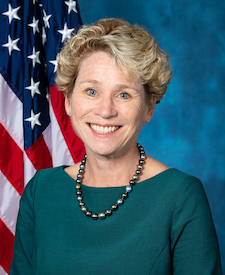
Rep. Chrissy Houlahan
Sponsored bills
Maddy summaryThe GROWTH Act of 2023 expands funding for nursing workforce training by making community colleges and their healthcare partnerships eligible for grants under the Nurse Education, Practice, Quality, and Retention program. It directly affects community colleges with existing nursing programs and partnerships between these colleges and healthcare facilities like Federally Qualified Health Centers. The bill requires the Secretary of Health and Human Services to prioritize up to 50% of annual funding for these community colleges or their partnerships. This changes how funds are distributed, ensuring a significant portion supports workforce development at the community college level.
Maddy summaryHR 5976, the Youth Mental Health Research Act, establishes a new NIH research initiative led by the National Institute of Mental Health. The bill directs collaboration between three NIH institutes to coordinate research on youth mental health, focusing specifically on building community resilience for at-risk youth and improving how mental health services reach young people in schools, communities, and other settings where they live and work. It authorizes $100 million annually for fiscal years 2024 through 2028 to fund this research. The bill does not create direct services but aims to generate evidence to inform future mental health support strategies for young people.
Maddy summaryThis bill excludes veterans' disability and dependency payments from income calculations for HUD housing assistance programs. It directly affects veterans and their families receiving disability compensation under Title 38, U.S. Code, by ensuring these benefits don't reduce their eligibility or housing assistance amounts. Specifically, it prevents HUD from counting these payments when determining eligibility, benefit amounts, or rent calculations for assisted housing. The policy change applies solely to HUD-administered housing programs, not other federal benefits.
Maddy summaryHRES 819 is a symbolic resolution recognizing the 5-year anniversary of the October 27, 2018, antisemitic attack at Pittsburgh’s Tree of Life Synagogue, which killed 11 people. It condemns antisemitism and references rising hate incidents, including the Anti-Defamation League’s 2022 report of record antisemitic activity (3,697 incidents). The resolution honors the victims, expresses solidarity with affected Jewish communities, and reaffirms the U.S. commitment to combatting hate and protecting religious freedom. As a procedural resolution (not a law), it has no binding effect but serves as a formal statement of congressional stance.
Maddy summaryThe Rape Kit Backlog Progress Act of 2023 requires states and local governments receiving federal crime-fighting grants to conduct comprehensive inventories of all sexual assault kits (both tested and untested) and report key details to the Attorney General. It mandates that jurisdictions document victim consent for testing, upload DNA results to the national CODIS database, establish electronic tracking systems for victims, and implement victim notification protocols. States must submit these reports annually to maintain eligibility for federal grants, with the Attorney General publishing a public annual report on backlog status and compliance. This law directly affects state/local law enforcement agencies and prosecutors handling sexual assault cases, aiming to improve transparency and accountability in processing evidence.
Maddy summaryHRES 771 is a non-binding resolution expressing the U.S. House of Representatives' support for Israel following Hamas' October 7, 2023, attack. It condemns Hamas' actions, affirms Israel's right to self-defense, and calls for the immediate release of hostages. The resolution also urges enforcement of existing laws restricting aid to terrorists and sanctions against Iran for supporting Hamas. It does not create new policies or allocate funds, as it is a symbolic statement of congressional support.
Maddy summaryHRES 768 is a symbolic House Resolution expressing congressional support for Israel following Hamas' October 7, 2023 attacks. It condemns Hamas' actions, reaffirms Israel's right to self-defense, and calls for the immediate release of hostages. The resolution references the U.S. commitment to Israel's security through existing military aid programs, including the 2016 U.S.-Israel Memorandum of Understanding, and emphasizes enforcement of laws like the Taylor Force Act to prevent U.S. aid from reaching terrorist groups. As a symbolic resolution, it does not create new policy but serves as a statement of congressional support for Israel.
Maddy summaryHR 6041, the Runaway and Homeless Youth and Trafficking Prevention Act of 2023, expands federal support for services targeting youth aged 12-26 experiencing homelessness or running away from home. The bill establishes grants for short-term shelter (Basic Center Program), longer-term transitional housing (Transitional Living Program), and specialized services for youth at risk of or experiencing trafficking (Sexual Abuse and Trafficking Prevention Program). It requires grantees to provide trauma-informed, culturally appropriate services that address substance use, mental health, education needs, and connections to caring adults, with special attention to vulnerable populations including LGBTQ youth, youth of color, and those involved with child welfare or justice systems. The bill authorizes $200 million annually for these programs through fiscal year 2028, with specific funding allocations for different program components.
Maddy summaryThis bill authorizes a one-time $40,000 payment to former Air America employees who served at least five years during 1950-1976, or to their survivors (widows/widowers, dependents, or children). Additional $8,000 payments are provided for each full year of service beyond five years. The total funding is capped at $60 million, with claims due within two years of regulations being finalized. It does not create ongoing benefits or change Air America’s legal status, and payments are issued as a single lump sum.