

Maddy summaryHR 6802, the RAPID Reserve Act, requires the Secretary of Health and Human Services to establish a reserve of critical drugs and their key ingredients to prevent shortages. It directs the Secretary to award contracts to eligible manufacturers or distributors (with strong quality records and domestic/OECD manufacturing capacity) to maintain a 6-month reserve of both the finished drug and its active ingredient, regularly replenished with new supply. During public health emergencies or shortages, the Secretary can direct the transfer of reserves between manufacturers or allocate reserves to address critical needs. The program, funded with $500 million for fiscal year 2024, targets drugs with vulnerable supply chains - such as those with geographic manufacturing concentration or few producers - to strengthen domestic drug security.
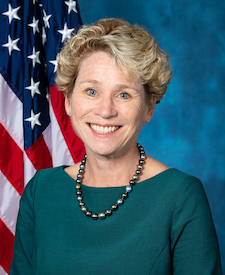
Rep. Chrissy Houlahan
Sponsored bills
Maddy summaryThe Menopause Research and Equity Act of 2023 requires the National Institutes of Health (NIH) to evaluate existing and ongoing research on menopause, perimenopause, and mid-life women’s health, identifying gaps in knowledge and funding over the past five years. The NIH must then develop a strategic plan with health professionals (including specialists like gynecologists and endocrinologists) to address these gaps and guide future research on treatments for menopause symptoms. The bill also mandates new NIH research on causes, symptoms, and treatments for menopause-related health issues, including a study on hormonal treatments. All activities must be funded using existing NIH resources, with no new appropriations authorized. This aims to improve scientific understanding of women’s mid-life health needs.
Maddy summaryHR 6759 makes AmeriCorps education awards tax-free for recipients. The bill amends the Internal Revenue Code to exclude these awards from taxable income under sections 117(c) and 108(f), meaning members who earn education awards through AmeriCorps will not pay federal income tax on them or on student loans forgiven through the program. This directly affects AmeriCorps members who receive education awards under the National and Community Service Act of 1990. The tax exclusion applies to taxable years beginning after the bill's enactment date.
Maddy summaryThis bill provides back pay and benefits to senior military officers (O-7 rank or higher) whose promotions were delayed due to a Senate confirmation suspension starting in February 2023. It requires the Secretary of Defense to retroactively pay these officers from a specific date - determined as the later of 30 days after their nomination was placed on the Senate Executive Calendar or the date they would have been appointed without the delay - and to establish their seniority from that same date. The law directly affects officers confirmed between December 5-31, 2023, who were impacted by the confirmation pause. It does not change future confirmation procedures but corrects past financial and career consequences for affected service members.
Maddy summaryHR 6725, the TIER Act, amends the Transition Assistance Program (TAP) under Title 10 of the U.S. Code to improve counseling for service members separating from military service. It directly affects transitioning service members and their families by requiring counselors to assess new factors, including child care needs (like Exceptional Family Member Program enrollment), household employment status, duty station location impacts, operational tempo effects, and whether the member is an Indian or urban Indian. Key provisions update existing counseling requirements - replacing terms like "Disability" with "Potential or confirmed disability" - and add five new assessment points (subparagraphs M through Q). The bill aims to make transition planning more comprehensive by incorporating these specific household and personal circumstances. This is a policy change focused on refining the TAP counseling process, not on funding or new benefits.
Maddy summaryHRES 904 is a House resolution supporting World AIDS Day goals. It encourages efforts to achieve zero new HIV transmissions, zero discrimination, and zero AIDS-related deaths by 2030, while commending existing programs like PEPFAR and the Ryan White CARE Act. The resolution also supports continued funding for HIV prevention, treatment, and research, with specific focus on communities disproportionately affected by HIV in the U.S. and globally. As a symbolic statement, it does not create new laws or allocate funds.
Maddy summaryHR 5785 modifies the Edith Nourse Rogers STEM Scholarship for veterans and military dependents pursuing STEM degrees. It updates eligibility by adding "or graduate" to degree requirements, reduces maximum benefit periods from 60 to 45 months for undergraduate and 90 to 67.5 months for graduate study, and adds new priority criteria for beneficiaries who've used the most entitlement months or are studying STEM fields. The bill also requires veterans to exhaust all other educational benefits before using this scholarship. These changes directly affect individuals seeking STEM education benefits under the program.
Maddy summaryThe COPE Act (HR 3581) creates a new grant program for the VA to fund mental health support services specifically for family caregivers of veterans enrolled in the VA's family caregiver program. It requires grantees to develop equitable plans addressing rural, American Indian/Alaska Native, elderly, women, and other underserved veteran communities, with priority given to areas with high veteran suicide rates or Veterans Crisis Line referrals. Grants must expand or create new mental health services while tracking outcomes like increased service utilization and reduced barriers, with annual reports to Congress. The bill authorizes $50 million annually (2023-2025) to supplement existing VA funding for this purpose.
Maddy summaryThe Immigration Visa Efficiency and Security Act of 2023 caps family-based immigrant visas for any single country at 15% (2% for dependent areas) of total visas annually, addressing longstanding visa backlogs for certain nations. It establishes new requirements for H-1B employers, including posting job openings on a Department of Labor website, meeting specific wage requirements (minimum $90,000 or prevailing wage), and preventing discrimination against workers. The bill also creates enhanced procedures for investigating H-1B violations, increases penalties for noncompliance, prohibits certain visas for nationals of "foreign adversary countries," and establishes a new pathway for employment-based immigrants to adjust their status with specific job requirements during the process.
Maddy summaryThis bill reauthorizes the Never Again Education program, which funds Holocaust education initiatives in schools. It extends the program's funding authorization period from ending after four fiscal years to continuing annually through fiscal year 2030. The bill modifies the existing law (Public Law 116-141) by updating the funding timeline without changing program requirements or eligibility. It directly affects the existing grant program supporting educational materials and teacher training on the Holocaust. The change ensures continued federal funding for these specific educational efforts until 2030.