

Maddy summaryHR 2514, the Trucker Bathroom Access Act, requires businesses like warehouses, distribution centers, and shipping facilities (but not small restaurants under 800 sq ft) to allow commercial truck drivers access to their restrooms when delivering goods or waiting to load cargo. It also mandates that port terminals provide sufficient restrooms for drayage truck operators (drivers of large trucks moving cargo at ports) in safe, accessible areas, including parking spots for vehicle access. The bill does not require businesses to make physical restroom changes and exempts locations where access would create health, safety, or security risks. It defines "covered drivers" as those operating commercial vehicles regulated by the Department of Transportation and "covered restrooms" as those safely accessible to drivers. This law directly affects truck drivers and the businesses they interact with during deliveries or port operations.
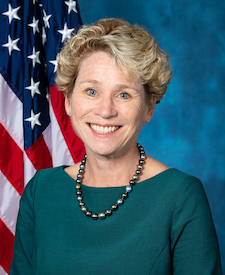
Rep. Chrissy Houlahan
Sponsored bills
Save America's Forgotten Equines Act of 2025 or the SAFE Act of 2025 This bill permanently prohibits the slaughter of equines (e.g., horses and mules) for human consumption. (Current law prohibits the slaughter of dogs and cats for human consumption. This bill extends the prohibition to equines.) Specifically, this bill prohibits a person from knowingly (1) slaughtering an equine for human consumption; or (2) shipping, transporting, possessing, purchasing, selling, or donating an equine to be slaughtered for human consumption or equine parts for human consumption. The bill subjects a violator to a fine. The bill applies to conduct in or affecting interstate or foreign commerce or within the special maritime and territorial jurisdiction of the United States. However, it does not apply to an activity carried out by an Indian for a religious ceremony. As background, in recent years, the appropriations acts have prohibited the Department of Agriculture (USDA) from using federal funds to inspect horses before they are slaughtered for human consumption. Therefore, there are currently no USDA-inspected horse slaughter facilities in the United States.
Maddy summaryHR 1613, the Protecting Mushroom Farmers Act, requires the federal Risk Management Agency to develop and research crop insurance policies specifically for mushroom farmers. The bill directs the agency to study insurance coverage for risks like pests (e.g., mushroom flies), fungal diseases, power outages, and extreme weather affecting growing media and production. Key provisions mandate streamlined paperwork to accommodate mushrooms' short growing cycles and multiple crop types within a single facility. The agency must submit a report to Congress within two years detailing research findings and recommendations for these new insurance policies. This bill directly affects commercial mushroom growers by aiming to create tailored insurance options for their unique production challenges.
Maddy summaryHR 2439 authorizes $50 million for fiscal year 2026 and $55 million for 2027 to fund the United Nations Population Fund (UNFPA), directly supporting its global programs. The bill specifies that these funds will help end preventable maternal deaths, address unmet contraceptive needs, combat gender-based violence, and end harmful practices like child marriage and female genital mutilation. UNFPA operates in over 150 countries, primarily aiding women and girls in developing nations and crisis zones, including those affected by conflict or natural disasters. The bill emphasizes UNFPA’s compliance with U.S. restrictions (not funding abortion) and its role in advancing U.S. strategic interests through voluntary family planning and reproductive health services.
Maddy summaryHR 2398, the Rural Veterinary Workforce Act, amends federal tax law to exempt certain student loan repayment or forgiveness assistance from income tax for veterinarians working in rural areas. It specifically expands existing tax exclusions to include programs under the National Agricultural Research, Extension, and Teaching Policy Act (7 U.S.C. 3151a) and similar state-level programs designed to increase rural veterinary access. This change directly affects veterinarians participating in qualifying loan repayment or forgiveness programs in states prioritizing rural veterinary services. The policy change modifies IRS tax treatment to reduce the financial burden on veterinarians serving underserved rural communities.
Maddy summaryThis bill requires the VA and Department of Defense to provide stellate ganglion block therapy to eligible veterans and active-duty military members diagnosed with PTSD who have given informed consent after learning about the treatment's risks and benefits. It applies specifically to veterans enrolled in VA care and service members in the TRICARE program who meet the diagnosis and consent criteria. The bill mandates that VA and DoD update their joint clinical guidelines within 180 days to include this therapy option and its clinical indicators. The policy change takes effect 180 days after enactment, making this therapy a covered benefit through existing VA and military healthcare systems.
Maddy summaryThis bill expands benefits for National Guard members injured during State active duty (like responding to disasters). It adds "State active duty" to the definition of qualifying service for retirement pay based on disability, and requires the military to adjust retirement pay if it duplicates other federal or state disability benefits. It also creates new eligibility for VA healthcare to treat disabilities incurred during State active duty, with rules requiring exhaustion of other insurance claims before VA coverage applies. These changes directly affect National Guard members who become disabled while serving under state authority, not federal deployment.
Maddy summaryHRES 254 is a non-binding resolution recognizing the 250th anniversary of the United States Marine Corps, to be observed on November 10, 2025. The resolution honors the Corps' founding at Tun Tavern in Philadelphia on November 10, 1775, its history of service in major conflicts, and its values of honor, courage, and commitment. It encourages public participation in commemorative events and local recognition of Marines' contributions to national defense.
Maddy summaryHR 2381, the SCREENS for Cancer Act of 2025, reauthorizes and updates the National Breast and Cervical Cancer Early Detection Program (NBCCEDP). It directly affects low-income, uninsured, or underinsured women across all 50 states, territories, and tribal communities by expanding access to breast and cervical cancer screenings, diagnostic services, and patient navigation support. Key provisions include updating program language to emphasize prevention alongside detection and control, adding specific strategies to reduce disparities, and appropriating $235 million annually for fiscal years 2026-2030. The bill also requires a GAO study by 2027 to assess program eligibility, service trends, and barriers to screening access.
Maddy summaryThe Unity through Service Act of 2025 establishes an Interagency Council on Service (Section 2) composed of senior federal officials from departments including Defense, State, Labor, and Education. The Council advises the President on coordinating military, national, and public service recruitment strategies, developing joint marketing initiatives, and assessing service program impacts (Section 2(c)). It requires annual reports to Congress on service strategies, a joint report on integrating military and national service recruitment within four years (Section 5), and a study on advertising effectiveness and vaccine requirements' impact on retention (Section 6). The bill directly affects federal agencies managing military, Peace Corps, and national service programs by mandating cross-agency coordination and reporting, without authorizing new funding (Sections 8-9).