

Maddy summaryThe MIL FMLA Act expands the Family and Medical Leave Act to provide military families with additional leave options. It allows eligible employees to take up to 26 workweeks of leave during a 12-month period to care for a covered servicemember (active duty member or veteran), regardless of the employee's family relationship to the servicemember. The bill adds new definitions to include domestic partners, grandparents, siblings, and other extended family members as eligible caregivers, and creates a new "veteran leave" provision for employees who are covered servicemembers needing leave due to service-related serious injury or illness. These changes aim to better support military families by providing more comprehensive leave options for caregiving needs related to military service.
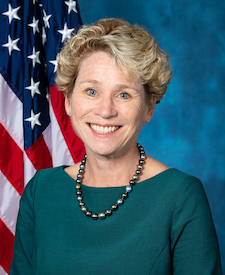
Rep. Chrissy Houlahan
Sponsored bills
Maddy summaryThis bill amends the Higher Education Act to clarify eligibility for Public Service Loan Forgiveness (PSLF). It corrects a technical wording error in the law that previously required borrowers to be *currently employed* in public service at the time of application. The change specifies that borrowers only need to have *completed* 10 years (120 payments) of qualifying public service employment to qualify. This directly affects federal student loan borrowers working in government or nonprofit roles who were previously disqualified due to the outdated wording. The amendment removes a barrier preventing eligible borrowers from receiving loan forgiveness they earned.
Maddy summaryHR 3304, the Providing Child Care for Police Officers Act of 2025, establishes a federal grant program to help law enforcement agencies provide child care for officers' minor children during nonstandard shifts. The program awards competitive 3-year grants to state or local "lead agencies" (like state child care offices) to fund child care services through eligible law enforcement agencies or consortia, with 20% of funds reserved for small agencies (under 200 officers). Grants cover startup costs, provider training, sick child care, facility construction, and other needs, requiring local matching funds (10% to 33% over three years). The program is authorized for $24 million annually from 2026-2030 and includes studies to evaluate its impact on child care access for officers and other first responders.
Maddy summaryThis bill prohibits the Department of Veterans Affairs (VA) from sharing veterans' personal data - including health, financial, and identifying information - with the U.S. DOGE Service (Department of Government Efficiency). It bans any special government employee from accessing or using veteran data for commercial purposes or non-governmental reasons, requiring them to return all data upon termination. The law specifically protects sensitive information like medical records, Social Security numbers, and biometric data from unauthorized use or retention. It directly affects VA data-sharing practices and ensures veteran privacy by restricting access to their personal information.
Maddy summaryHR 3243, the Therapeutic Fraud Prevention Act of 2025, bans the provision of paid conversion therapy aimed at changing a person's sexual orientation or gender identity, and prohibits advertising such therapy as effective, safe, or without risk. It directly affects LGBTQ+ individuals and their families who might be targeted by these practices, as professionals have determined conversion therapy is ineffective and harmful. The law treats violations as deceptive acts under consumer protection laws, empowering the Federal Trade Commission and state attorneys general to enforce it through civil actions. It explicitly excludes legitimate gender transition support and non-discriminatory counseling from the ban.
Maddy summaryThis bill amends the Small Business Act to improve how federal agencies support small businesses in turning research into market products through the SBIR and STTR programs. It shortens peer review timelines from one year to 180 days, requires reviewers to assess commercialization potential alongside technical merit, and mandates agencies to appoint dedicated Technology Commercialization Officials. Agencies must also track success through annual reports measuring revenue from new products, patents, follow-on funding, and spin-out companies. The changes directly affect small businesses receiving SBIR/STTR grants and federal agencies managing these programs.
Maddy summaryThe American Ownership and Resilience Act establishes a new framework for "ownership investment companies" that provide capital to support employee stock ownership plans (ESOPs) and worker-owned cooperatives. The bill creates a licensing system requiring ownership investment companies to meet capital requirements, use independent financial advisors and trustees for transactions, and maintain employee ownership interests. It establishes a facility to provide leverage to these companies with specific limits ($5 billion total annual limit, $100 million per Protégé OIC), and requires detailed reporting on the impact of these investments. The act aims to facilitate and protect employee ownership structures while ensuring transparency and accountability through strict regulatory requirements.
Maddy summaryThe Law Enforcement Officers Equity Act expands federal retirement benefits to include specific non-traditional law enforcement roles, such as IRS tax collection officers, U.S. Postal Inspection Service employees, Department of Veterans Affairs police, and certain U.S. Customs and Border Protection seized property specialists. It directly affects current and future federal workers in these positions who were previously excluded from law enforcement retirement benefits under the Federal Employees Retirement System and Civil Service Retirement System. The bill allows current employees (incumbents) to elect to count prior service toward retirement by paying a deposit covering the difference in retirement contributions, with government contributions made over 10 years. It also temporarily exempts law enforcement officers from mandatory separation for three years after enactment.
Maddy summaryThis resolution (HRES 394) expresses congressional support for designating July 16, 2025, as "Glioblastoma Awareness Day." It aims to raise public awareness about glioblastoma, a highly aggressive and deadly brain cancer with a 6.9% 5-year survival rate. The resolution encourages greater attention to the disease's urgent unmet medical needs and supports research efforts, including the Glioblastoma Therapeutics Network. It directly affects patients, caregivers, and researchers by promoting recognition of the disease and urging collaborative efforts to improve treatments.
Maddy summaryHR 3178, the Save Healthcare Workers Act, creates a new federal crime for assaulting hospital staff while they are performing their duties, with penalties including fines and up to 10 years in prison (up to 20 years for aggravated cases involving weapons or injuries). The bill directly affects hospital employees - including nurses, doctors, and support staff - across all covered facilities (such as emergency rooms, long-term care centers, and children’s hospitals) by criminalizing violence that disrupts patient care. It also establishes a $25 million annual grant program (2025-2034) to help hospitals implement safety measures like staff de-escalation training, security technology, and coordination with local law enforcement. These provisions aim to address workplace violence in healthcare settings, which the bill cites as a growing problem affecting service delivery and staff retention.