

Maddy summaryHRES 996 is a resolution introduced by multiple House members to impeach Kristi Lynn Arnold Noem, the Secretary of Homeland Security, for alleged violations of law and the Constitution. It outlines three articles of impeachment: obstructing congressional oversight by denying access to detention facilities and withholding funds, violating public trust through warrantless arrests and excessive force (including tear gas on children), and self-dealing by awarding federal contracts to associates without competitive bidding. If approved by the House, this resolution would formally charge Noem, triggering a Senate trial to determine her removal from office. The resolution itself does not enact new policy but initiates the constitutional impeachment process against a sitting Cabinet official.
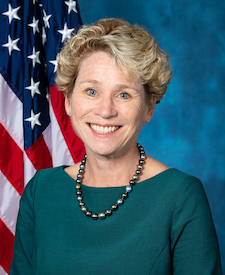
Rep. Chrissy Houlahan
Sponsored bills
Maddy summaryHR 7066, the SHIELD Act, requires electricity utilities to fully recover grid upgrade costs from large commercial or industrial facilities (those with peak demand over 75 megawatts) that drive these upgrades. It prioritizes new service requests from such facilities that use energy efficiency, onsite storage, or zero-emission energy (like solar or wind) to meet their needs. The bill also defines "large load facilities" to exclude existing sites where increased demand results from electrification or emissions-reduction efforts. Utilities must implement these requirements within 2 years, with states reporting progress to Congress. This directly affects major electricity consumers and shapes how grid costs are allocated.
Maddy summaryHR 7060, the "No Political Enemies Act," prohibits federal officials from targeting individuals or domestic entities for exercising constitutionally protected speech or assembly. It creates an affirmative defense for defendants who show government enforcement actions were "substantially motivated" by such protected activity (Section 4), allows civil lawsuits for injunctions against politically motivated actions (Section 6), and enables damage claims if officials knowingly targeted protected speech (Section 7). The bill also requires the Justice Department to submit quarterly reports on sensitive investigations to Congress (Section 10) and bans federal funding for enforcement actions based on protected speech (Section 9). It directly affects government officials who initiate enforcement actions and covers individuals or organizations engaging in protected expression.
Maddy summaryHR 6088, the *Restoring Food Security for American Families and Farmers Act of 2025*, repeals specific sections (10101-10108) from a prior reconciliation law. This action revives previous provisions related to food security programs that were modified by those repealed sections. The bill directly affects federal food assistance and agricultural support programs by restoring their prior legal framework. It does not create new policies but reverses recent changes to existing food security measures.
Maddy summaryThis bill prohibits the use of a federal fund to provide financial support to Argentina's markets, including currency swaps or debt purchases, with existing contracts requiring termination within 7 days. It redirects funds from this prohibition - specifically from the sale or termination of affected financial instruments - to create a one-time economic relief program for U.S. crop producers. The program provides payments to farmers who experienced export market losses for specific crops during the 2025 marketing year, as determined by the Secretary of Agriculture. The relief targets direct economic impacts on agricultural producers tied to lost exports, not broader market interventions.
Maddy summaryThis bill updates federal nutrition law to include Puerto Rico in the Supplemental Nutrition Assistance Program (SNAP), allowing it to transition from its current funding method to the same SNAP benefits available to U.S. states. Puerto Rico must submit a 180-day plan to the USDA detailing its transition to SNAP, with approval required within another 180 days. The transition period lasts up to 5 years from the bill's effective date, during which Puerto Rico would continue receiving block grants while preparing for full SNAP participation. This change directly affects Puerto Rico's 1.4 million residents who currently receive nutrition assistance under a separate funding structure.
Maddy summaryHR 4782, the Local Farmers Feeding our Communities Act, establishes a USDA program to connect local farmers with food distribution networks. It requires eligible entities (like state agriculture agencies) to use funds to purchase unprocessed or minimally processed local foods from covered producers - including at least 25% from small-size, mid-size, beginning, or veteran farmers - while providing technical assistance for food safety and supply chains. The bill allocates $200 million annually (2026-2030) from the Commodity Credit Corporation, mandating 10% for Tribal governments and 1% per state before distributing remaining funds. This directly supports regional food security by boosting economic opportunities for local farmers and improving access to fresh, nutritious food through established distribution channels.
Maddy summaryHR 909, the Crime Victims Fund Stabilization Act of 2025, modifies how funds from the False Claims Act are deposited into the Crime Victims Fund. It specifies that from 2025 through 2029, certain False Claims Act proceeds (specifically those for qui tam plaintiff payments and government damage reimbursements) cannot be deposited into the fund. This change directly affects the composition of the Crime Victims Fund by excluding these specific revenue streams during the specified period. The bill does not create new benefits or alter victim services; it only adjusts fund allocation rules for existing False Claims Act revenues.
Maddy summaryHR 7016, the "No Funds for NATO Invasion Act," blocks federal funding for any U.S. military invasion of a North Atlantic Treaty Organization (NATO) member country or territory covered by NATO's Article 5 mutual defense clause. The bill prohibits using any federal funds for such invasions and bans U.S. officials from executing these actions. It directly affects U.S. military operations and funding decisions involving NATO members. The law applies to all federal spending, preventing the use of existing budgets for this specific purpose.
Maddy summaryHR 6997, the Community Passport Services Access Act, allows qualified public libraries to become official passport acceptance facilities and collect the standard execution fee for passport applications. It directly affects non-profit public libraries meeting U.S. State Department regulations, enabling them to serve as passport application sites - expanding access beyond current locations like post offices. Key provisions authorize new libraries to apply for this role and automatically authorize existing libraries that previously accepted passports. The bill also updates the Passport Act to formally include public libraries in the list of authorized acceptance locations. This creates a concrete policy change in where passport services are available to the public.