

Maddy summaryThis bill reauthorizes the Debbie Smith DNA Backlog Grant Program, which provides federal funding to state and local law enforcement agencies to reduce backlogs in processing DNA evidence from crime scenes. It extends the program's funding period from fiscal years 2024 through 2029 (previously ending in 2024). The bill also updates audit requirements to ensure grant funds are used properly through 2029. This directly affects law enforcement agencies that receive these grants to accelerate DNA analysis for criminal investigations.
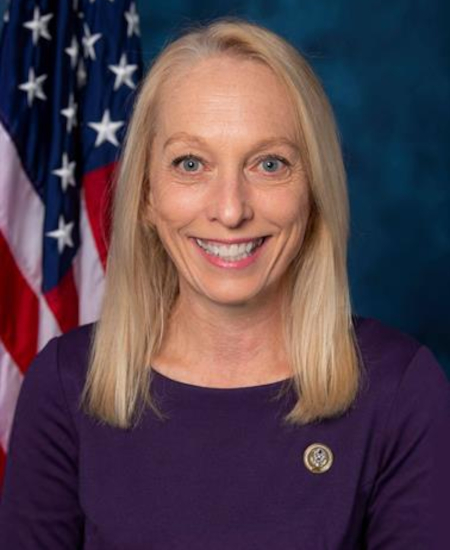
Rep. Mary Gay Scanlon
Sponsored bills
Maddy summaryThis resolution (HRES 1390) formally recognizes the 50th anniversary of the Legal Services Corporation (LSC), established by the 1974 Legal Services Corporation Act. It highlights the LSC's role in funding 130 legal aid organizations that provide free civil legal assistance to low-income individuals - those with incomes at or below 125% of the federal poverty level - serving every U.S. county and territory. The resolution notes that LSC grantees have assisted an estimated 76 million low-income Americans over 50 years, including 1.9 million in 2023, while emphasizing the ongoing "justice gap" where 92% of significant civil legal needs go unmet. As a ceremonial resolution, it does not create new law but reaffirms access to justice as a core value and calls for continued LSC funding.
Maddy summaryThe Federal Prison Oversight Act establishes a new inspections regime for federal prisons, requiring the Justice Department's Inspector General to conduct regular assessments of Bureau of Prisons facilities. These inspections will evaluate conditions of confinement, medical care, staffing levels, safety protocols, and policies related to visitation and programming. The bill also creates a new Ombudsman position within the Department of Justice to receive and address complaints from incarcerated people, their families, and staff about health, safety, and rights concerns. The Inspector General must submit public reports with recommendations, and the Bureau must respond with corrective action plans within 60 days. The law includes protections against retaliation for those filing complaints and requires the Bureau to provide multiple confidential channels for submitting complaints.
Maddy summaryThe SAFE Act establishes a national strategy to protect fish, wildlife, and plants from climate change impacts by requiring federal agencies to integrate climate adaptation into their conservation plans. It creates a Working Group to develop and update a National Strategy, establishes a Climate Adaptation Science Center Network for scientific support, and mandates that states develop their own adaptation plans to receive federal funding. The bill directly affects federal agencies, state governments, Indian Tribes, and Native Hawaiian organizations, emphasizing collaboration and incorporation of traditional ecological knowledge. Key mechanisms include regular review of the National Strategy, requirements for state adaptation plans addressing climate impacts on ecosystems, and coordination across different government levels. This legislation focuses on concrete policy changes to enhance ecosystem resilience to climate change effects like extreme weather, habitat loss, and species migration.
Maddy summaryHR 9104, the Access to Birth Control Act, requires pharmacies that normally stock contraception to provide birth control or related medications without delay if in stock, or immediately offer alternatives like referrals to other pharmacies or expedited orders if unavailable. It prohibits pharmacists from intimidating customers, misrepresenting availability, breaching confidentiality, or refusing to fill valid prescriptions for birth control. Pharmacies violating these rules face civil penalties up to $1,000 per day or private lawsuits. The law specifically applies to pharmacies that routinely carry contraception and excludes cases where a valid prescription is missing or payment cannot be made. It aims to address documented refusals to dispense birth control, particularly following the Dobbs decision.
Maddy summaryThis is a commemorative resolution (HRES 1369) honoring Corey Comperatore, a volunteer firefighter, U.S. Army Reserves veteran, and community leader from Sarver, Pennsylvania, who died on July 13, 2024. The resolution formally mourns his passing and celebrates his life, noting he left behind his wife, Helen, and two daughters, Allyson and Kaylee. It recognizes his service to the Buffalo Township Volunteer Fire Department, his military service, and his role as a devoted member of Cabot Methodist Church. As a ceremonial resolution, it has no policy impact or direct effect on legislation or constituents beyond this formal acknowledgment.
Maddy summaryThe Corner Post Reversal Act amends federal law to establish a six-year deadline for filing lawsuits challenging federal agency actions. It requires that any legal challenge to an agency decision must be initiated within six years of the agency's final action, unless another law specifies a different timeframe. This change directly affects individuals, organizations, or entities seeking to contest agency decisions in court by limiting the window for legal action. The bill does not alter substantive policies but modifies procedural rules governing judicial review of agency actions.
Maddy summaryHRES 1355 is a non-binding resolution supporting the designation of July 10 as Journeyman Lineworkers Recognition Day. It honors lineworkers who maintain electrical infrastructure under hazardous conditions, including during disasters, and commemorates Henry Miller, the first president of the International Brotherhood of Electrical Workers, who died on July 10, 1896, while troubleshooting an electrical outage. The resolution encourages public recognition of these workers' contributions but does not create new laws or policies.
Maddy summaryHR 8988, the "Get Foreign Money Out of U.S. Elections Act," expands federal law to prohibit foreign-controlled businesses from influencing U.S. elections. It bans contributions or spending by any for-profit business entity where foreign nationals own 50% or more of voting shares, or where foreign entities collectively own 5% or more (or exert control over election activities). Businesses must certify compliance before making election-related spending, including contributions to political committees, and recipients cannot reuse uncertified funds for further election activities. This bill directly affects foreign-owned corporations, partnerships, and similar entities seeking to participate in U.S. elections.
Maddy summaryHRES 1345 is a ceremonial resolution recognizing the 100th anniversary of diplomatic relations between the United States and Ireland, established on October 7, 1924. It commemorates the historical milestone, highlighting the strong cultural ties (with over 30 million Americans claiming Irish heritage), economic partnership (over $1 trillion in annual trade), and shared values supporting peace in Northern Ireland. The resolution does not create new laws or directly affect any individuals or entities, as it is purely symbolic. It affirms congressional support for continued U.S.-Ireland friendship and the enduring people-to-people connections between the two nations.