

Goldie's Act This bill expands enforcement provisions under the Animal Welfare Act (AWA). Specifically, the bill directs the Department of Agriculture (USDA) to document and record detailed descriptions of violations of the act observed during inspections and investigations. USDA must provide a copy of all records documenting violations to state, local, and municipal animal control or law enforcement officials within 24 hours of such inspections or investigations. Inspections must be held at least once a year of each research facility, the premises of each animal dealer, and each exhibitor of animals. If violations are found during inspections, then USDA must conduct any necessary follow-up inspections until all the violations are corrected. Inspectors must confiscate or destroy in a humane manner animals found to be suffering physical or psychological harm as a result of failure to comply with the AWA. Violators are subject to civil penalties as outlined in the bill.
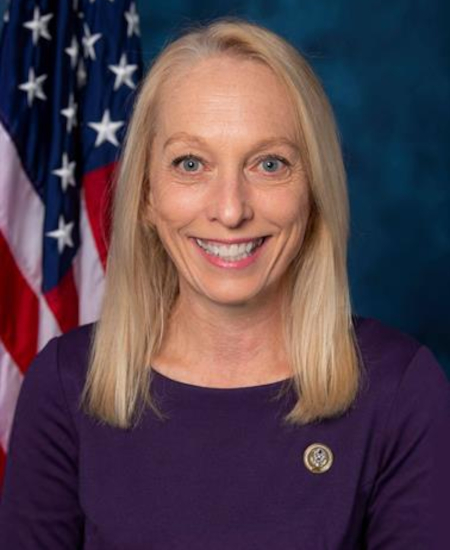
Rep. Mary Gay Scanlon
Sponsored bills
This bill expands the E-3 visa program to cover Irish nationals. The E-3 visa is a nonimmigrant visa currently only available to Australian nationals coming to the United States for employment in a specialty occupation. For Irish E-3 initial applications, the Department of State may approve each fiscal year no more than 10,500 minus the number of Australian initial applications approved the previous fiscal year.
Maddy summaryHR 1330 establishes the Smithsonian National Museum of the American Latino, authorizing its location within the National Mall's "Reserve" area. The bill requires the Smithsonian Board to coordinate with federal agencies managing potential museum sites, including notifying relevant congressional committees before land transfers. It mandates that the museum's exhibits and programs accurately represent the diverse cultures, histories, and viewpoints of Hispanic and Latino communities in the U.S., seeking input from a broad range of community experts. The Smithsonian must also submit regular reports to Congress detailing compliance with these representation requirements.
Maddy summaryHR 1321, the "Ending DOGE Conflicts Act," requires special government employees (like officials overseeing federal contracts) who own, control, or lead companies doing business with the government to file financial disclosure reports with the Office of Government Ethics. These employees must now comply with the same financial disclosure rules as other government officials under Title 5 of the U.S. Code. Until their initial report is certified as compliant by the Office of Government Ethics, these employees are prohibited from performing any official duties related to federal contracting. The bill directly affects high-level government officials with direct financial ties to federal contractors.
Maddy summaryThe Office of Gun Violence Prevention Act of 2025 would create a new office within the Department of Justice to coordinate federal efforts on reducing gun violence. The office, led by a Director appointed by the Attorney General, would integrate existing DOJ programs, evaluate data gaps, and develop evidence-based recommendations for Congress and the President. It would also establish an advisory council including survivors of gun violence, public health officials, and community representatives to guide its work. The office would produce annual reports detailing gun violence trends and policy proposals, while collaborating with agencies like Health and Human Services and the FBI.
Maddy summaryThis bill reauthorizes the Delaware River Basin Restoration Program through 2032, extending funding for watershed restoration projects. It adds Maryland as a fifth Basin state (previously a 4-State program) and requires the program to prioritize projects benefiting small, rural, or disadvantaged communities. The bill also updates definitions and administrative provisions from the original 2016 program under the Water Infrastructure Improvements for the Nation Act. This affects restoration efforts across the Delaware River Basin states (Delaware, New Jersey, New York, Pennsylvania, and Maryland).
Maddy summaryHR 1348, the Venezuelan Adjustment Act, allows certain Venezuelans already in the U.S. to apply for permanent residency. It directly affects Venezuelans who entered the U.S. before December 31, 2021, and have lived there continuously for at least one year, plus their spouses and children. Key provisions include waiving specific inadmissibility grounds (like some criminal convictions), granting work authorization after 180 days of pending applications, and halting removal proceedings during processing. The bill also ensures no reduction in available immigrant visas and establishes a record of permanent residence upon approval.
Maddy summaryHR 1269, the Honoring Our Fallen Heroes Act of 2025, expands benefits for public safety officers (like police and firefighters) who develop certain cancers linked to their work. It adds 22 specific cancers - including lung, mesothelioma, and breast cancer - to the list of conditions presumed to be "exposure-related" and sustained in the line of duty. This presumption applies if the officer served at least 5 years, was diagnosed with the cancer within 15 years after last active duty, and the cancer directly caused death or permanent disability. The bill also establishes a process for adding new cancers every 3 years based on medical evidence from agencies like NIOSH, and allows claims to be filed within 3 years of the law's enactment.
Maddy summaryThis resolution (HRES 123) is a symbolic gesture by the U.S. House of Representatives congratulating the Philadelphia Eagles football team on their victory in Super Bowl LIX. It directly recognizes the team's achievement, citing specific game details like Jalen Hurts' performance and the team's journey. The resolution contains no new laws or policy changes - it merely expresses congressional appreciation through two formal statements of congratulations. As a ceremonial resolution, it does not affect any laws, regulations, or individuals beyond acknowledging the team's win.
Maddy summaryThis bill prohibits non-consensual distribution of intimate images (like photos showing genitals or sexual activity) created in private settings without the subject's consent, if the distribution causes psychological, financial, or reputational harm. It specifically bans sharing nude images of minors with abusive intent. Exceptions cover law enforcement, journalism, medical use, and legal proceedings. Violations carry up to 2 years in prison for non-consensual adult images or 3 years for minor-related offenses.