

Federal Adjustment of Income Rates Act or the FAIR Act This bill modifies pay rates for federal employees in 2026. Specifically, the bill increases rates under the statutory pay systems and for prevailing rate employees by 3.3% and increases locality pay by 1%.
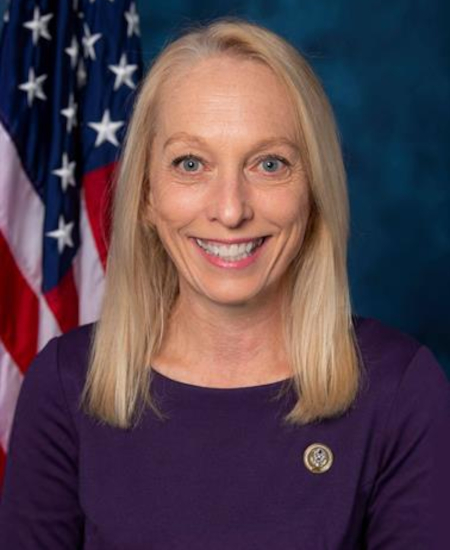
Rep. Mary Gay Scanlon
Sponsored bills
Maddy summaryThe George Floyd Justice in Policing Act of 2025 would establish a National Police Misconduct Registry to track officer complaints, disciplinary actions, and misconduct records across all law enforcement agencies. It would require law enforcement agencies to implement body-worn camera programs with specific recording and retention policies, ban chokeholds and no-knock warrants in drug cases, and reform qualified immunity to make it easier to hold officers accountable for misconduct. The bill mandates comprehensive data collection on use of force incidents, requiring agencies to report detailed information about stops, searches, and force used, disaggregated by race, ethnicity, gender, and other demographics. These provisions would directly affect all Federal, State, and local law enforcement agencies that receive federal grant funding, with requirements for policy changes, training, and data reporting.
Maddy summaryThe FAIR Act of 2025 would prohibit companies from requiring pre-dispute arbitration agreements or waivers that prevent individuals from joining class or collective lawsuits in employment, consumer, antitrust, or civil rights cases. This directly affects workers, consumers, and small businesses who currently face forced arbitration for issues like workplace discrimination, product defects, or unfair business practices. The bill makes such agreements unenforceable while allowing voluntary arbitration after disputes arise and leaving collective bargaining agreements unaffected. It applies to all disputes occurring after the law takes effect, without changing how voluntary arbitration works post-dispute.
Maddy summaryHJRES 121 proposes a constitutional amendment to allow Congress and states to set reasonable limits on money raised or spent to influence elections. It would permit regulations distinguishing between natural persons (individuals) and corporations or other artificial entities, potentially restricting corporate spending in elections. The amendment explicitly states that such regulations cannot abridge press freedom. This is a proposed constitutional change requiring ratification by three-fourths of state legislatures, not yet law.
Maddy summaryHR 5309, the Congressional Tribute to Constance Baker Motley Act of 2025, authorizes a posthumous Congressional gold medal for Constance Baker Motley, a pioneering civil rights attorney and judge. The bill directs the Treasury Secretary to strike the medal with her image and name, to be presented to her son, Joel W. Motley III, and her niece, Constance Royster. It also permits the sale of bronze duplicates at cost to cover expenses, with proceeds going to the U.S. Mint fund. This is a commemorative measure with no substantive policy changes, honoring Motley’s legacy as the first African-American woman appointed to a federal judgeship.
Maddy summaryThis bill reauthorizes the existing program providing support and treatment services for law enforcement officers experiencing mental health crises. It extends the funding authorization period from 2020-2024 to 2025-2029 under the Omnibus Crime Control and Safe Streets Act of 1968. The bill directly affects law enforcement officers who access these crisis support services through participating state and local programs. It makes no new policy changes but ensures the current program continues operating without interruption for five additional years.
Maddy summaryThis bill amends the Social Security Act to remove a payment limitation for certain Medicaid Home and Community-Based Services (HCBS) waivers. Specifically, it strikes a provision (subparagraph (C) of Section 1915(c)(11)) that restricted how states could fund these waivers under Medicaid. The change directly affects state Medicaid programs that use HCBS waivers to provide home and community care for people with disabilities or elderly individuals. By removing this restriction, states gain more flexibility in allocating Medicaid funds for these services, without altering eligibility or service requirements.
Maddy summaryThe Empowering Striking Workers Act of 2025 would expand unemployment insurance eligibility to workers unable to work due to labor disputes, including strikes or lockouts. It sets a 14-day waiting period (or earlier if replacements are hired, a lockout starts, or the dispute ends) before benefits begin, treating these workers as "unemployed" under federal law. The bill also removes the standard requirement for these workers to actively seek other employment to qualify for benefits. This directly affects workers involved in labor disputes, such as those on strike or unable to work due to employer lockouts.
Maddy summaryHR 1510, the Due Process Continuity of Care Act, expands Medicaid eligibility to cover individuals in jail or custody while awaiting trial or disposition of charges, at a state's option. This allows states to provide Medicaid benefits to this population without requiring them to be convicted first. The bill provides $50 million in planning grants to states to develop implementation plans, including assessing healthcare needs, recruiting providers (especially for behavioral health and substance use treatment), and creating electronic billing systems for correctional facilities and outpatient providers. States must also consult with stakeholders like jails, providers, and Medicaid advocates before finalizing their plans.
Maddy summaryThis bill requires the EPA to establish guidelines for indoor air contaminants like radon, formaldehyde, and carbon monoxide that affect schools and childcare facilities. It mandates a national assessment of indoor air quality in these buildings, with updates every five years, and provides technical assistance to schools and childcare providers to implement air quality improvements. The EPA must publish science-based guidelines with recommended concentration limits for key contaminants and support voluntary building certifications for healthier indoor environments. These provisions directly impact local schools, childcare centers, and state/local governments responsible for building maintenance and health standards.