

Raise the Wage Act of 2021 This bill increases the federal minimum wage for regular employees over a 5-year period, for tipped employees, and for newly hired employees who are less than 20 years old. The bill sets forth a schedule of annual increases in the federal minimum wage for individuals with disabilities. The Department of Labor shall no longer issue special certificates for the payment of subminimum wages to such individuals after the final wage increase under this bill for such individuals takes effect. Labor shall provide, upon request, technical assistance and information to employers to (1) help them transition their practices to comply with wage increases and other requirements under this bill for individuals with disabilities, and (2) ensure continuing employment opportunities for such individuals. The bill eliminates the separate minimum wage requirements for tipped, newly hired, and disabled employees. After a specified period, these employees shall be paid the same minimum wage as regular employees. Labor must publish any increase in the minimum wage in the Federal Register and on its website 60 days before it takes effect.
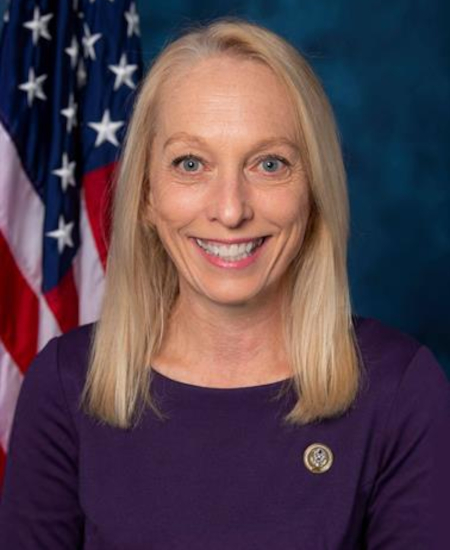
Rep. Mary Gay Scanlon
Sponsored bills
Earned Income and Child Tax Credits Outreach Act of 2021 This bill directs the Department of the Treasury, not later than March 1, 2021, to carry out a public outreach program to inform certain individual taxpayers of their potential eligibility for the earned income and child tax credits. The Inspector General for Tax Administration of Treasury must study the outreach program and make recommendations for improving it.
Health Care Fairness for Military Families Act of 2021 This bill modifies the extension of dependent coverage under TRICARE by allowing a dependent under the age of 26 to be covered without an additional premium. Additionally, the bill authorizes such coverage of dependents without a premium regardless of whether they are eligible to enroll in an employer sponsored plan.
Emergency Pension Plan Relief Act of 2021 This bill modifies the funding rules and provides financial assistance for certain pension plans that are underfunded or insolvent. First, the bill expands the authority of, and provides funding for, the Pension Benefit Guaranty Corporation (PBGC) to provide special partition assistance to a multiemployer pension plan that is insolvent or at risk of insolvency. The bill expands eligibility for partition assistance, provides funding for a plan to reach a projected funded ratio of 80% over a 30-year period, and does not require a plan to repay such assistance. The bill further permits a multiemployer pension plan to elect to retain its funding zone status from the previous year for either (1) the first plan year beginning during the period from March 1, 2020, through February 28, 2021; or (2) the next succeeding plan year, as designated by the plan sponsor. A plan may also extend by five years the funding improvement or rehabilitation period if the plan is designated as in endangered or critical status for a plan year beginning in 2020 or 2021. A plan in critical and declining status may not suspend payment of plan benefits. Additionally, the bill adjusts the minimum funding standards for a multiemployer pension plan to account for investment losses and other losses related to the COVID-19 pandemic and modifies the PBGC guarantee formula to increase the maximum potential benefits under a multiemployer pension plan. Finally, the bill makes changes with respect to single employer pension plans, including revising the amortization rules and extending and modifying the pension funding stabilization percentages.
Inaugural Fund Integrity Act This bill limits donations to inaugural committees and requires these committees to disclose donations and disbursements. Specifically, inaugural committees may not solicit, accept, or receive donations from corporations or foreign nationals. An individual may not make a donation in the name of another individual or authorize his or her name to be used to make such a donation. In addition, foreign nationals may not make donations or make promises to make donations to inaugural committees. Further, the bill caps the amount an individual may donate to an inaugural committee. Donations to inaugural committees may not be converted to personal use. Finally, inaugural committees must report certain information on donations and disbursements to the Federal Election Commission.
Access Technology Affordability Act of 2021 This bill allows a refundable tax credit equal to the amounts paid for qualified access technology for use by a blind individual who is the taxpayer, the taxpayer's spouse, or a dependent of the taxpayer. Qualified access technology is hardware, software, or other information technology with the primary function of converting or adapting information that is visually represented into forms or formats useable by blind individuals. The credit is limited to (1) costs that are not compensated by insurance or otherwise, and (2) an aggregate amount of $2,000 per blind individual in any period of three consecutive taxable years. The credit must be adjusted for inflation after 2021 and terminates after 2026.
COVID-19 Student Loan Relief Extension Act This bill extends certain temporary relief related to federal student loans and expands eligibility for such relief to additional types of loans. Specifically, the bill extends the current suspension of payments due on federal student loans to 30 days after the end of the COVID-19 (i.e., coronavirus disease 2019) public health emergency. It also extends the suspension of interest due on these loans until the economy shows specified initial signs of recovery. Further, the bill expands eligibility for temporary relief on federal student loans to include Federal Family Education Loans (FFELs) and Federal Perkins Loans that are not held by the Department of Education (ED) and certain health profession and nursing loans. (Currently, these temporary relief provisions are only applicable to certain Federal Direct Loans and FFELs that are held by ED.) Additionally, the bill makes this eligibility retroactive to March 13, 2020. Finally, ED and the Department of Health and Human Services must carry out a program, beginning on August 1, 2021, to provide at least six notices to borrowers that normal payment obligations will resume.
Civics Learning Act of 2021 This bill expands the use of American History and Civics Education—National Activities grants to prioritize innovative civics learning and teaching. Specifically, the bill expands the allowable uses of these grants to include before-, during-, and after-school activities and extracurricular activities; activities that include service learning and community service projects that are linked to school curriculum; activities that encourage and support student participation in school governance; and online and video game-based learning. Further, the Department of Education must ensure that specified percentages of grant funds are awarded on a diverse basis to eligible entities (e.g., institutions of higher education) that serve students and teachers at elementary schools, middle schools, and high schools.
This bill repeals the prohibition on the use of certain funds by the Securities and Exchange Commission to implement a rule, regulation, or order to require the disclosure of political contributions, contributions to tax exempt organizations, or dues paid to trade associations.
Transparent Representation Upholding Service and Trust in Congress Act or the TRUST in Congress Act This bill requires a Member of Congress, as well as any spouse or dependent child of a Member, to place specified investments into a qualified blind trust (i.e., an arrangement in which certain financial holdings are placed in someone else's control to avoid a possible conflict of interest) until 180 days after the end of their tenure as a Member of Congress.