

Pursuing Equity in Mental Health Act This bill establishes and expands programs to address racial and ethnic disparities in mental health. Specifically, the Department of Health and Human Services (HHS) must award grants to establish interprofessional behavioral health care teams in areas with a high proportion of racial and ethnic minority groups. In addition, HHS may award grants to incorporate best practices and competencies to address mental health disparities in curricula for training social workers, psychologists, and other behavioral health professionals. HHS must also promote behavioral and mental health and reduce stigma associated with mental health conditions and substance use disorder through outreach to racial and ethnic minority groups. HHS must consult with appropriate advocacy groups and behavioral health organizations to develop a strategy for this outreach. The bill also (1) reauthorizes the minority fellowship program to support the education of mental health professionals who provide services to racial and ethnic minorities, and (2) requires studies on mental health disparities and the effects of social media use on adolescents.
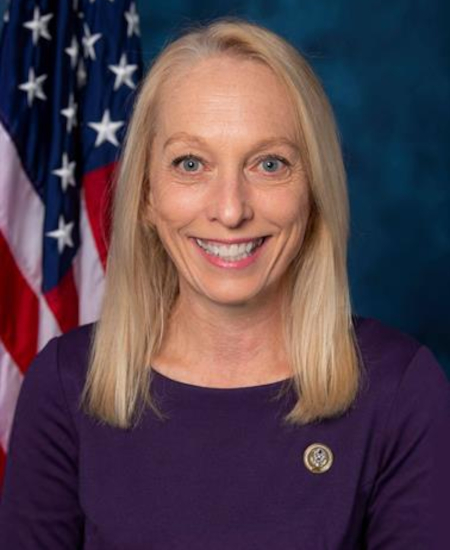
Rep. Mary Gay Scanlon
Sponsored bills
Protecting Moms Who Served Act This bill requires the Department of Veterans Affairs (VA) to implement the maternity care coordination program. The VA must provide community maternity care providers (i.e., non-VA maternity care providers) with training and support with respect to the unique needs of pregnant and postpartum veterans, particularly regarding mental and behavioral health conditions in relation to the service of the veterans in the Armed Forces. Additionally, the Government Accountability Office must report on maternal mortality and severe maternal morbidity among pregnant and postpartum veterans, with a focus on racial and ethnic disparities in maternal health outcomes for veterans.
Mental Health Services for Students Act of 2021 This bill provides specific statutory authority for the Project AWARE (Advancing Wellness and Resiliency in Education) State Educational Agency Grant Program that is administered by the Substance Abuse and Mental Health Services Administration. The program supports school-based mental health services, including screening, treatment, and outreach programs.
Accelerating Kids' Access to Care Act This bill requires state Medicaid programs to establish a process through which qualifying out-of-state providers may enroll as participating providers without undergoing additional screening requirements. Among other things, a qualifying provider must (1) serve minors, or adults whose condition began as a minor; and (2) have previously been screened for Medicare participation or for participation in the Medicaid program of the state in which the provider is located.
Breast Cancer Patient Equity Act This bill provides for Medicare coverage of custom fabricated breast prostheses following the surgical removal of the breast (i.e., a mastectomy), including replacements of such prostheses. Currently, Medicare covers surgically implanted breast prostheses, as well as some external breast prostheses (e.g., post-surgical bras).
Equity in Neuroscience and Alzheimer's Clinical Trials Act of 2021 or the ENACT Act of 2021 This bill sets out activities and requirements to increase the participation of underrepresented populations in research and clinical trials for Alzheimer's disease and related dementias. Specifically, the National Institute on Aging (NIA) must establish and provide technical assistance to Alzheimer's research centers located in areas with higher concentrations of minority groups. These centers must establish diagnostic and treatment clinics designed to serve minority, rural, and other underserved populations; operate clinical trials; and carry out public outreach to encourage members of minority populations to participate in clinical trials and research. Additionally, the NIA must disseminate information to members of minority populations about participating in clinical trials and take other actions to enhance diversity with respect to the Alzheimer's research that it conducts or supports. The bill also directs the NIA to increase diversity among Alzheimer's researchers by encouraging the participation of individuals who are from groups that are underrepresented in clinical, behavioral, and social sciences.
Foster Youth Mentoring Act of 20 21 This bill directs the Department of Health and Human Services to award grants for programs that provide mentoring for children in foster care and children with experience in foster care.
Transform, Heal, and Renew by Investing in a Vibrant Economy Act or the THRIVE Act This bill establishes a program to address the economy, racial justice, and climate change. The President must establish a board to advise the President and the heads of federal departments and agencies regarding the implementation of this bill. The President, in consultation with the board, must establish a 10-year plan to create a society that enables and supports greater racial, Indigenous, gender, environmental, and economic justice; work opportunities; healthy communities; a stable climate; and healthy ecosystems. In addition, the President, in consultation with the board, must implement a program that provides support to public or private entities that carry out qualified programs. The programs must meet certain labor, equity, and environmental conditions and support infrastructure, including to expand access to pollution-free, renewable, and affordable energy; care workers and social infrastructure (e.g., health care infrastructure); expanded access to housing; efforts to protect and restore biodiversity or natural habitats and efforts to remediate pollution in communities harmed by environmental, economic, or socioeconomic injustice; agriculture, including agricultural workers; or the development and transformation of the U.S. industrial base, including by expanding manufacturing of clean technologies.
Accessible Voting Act of 2021 This bill addresses voting accessibility for individuals with disabilities and older individuals. First, the bill establishes the Office of Accessibility within the Election Assistance Commission (EAC). The office must serve as the advocate on behalf of voters with access needs, ensure state and local election officials are maintaining voting systems that meet Department of Justice accessibility standards, and make payments to states to implement the accessibility requirements outlined by the bill. In addition, the office must establish and operate a National Resource Center on Accessible Voting to provide state and local election officials, poll workers, and volunteers with the information and technical assistance needed to provide accessible voting. The office must also work with state and local election officials to collect data and administer a public national voter accessibility website. The bill requires each state to (1) ensure election websites are accessible and meet specified requirements, (2) designate a single office to provide information on federal elections to individuals with disabilities and older individuals, (3) notify the public of changes to voting practices, (4) expand access to absentee registration procedures and no-excuse mail-in absentee voting in federal elections, and (5) ensure all polling places and voter drop boxes are accessible. The EAC must coordinate with specified agencies to make grants to eligible entities to study, test, and develop accessible voting options. The bill also permanently reauthorizes and expands a Department of Health and Human Services grant program for increasing accessibility to polling places.
Creating Opportunities Now for Necessary and Effective Care Technologies (CONNECT) for Health Act of 2021 or the CONNECT for Health Act of 2021 This bill expands coverage of telehealth services under Medicare. Among other provisions, the bill allows the Centers for Medicare & Medicaid Services (CMS) to waive certain restrictions, such as restrictions on the types of technology that may be used; permanently removes geographic restrictions on originating sites (i.e., the location of the beneficiary) and allows the home of the beneficiary to serve as the originating site for all services; permanently allows federally qualified health centers and rural health clinics to serve as the distant site (i.e., the location of the health care practitioner); and allows the CMS to generally waive coverage restrictions during any public health emergency. Additionally, the CMS must report on the effects of expanded telehealth services during the COVID-19 public health emergency, including with respect to the utilization, quality, and outcomes of services. The Center for Medicare and Medicaid Innovation may also test alternative payment models relating to expanded telehealth services.