

Equitable Health Care for All Act This bill prohibits discrimination in health care based on race, religion, and other characteristics. It also revises reporting requirements, adds equity-related measures to certain Medicare programs, and makes other changes to reduce health disparities. To enforce the prohibition, the Department of Health and Human Services (HHS) must establish an administrative process to resolve complaints about inequitable health care. HHS must investigate these complaints and mediate agreements to resolve issues. In the event of noncompliance with a mediated agreement, an aggrieved individual may bring a civil action. Health care providers must also report data in formats that allow disaggregation by demographic factors. HHS must issue proposed regulations to carry out this requirement within 90 days. Additionally, the Centers for Medicare & Medicaid Services (CMS) must include measures related to equitable health care in the Medicare value-based purchasing program for hospitals. This program provides incentive payments based on quality of care. The CMS may also exclude providers that furnish inequitable health care from its programs. In addition, the bill establishes the Federal Health Equity Commission to monitor implementation of the bill and establishes a grant program for hospitals to promote equitable health care.
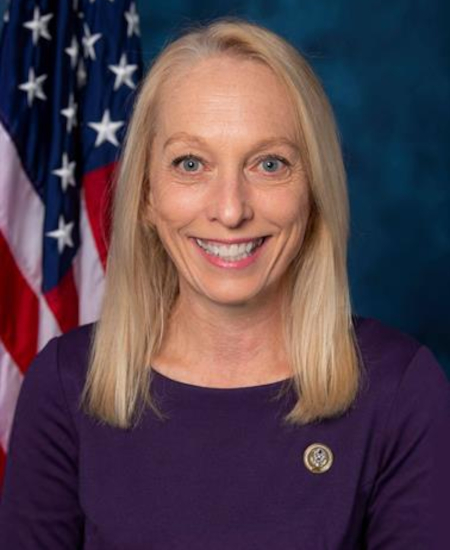
Rep. Mary Gay Scanlon
Sponsored bills
Family Violence Prevention and Services Improvement Act of 20 21 This bill modifies, expands, and reauthorizes through FY2026 the Family Violence and Prevention Services program, which funds emergency shelters and supports related assistance for victims of domestic violence. Specifically, the bill requires the Department of Health and Human Services (HHS) to award grants and enter cooperative agreements with state and tribal domestic violence coalitions, and community-based organizations, to support prevention services. Depending on the type of organization, grant recipients must use funding to (1) provide technical assistance; (2) promote evidence-informed prevention strategies; (3) implement coordinated, community responses to reduce risk factors for family violence; and (4) develop prevention partnership strategies. Further, HHS must award specified grants to organizations that provide population-specific services in underserved communities and to community-based organizations that provide culturally specific domestic violence services to racial and ethnic minority groups. The bill also establishes a grants program for tribal domestic violence coalitions to support the provision of local, tribal, family domestic or dating violence services and requires HHS to award a grant for the administration of a hotline dedicated to serving Indians affected by domestic violence. In addition, the bill modifies certain program-wide definitions; changes the requirements for specified grant applications, eligibility criteria, and use of funds; and makes other technical revisions.
Public Service Freedom to Negotiate Act of 20 21 This bill provides minimum collective bargaining rights and procedures for public employees and prohibits strikes by certain public safety workers. The Federal Labor Relations Authority (FLRA) shall determine for each state whether the laws of such state substantially provide for each of the minimum standard collective bargaining rights and procedures specified by this bill, including the right of public employees and supervisory employees to self-organize, form or join a labor organization, or collectively bargain. The FLRA must issue rules and take actions to establish and administer bargaining rights and procedures for those states that do not substantially provide for them. No employers, emergency services employees, or law enforcement officers may engage in a lockout, strike, or any other organized job action that is likely to result in a measurable disruption of the delivery of emergency or public safety services. Furthermore, no labor organization may be the cause of a violation of such prohibition.
Bring Animals Relief and Kibble Act of 2021 or as the BARK Act of 2021 This bill extends federal protection from civil and criminal liability that applies to donations of food or grocery products for needy individuals to the donation of pet food or supplies.
Student Food Security Act of 2021 This bill expands the Supplemental Nutrition Assistance Program (SNAP) and establishes programs to address food insecurity among college students. Specifically, the bill permanently modifies the eligibility requirements to allow additional college students to receive SNAP benefits, and it establishes a demonstration program to allow college students to use SNAP benefits on college campuses instead of meal plans.
This concurrent resolution recognizes the disparity between wages paid to Latina women, and its impact on women, families, and the nation and reaffirms Congress' commitment to supporting equal pay and to narrowing the gender wage gap.
This concurrent resolution supports the goals and ideals of the National Day of Silence (during which students vow to remain silent to bring attention to the harassment and discrimination faced by lesbian, gay, bisexual, transgender, queer and questioning individuals in schools).
This resolution recognizes the opportunity for Black Maternal Health Week to raise national awareness of the state of Black maternal health in the United States.
This bill generally addresses the adverse effects of climate change with a particular focus on immigration. Specifically, the bill establishes an immigration pathway to admit climate-displaced persons into the United States. These are individuals (1) who need durable resettlement because of an environmental change that adversely affects their living conditions, and (2) whose government cannot or will not provide a resettlement solution. Persons admitted to the United States under this pathway are entitled to the same resettlement assistance and benefits available to refugees. Additionally, the bill authorizes the President to provide foreign assistance for promoting resilience and reducing vulnerability among communities facing adverse effects of climate change. It also creates the position of Coordinator of Climate Change Resiliency in the Department of State. Moreover, the State Department must implement, and periodically report on, a strategy to mitigate the impact of climate change on displacement and humanitarian emergencies. The State Department must also provide (1) training on climate displacement to foreign service officers assigned to countries from which climate-displaced persons originated, and (2) guidance on the humanitarian impacts associated with climate change to all U.S. diplomatic missions. The bill also requires the President to report on displacement caused by climate change.
Families Belong Together Act This bill provides various immigration benefits for eligible alien parents (or legal guardians) and minor children who were separated by the Department of Homeland Security (DHS) between January 20, 2017, and January 20, 2021. Generally, to be an eligible parent or minor child under this bill, the alien must not be inadmissible for certain crime- or security-related grounds, though DHS may waive certain grounds for humanitarian or public interest reasons. Furthermore, an eligible child who was separated as a minor remains eligible for the immigration benefits after reaching majority. DHS must grant humanitarian parole into the United States to an eligible alien who requests such parole, regardless of whether the alien is physically present in the United States. An eligible alien in the United States may apply for lawful permanent resident status. U.S. Citizenship and Immigration Services shall grant a qualifying alien's lawful permanent resident status within 30 days of receiving the alien's application. An alien who receives lawful permanent resident status under this bill shall be eligible for benefits and services that are available to an alien who is admitted as a refugee. Certain annual numerical limitations shall not apply to aliens who receive lawful permanent resident status under this bill. If an alien seeks judicial review of a denial of an application for lawful permanent resident status under this bill, the Department of Justice shall appoint counsel to represent that alien upon request.