

Maddy summaryThe Increasing Access to Mental Health in Schools Act creates a federal grant program to increase mental health staff in low-income schools. It provides funding for partnerships between low-income schools (where at least 20% of students are from families below the poverty line) and graduate programs in school counseling, psychology, and social work. Grant funds can cover training costs, salary support for new mental health providers, recruitment of underrepresented students, and student loan repayment for mental health staff working in qualifying schools. The bill sets target ratios for staff-to-student ratios (like 1 counselor per 250 students) and requires annual reporting on program outcomes. The program is authorized for $200 million annually to address mental health staffing shortages in schools serving high-poverty communities.
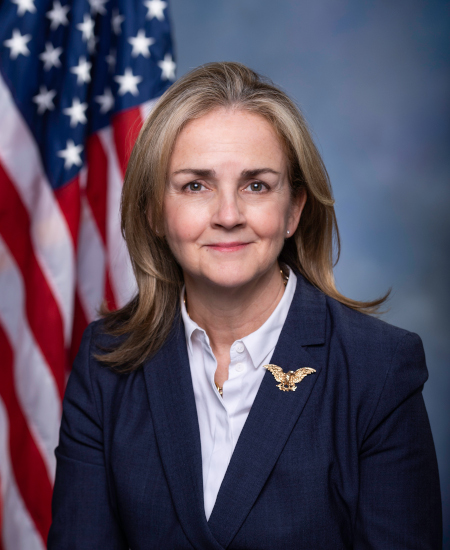
Rep. Madeleine Dean
Sponsored bills
Maddy summaryThis bill designates the U.S. Postal Service facility at 28 East Airy Street in Norristown, Pennsylvania, as the "Charles L. Blockson Post Office Building." It directly affects the specific post office location and all official references to it. The key provision requires that all future government documents, maps, and records referencing this facility must use the new name. The bill makes no changes to postal services, operations, or affected individuals - only updating the facility's official designation. (Procedural naming bill; summary limited to 2 sentences as specified.)
Maddy summaryHRES 1032 is a symbolic resolution designating the week of February 26-March 1, 2024, as "Public Schools Week" in the U.S. House of Representatives. It expresses congressional support for public education, highlighting its role in preparing students and communities. The resolution has no legal effect or funding provisions - it solely serves as a formal expression of backing for public schools. It directly affects no individuals or entities but aims to raise awareness about public education. This is a non-binding gesture, not a policy change.
Maddy summaryThis resolution proposes creating a Permanent Select Committee on Aging in the U.S. House of Representatives. The committee would study issues affecting older Americans - such as income security, healthcare, housing, and long-term care - without having the power to pass laws. It would review existing government and private programs, develop coordination strategies for aging-related services, and assess recommendations from the President or the White House Conference on Aging. The committee’s work would inform future policy discussions but would not directly change legislation.
Maddy summaryThis symbolic resolution (HRES 1026) recognizes Black History Month and honors the 94 African-American recipients of the Congressional Medal of Honor for their military bravery, heroism, and valor. It does not create new laws or policies but formally acknowledges their contributions, referencing historical context like Sergeant William Harvey Carney’s 1863 actions and the 1993 study revealing racial discrimination in Medal of Honor awards during WWII. The resolution specifically calls for the House to recognize Black History Month and honor these 94 service members. It is a non-binding expression of support with no concrete policy changes.
Maddy summaryHRES 1014 is a symbolic House resolution commemorating the Ukrainian people's sacrifices two years after Russia's February 24, 2022, invasion. It recognizes the war's devastating toll, including over 10,000 civilian deaths, 19,000 abducted children, and 10 million displaced people, while condemning Russia's actions. The resolution reaffirms U.S. support for Ukraine, condemns Vladimir Putin's regime, and stands in solidarity with Ukraine's defense of democratic values. As a commemorative resolution, it has no binding effect but formally acknowledges Ukraine's struggle and resilience. It directly honors Ukrainian civilians, soldiers, and those displaced by Russia's war of aggression.
Maddy summaryHR 7389, the Accessible Voting Act of 2024, requires states to improve voting accessibility for individuals with disabilities, older voters (60+), Native Americans, Alaska Natives, and people with limited English proficiency. The bill establishes an Office of Accessibility within the Election Assistance Commission to oversee implementation, mandates accessible election websites with detailed voting information, and requires polling places to meet accessibility standards. It expands access to absentee voting procedures and provides federal funding to help states implement these requirements. The bill aims to address documented barriers to voting, including architectural barriers at polling places and challenges in absentee ballot processes. It will take effect for elections held on or after January 1, 2025.
Maddy summaryHRES 1013 is a symbolic resolution designating February 2024 as "National Teen Dating Violence Awareness and Prevention Month." It expresses congressional support for this designation to promote community awareness and prevention efforts around teen dating violence, which affects youth across the U.S. The resolution does not create new laws or funding but encourages schools, families, and communities to observe the month with educational activities. It references statistics on teen dating violence (like 28.1% of teens experiencing digital dating abuse) to highlight the issue's significance.
Maddy summaryHRES 966 is a symbolic resolution condemning alleged sexual violence committed by Hamas during its October 7, 2023, attack on Israel. It specifically references eyewitness accounts, forensic evidence, and Hamas fighters' admissions of ordering gang rape, sexual mutilation, and assault against Israeli civilians. The resolution calls for international condemnation of such acts as weapons of war, urges nations to criminalize sexual violence, and supports investigations into Hamas' actions. As a non-binding resolution, it does not create new laws or directly affect any individuals but formally expresses the House's position on the issue.
Maddy summaryHR 7350, the AID Local Government Leadership Act, provides federal grants to local governments to cover reasonable accommodations for elected or appointed officials with disabilities. The bill directly affects small or rural local governments (populations under 10,000, rural areas, or communities with high poverty rates) that elect or appoint officials with disabilities. Key provisions include $3,000-$50,000 annual grants per official for work-related accommodations like office modifications, specialized software, sign language interpreters, or communication supports, requiring local governments to match 25% of funds and maintain a dedicated funding account for four years. Grants cover the official’s first term plus two years, with annual reports to Congress tracking grant usage, community demographics, and accommodation types. The program aims to address underrepresentation of people with disabilities in local government by ensuring necessary support is funded.