

Maddy summaryHRES 845 is a symbolic resolution designating November 2-8, 2025, as "Drowsy Driving Prevention Week" to raise public awareness about the risks of driving while fatigued. It does not create new laws or policies but encourages the public to adopt preventative measures, such as improving sleep habits and avoiding sleep-inducing medications. The resolution cites statistics on drowsy driving (e.g., 6,400 annual deaths) but focuses solely on awareness, not regulatory changes. As a procedural resolution, it directly affects public awareness efforts, not specific individuals or entities.
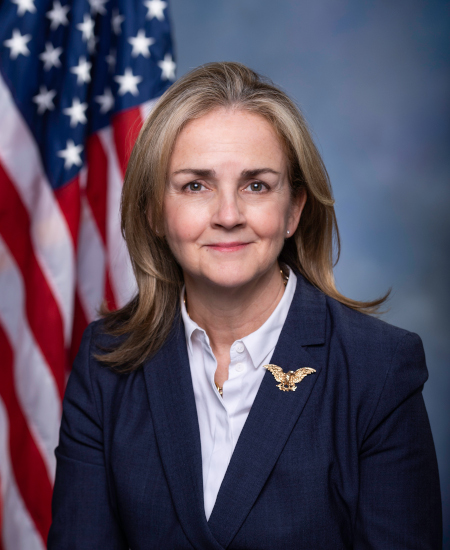
Rep. Madeleine Dean
Sponsored bills
Maddy summaryHRES 846 is a symbolic resolution designating October 2025 as National Domestic Violence Awareness Month. It expresses the House's support for raising awareness about domestic violence and its impacts, and calls for continued congressional attention to ending domestic violence through existing programs. The resolution does not create new laws, allocate funding, or directly affect any specific groups - it is purely a statement of support. It references statistics on domestic violence prevalence but focuses on awareness rather than policy changes.
Maddy summaryHRES 843 is a symbolic resolution supporting the designation of October 30 as an "International Day of Political Prisoners" in the United States. It expresses the House's solidarity with global political prisoners - estimated at 1 million - including journalists, activists, and dissidents detained for political reasons without credible charges. The resolution urges the U.S. government to continue efforts to condemn political imprisonment, secure releases through diplomacy, and raise international awareness. It does not create new laws or directly affect specific individuals, as it is a non-binding expression of support for an existing international observance.
Maddy summaryThe American Energy Independence and Affordability Act extends multiple clean energy tax credits that were set to expire between 2025 and 2026. It specifically extends residential clean energy credits through 2034, clean electricity investment credits for wind and solar through 2032, and clean vehicle credits for electric vehicles through 2032. The bill also reinstates special rates for sustainable aviation fuel and modifies requirements for energy-efficient home improvements. These provisions directly affect homeowners installing solar panels, businesses investing in clean energy infrastructure, and manufacturers producing clean energy equipment.
Maddy summaryThis bill makes federal funding for the WIC program mandatory by requiring Congress to appropriate necessary funds annually for fiscal year 2026 and each subsequent year. It removes discretionary language from WIC funding requirements and clarifies that eligible participants must be served without participation limits. The bill directly affects low-income pregnant women, new mothers, and young children who rely on WIC for nutrition assistance, ensuring continued access to critical food, health, and education services.
Maddy summaryThis bill adds Medicare coverage for multi-cancer early detection screening tests (blood or biological tests analyzing cell-free DNA) starting January 1, 2028. It directly affects Medicare beneficiaries aged 68 and older (starting in 2028, with the age limit increasing by 1 year annually), requiring tests to be FDA-cleared and deemed reasonable/necessary by the Secretary for early cancer detection across multiple organ sites. Payment will initially match current stool DNA test rates before 2031, then shift to a lower rate or new payment system after 2031, with limits preventing more than one test per year. The bill explicitly states it does not alter coverage for existing cancer screenings like breast, colorectal, or prostate cancer tests.
Maddy summaryHR 5653, the Trust Through Transparency Act of 2025, requires U.S. Customs and Border Protection (CBP) and U.S. Immigration and Customs Enforcement (ICE) officers, as well as deputized personnel, to wear body cameras during all public immigration enforcement actions like stops, arrests, or checkpoints. Footage must be kept for six months unless it involves use of force, an arrest, a complaint, or a voluntary request for longer retention (up to three years) by officers, the public, or families. The bill mandates annual reports to Congress detailing enforcement actions, compliance issues, disciplinary actions taken, and public access to these reports (with privacy redactions permitted). It also creates an independent panel to advise on body camera policies, aiming to increase accountability in immigration enforcement.
Fair Pay for Federal Contractors Act of 2025 This bill provides back pay to employees of federal contractors who lost pay due to a lapse in appropriations (i.e., government shutdown) in FY2026. Specifically, the bill provides appropriations for federal agencies that are subject to a lapse in appropriations in FY2026 to adjust the price of contracts to compensate federal contractors for providing back pay to employees who were affected by the lapse in appropriations. The agencies must adjust the price of any contract for which the contractor stopped, suspended, delayed, or interrupted all or part of the work under the contract due to the lapse in appropriations. The price adjustment must compensate the contractor for reasonable costs incurred to (1) compensate employees who were furloughed or laid off, were not working, or experienced a reduction of hours or compensation due to the lapse in appropriations; or (2) restore paid leave taken by employees during the lapse in appropriations if the contractor required or permitted employees to use paid leave as a result of the lapse in appropriations. The maximum amount of weekly compensation of an employee for which an adjustment may be made under this bill may not exceed the lesser of (1) the employee's actual weekly compensation, or (2) $1,442 (or a lesser amount pro-rated for an employee who works less than 40 hours per week). The bill also requires the Office of Federal Procurement Policy to submit a report to Congress on the adjustments made under this bill.
Maddy summaryThis concurrent resolution designates the week of September 22-28, 2025, as "National Falls Prevention Awareness Week" to raise public awareness about falls among older adults (65+). It directly affects older adults and organizations working on fall prevention, such as healthcare providers and community groups. The resolution cites CDC data showing falls cause 41,000 annual deaths and $80 billion in medical costs, while encouraging existing evidence-based strategies like home safety modifications and balance exercises. It does not create new laws or funding but supports awareness efforts and collaboration among federal agencies, the Aging Network, and healthcare providers.
Maddy summaryThis bill prevents federal agencies from terminating employees during a government shutdown caused by a lapse in discretionary funding. It prohibits removals of civil service employees at any agency affected by a funding gap, and if an employee is wrongfully removed, they can return to their job with back pay once funding resumes. The law directly protects all federal employees covered by the civil service system during shutdowns. It applies automatically to any funding lapse, requiring automatic reinstatement without needing separate legal action.