

This resolution condemns and denounces all forms of anti-Asian sentiment, including those related to COVID-19 (i.e., coronavirus disease 2019), and calls on federal law enforcement officials, working with state and local agencies, to take specified steps. The resolution calls on federal officials to expeditiously investigate and document all credible reports of hate crimes, harassment, bullying, and threats against the Asian American and Pacific Islander communities; the Attorney General to work with state and local agencies and Asian American and Pacific Islander community-based organizations to prevent discrimination and to expand culturally competent and linguistically appropriate education campaigns on public reporting of hate crimes; and the Department of Health and Human Services to issue guidance describing best practices to mitigate racially discriminatory language in describing the pandemic. The resolution recommits the United States to serving as a world leader in building more inclusive, diverse, and tolerant societies by (1) prioritizing language access and inclusivity in communication practices, and (2) combating misinformation and discrimination that put Asian Americans and Pacific Islanders at risk.
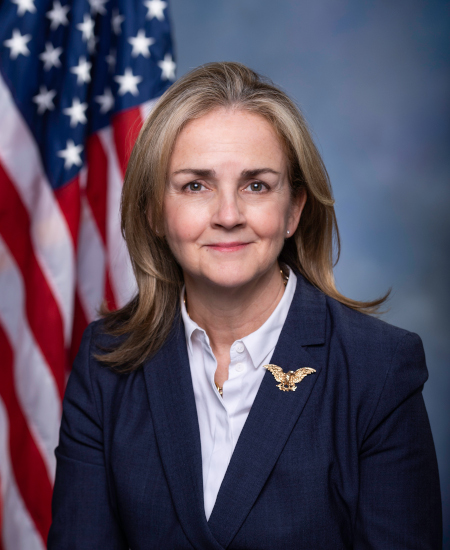
Rep. Madeleine Dean
Sponsored bills
This resolution supports the designation of National Teen Dating Violence Awareness and Prevention Month.
America's College Promise Act of 2021 This bill provides funding and establishes grant programs to expand access to higher education, including by providing free community college to students. Specifically, the bill establishes a program to waive resident tuition and fees for community college students. The Department of Education (ED) must award grants to states and Indian tribes to pay the federal share (75% of the average resident community college tuition and fees per student) of the program. As a condition of receiving such a grant, a state must (1) submit a plan to align the requirements for receiving a regular high school diploma with the requirements for entering credit-bearing coursework at community colleges; and (2) submit a plan to improve transfer pathways between institutions of higher education (IHEs), including by ensuring that associate degrees awarded by community colleges are fully transferable to four-year IHEs. Next, the bill directs ED to award grants to states and Indian tribes for implementing evidence-based institutional reforms and innovative practices to improve student outcomes. In addition, ED must award grants to participating historically Black colleges and universities, tribal colleges and universities, and minority-serving institutions to waive or significantly reduce the first 60 credits of tuition and fees for low-income students.
First-Time Homebuyer Act of 2021 This bill modifies the first-time homebuyer tax credit. Specifically, it increases the allowable dollar amount of the credit from $8,000 to $15,000, revises the income formula for determining the maximum allowable credit amount, replaces the limitation on the credit based on purchase price (currently, $800,000) with a limitation based on area median purchase price, and revises rules relating to recapture of the credit and to members of the Armed Forces.
Universal Child Care and Early Learning Act This bill provides funds to the Department of Health and Human Services (HHS) for an affordable child care and early learning program. Children who are at least six weeks of age but not yet required to attend school may participate in the program regardless of family income, disability status, citizenship status, or employment of a family member. Under the program, HHS must support sponsors (e.g., states, local governments, tribal organizations, and nonprofit community organizations) that provide child care and early learning services for families. Families must pay a subsidized fee, based on their income, for the services. The fees are waived for children from families with incomes below 200% of the poverty line. The fees are capped at 7% of a family's income regardless of the family's income level.
VET TEC Enhancement Act of 2021 This bill increases the amount authorized to be appropriated for the Department of Veterans Affairs (VA) High Technology Pilot Program from $45 million to $125 million for FY2022 and each succeeding year. The High Technology Pilot Program provides eligible veterans with the opportunity to enroll in high technology programs of education that the VA determines provide training or skills sought by employers in a relevant field or industry.
Ghost Guns Are Guns Act This bill broadens the definition of firearm for purposes of federal firearms laws. Specifically, it includes as a firearm any combination of parts designed or intended to be used to convert a device into a firearm and from which a firearm may be readily assembled.
Ensuring Quality Access to Legal Defense Act of 2021 or the EQUAL Defense Act of 2021 This bill establishes and modifies certain programs that support the delivery of public defense services (i.e., legal services for criminal defendants who cannot afford counsel). Specifically, the bill directs the Department of Justice (DOJ) to award grants to state and local governments, tribal organizations, and public defender offices for public defense. A grant recipient must use the grant to establish a data collection process, develop workload limits, and satisfy specified compensation requirements (e.g., pay parity between public defenders and prosecutors). The bill also directs DOJ to award grants to nonprofits and government organizations to train public defenders, court-appointed attorneys, and contract attorneys. Additionally, a state that receives Edward Byrne Memorial Justice Assistance Grant program funds must annually submit to DOJ information related to the legal representation of defendants in criminal cases. Finally, it reauthorizes through FY2025 the student loan repayment program for prosecutors and public defenders and otherwise revises the program, including by increasing the maximum benefit amount.
Pandemic Heroes Compensation Act of 2021 This bill allows essential workers and their family members to file claims and receive compensation for harm or death suffered as a result of COVID-19 (i.e., coronavirus disease 2019). A Special Master appointed by the Department of Justice must review claims submitted and determine if a claimant is eligible for compensation, the extent of the harm to the claimant, and the amount of compensation to be awarded.
Mental Health Justice Act of 2021 This bill creates a grant program for states and local governments to train and dispatch mental health professionals to respond, instead of law enforcement officers, to emergencies that involve people with behavioral health needs. The Substance Abuse and Mental Health Services Administration (SAMHSA) must manage the program in consultation with the Department of Justice (DOJ). SAMHSA may cancel grants that increase incarceration or institutionalization. Grantees must use funds for purposes including de-escalation and anti-racism training. The Department of Health and Human Services and the DOJ must evaluate this program.