

Paycheck Fairness Act This bill addresses wage discrimination on the basis of sex, which is defined to include pregnancy, sexual orientation, gender identity, and sex characteristics. Specifically, it limits an employer's defense that a pay differential is based on a factor other than sex to only bona fide job-related factors in wage discrimination claims, enhances nonretaliation prohibitions, and makes it unlawful to require an employee to sign a contract or waiver prohibiting the employee from disclosing information about the employee's wages. The bill also increases civil penalties for violations of equal pay provisions. Additionally, the Equal Employment Opportunity Commission (EEOC) and the Office of Federal Contract Compliance Programs must train EEOC employees and other affected parties on wage discrimination. The bill directs the Department of Labor to (1) establish and carry out a grant program to provide training in negotiation skills related to compensation and equitable working conditions, (2) conduct studies to eliminate pay disparities between men and women, and (3) make available information on wage discrimination to assist the public in understanding and addressing such discrimination. The bill establishes the National Award for Pay Equity in the Workplace for an employer who has made a substantial effort to eliminate pay disparities between men and women. It also establishes the National Equal Pay Enforcement Task Force to address compliance, public education, and enforcement of equal pay laws. Finally, the bill requires the EEOC to issue regulations for collecting from employers compensation and other employment data according to the sex, race, and national origin of employees for use in enforcing laws prohibiting pay discrimination.
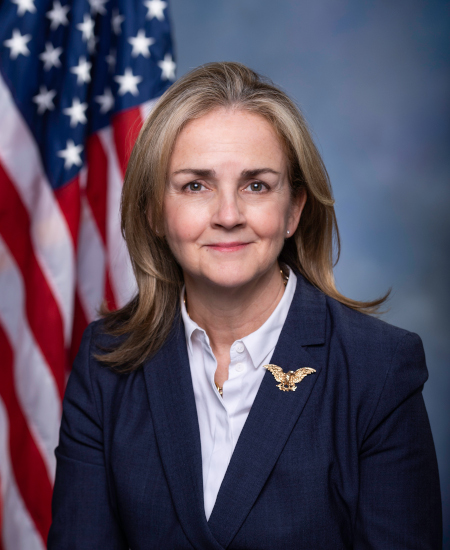
Rep. Madeleine Dean
Sponsored bills
Americans Giving Care to Elders (AGE) Act of 2021 This bill allows a tax credit for a portion of a taxpayer's expenses for eldercare. The credit applies to expenses to care for certain relatives or members of the taxpayer's household who have attained the age of 60 and require assistance with activities of daily living. Eldercare expense include amounts paid for: medical care, lodging away from home, adult day services, personal care, respite care, assistive technologies and devices (including remote health monitoring), environmental modifications (including home modifications), and counseling or training for a caregiver. The amount of eldercare expenses incurred during any year that may be taken into account for the credit may not exceed $6,000.
Armed Forces Transgender Dependent Protection Act This bill expands the policy of the Office of Special Needs within the Department of Defense to address transgender dependents. Specifically, the bill codifies the definition of a medical or educational special need to include gender dysphoria. Under the bill, the policy of the office must prohibit the assignment of a military family with special needs to a permanent duty location where the law restricts medically necessary treatment for a medical or educational special need. A member who is serving at a location when such a law is established may elect to be reassigned.
Clean Water Standards for PFAS Act of 2021 This bill directs the Environmental Protection Agency (EPA) to develop requirements and incentives to limit the discharge of perfluoroalkyl and polyfluoroalkyl substances (PFAS) into certain waters of the United States. PFAS are man-made and may have adverse human health effects. A variety of products contain the compounds, such as nonstick cookware or weatherproof clothing. Within two years, the EPA must publish water quality criteria for each measurable perfluoroalkyl substance, polyfluoroalkyl substance, and class of PFAS. The water quality criteria must determine how much of these substances can be present in water before it is likely to harm human health. Within four years, the EPA must publish a final rule that establishes, for each priority industry category specified in the bill, effluent limitations guidelines and standards for the discharge of each measurable perfluoroalkyl substance, polyfluoroalkyl substance, and class of PFAS. Under the Clean Water Act, effluent limitations restrict the quantities, rates, and concentrations of chemical, physical, biological, and other constituents which are discharged from point sources (e.g., a discernible source such as a pipe) into navigable waters, the ocean, or other specified waters. In addition, the EPA must award grants to owners and operators of publicly owned treatment works for implementing the effluent limitations guidelines and standards.
United States Army Rangers Veterans of World War II Congressional Gold Medal Act This bill provides for the award of a single Congressional Gold Medal to the U.S. Army Rangers Veterans of World War II in recognition of their dedicated service during World War II.
Filing Relief for Natural Disasters Act This bill authorizes the Internal Revenue Service to postpone federal tax filing deadlines upon the written request of a governor of a state in which an emergency or disaster has been declared. The bill also extends current mandatory extensions from 60 to 120 days. For purposes of this bill, a state includes the District of Columbia, the Commonwealth of Puerto Rico, the U.S. Virgin Islands, Guam, American Samoa, and the Commonwealth of the Northern Mariana Islands.
Increasing Access to Mental Health in Schools Act This bill directs the Department of Education (ED) to establish a grant program and a student loan forgiveness program to increase the number of school-based mental health services providers in elementary and secondary schools. First, ED must award grants to partnerships between educational agencies and graduate institutions to increase the number of school-based mental health services providers employed by low-income local educational agencies (LEAs). Grant funds may be used for specified purposes, including to provide student loan forgiveness and tuition credits and to support recruitment, hiring, and training. In addition, ED must establish a program to provide student loan forgiveness for individuals who (1) are not, and have never been, participants in the grant program established by the bill; and (2) have been employed by low-income LEAs for five or more consecutive school years as mental health services providers.
Veteran Education Empowerment Act This bill reauthorizes through FY2029 and otherwise revises a Department of Education (ED) grant program for student veteran centers. Specifically, ED must make grants to institutions of higher education (IHEs) or consortia of IHEs to establish, maintain, improve, or operate a student veteran center. A student veteran center is a dedicated space on a campus that provides students who are veterans or members of the Armed Forces with (1) a lounge or meeting space for themselves, their spouses or partners, their children, and veterans in the community; and (2) a centralized office for student veteran services that serves as a single point of contact to coordinate comprehensive support services for student veterans.
Reproductive Rights are Human Rights Act of 2021 This bill directs the Department of State to include in its annual reports on human rights in countries receiving U.S. development and security assistance a discussion of the status of reproductive rights in each country. This must include whether a country has adopted and enforced policies to (1) promote access to contraception and accurate, nondiscriminatory family planning and sexual health information; (2) provide services to ensure safe and healthy pregnancy and childbirth; (3) expand or restrict access to safe abortion services; and (4) prevent and treat sexually transmitted diseases. For each country, the reports shall also contain (1) data concerning pregnancy-related injuries and deaths; and (2) a description of the nature and extent of discrimination and violence against women, girls, and LGBTQI+ individuals in health care settings and the relevant government's response to such actions.
This resolution supports the designation of ALS Awareness Month. Amyotrophic lateral sclerosis (ALS) is a progressive neurodegenerative disease, also known as Lou Gehrig's disease, that affects nerve cells in the brain and spinal cord.