Support Recovery from Addiction Act of 2021 This bill requires states to expend at least 10% of their Substance Abuse Prevention and Treatment Block Grants on recovery support services for individuals with substance use disorders.
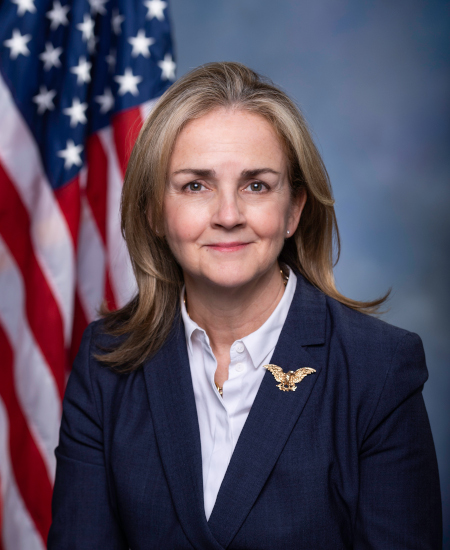
Rep. Madeleine Dean
Sponsored bills
The Pioneering Antimicrobial Subscriptions To End Up surging Resistance Act of 2021 or the PASTEUR Act of 2021 This bill authorizes the Department of Health and Human Services (HHS) to enter into subscription contracts for critical-need antimicrobial drugs, provides $11 billion in appropriations for activities under the bill, and contains other related provisions. A manufacturer of a Food and Drug Administration-approved antimicrobial drug may apply to HHS to have the drug designated as a critical-need antimicrobial, and HHS may enter into a subscription contract for such a critical-need antimicrobial. The bill imposes certain requirements related to such contracts, including a mechanism to lower payments under the contract in certain instances to limit the manufacturer's revenue from the drug. Furthermore, HHS and the Centers for Disease Control and Prevention (CDC) shall award grants to support efforts to encourage the appropriate use of antimicrobial drugs and efforts to combat antimicrobial resistance. The CDC shall also track and assess data relating to antibacterial resistance and human antibiotic use and make such data publicly available. HHS shall also establish a Committee on Critical Need Antimicrobials. The committee shall develop a list of prioritized infections for which new antimicrobial drug development is needed, among other duties. Within six years of the bill's enactment, the Government Accountability Office shall report to Congress a study on the bill's effectiveness in developing priority antimicrobial drugs.
Domestic Workers Bill of Rights Act This bill provides rights and protections for domestic workers (e.g., housekeepers, nannies, caretakers, personal assistants, and chauffeurs), including pay and leave rights, and health and safety protections. Specifically, the bill repeals the exemption of domestic live-in employees from certain minimum wage and maximum hour requirements. Employers must provide written notice of termination and provide at least 30 days of lodging and two weeks of severance pay to terminated live-in employees. Live-in employees also must be provided with reasonable access to telephone and internet service during their employment. The bill requires employers to provide domestic workers with a written agreement covering wages, sick leave, benefits, and other matters. Further, domestic workers may request and be granted changes to work schedules due to personal events. The bill also provides domestic workers with certain privacy rights, extends to domestic workers protections against discrimination in employment, and increases the federal medical assistance percentage (FMAP) for certain Medicaid-funded medical services provided by domestic workers. The Department of Labor must (1) award grants for a domestic worker national hotline for reporting emergencies, training on hazards facing domestic workers, and workforce investment activities for domestic workers; and (2) establish a Domestic Worker Wage and Standards Board to investigate standards in the domestic workers industry. Labor must publish online a document that describes the rights and protections for domestic workers under this bill.

Protecting Renters from Evictions Act of 2021 This bill extends through December 31, 2021, the order issued by the Centers for Disease Control and Prevention titled Temporary Halt in Residential Evictions To Prevent the Further Spread of COVID–19 and published on September 4, 2020.
This resolution condemns acts of violence against Afghan women and girls and any effort to limit the ability of women and girls to participate in the civic affairs of Afghanistan. It also urges the President to ensure that Afghan women, youth, and other marginalized groups are meaningfully participating and engaging in all peace talks.
Stop Copay Overpay Act This bill prohibits the Department of Defense (DOD) from charging a covered individual (i.e., individuals enrolled under the TRICARE program) a co-payment exceeding a certain rate for an outpatient visit for mental health or behavioral health under the TRICARE program, regardless of whether the visit is furnished by a specialty care provider. Specifically, the co-payment amount may not exceed the amount of a co-payment that would be charged under the TRICARE program for an outpatient visit for primary care services. During the one-year period after this bill is enacted, DOD may not increase the co-payment amount charged to a covered individual for any service (1) furnished by a specialty care provider under the TRICARE program, and (2) that is not mental or behavioral health care.
National Foundation on Fitness, Sports, & Nutrition Act or the NFFSN Act This bill permits the National Foundation on Fitness, Sports, and Nutrition to receive federal funds upon meeting grant eligibility requirements and revises procedures for the appointment of board members. The board shall consist of at least nine members and may amend the bylaws of the foundation to increase the number of members.
This bill requires the Joint Committee on the Library to obtain, and the Architect of the Capitol to permanently install in the U.S. Capitol or on the U.S. Capitol Grounds, statues honoring Associate Justices of the Supreme Court Sandra Day O'Connor and Ruth Bader Ginsburg.
Captive Primate Safety Act This bill limits the trade and possession of nonhuman primates. For example, the bill prohibits most individuals from owning a nonhuman primate as a pet.
Critically Endangered Animals Conservation Act of 2021 This bill provides statutory authority for the Critically Endangered Animals Conservation Fund, which finances a grant program to protect critically endangered species. Specifically, the bill requires the Department of the Interior to establish the fund as a separate account in the Multinational Species Conservation Fund. Critically endangered species means any animal species categorized on the International Union for Conservation of Nature (IUCN) Red List of Threatened Species as either endangered or critically endangered. The term also means any other animals species categorized on such list as data deficient or under a threat category lower than endangered if Interior determines that (1) the most recent IUCN Red List assessment indicates that the population is decreasing, or (2) such species is facing new or emerging threats.