

Dignity for Detained Immigrants Act of 2021 This bill directs the Department of Homeland Security (DHS) to establish standards for facilities holding aliens in its custody, phases out using non-DHS facilities for such purposes, and contains other related provisions. The standards shall comply with the American Bar Association's Civil Immigration Detention Standards. The DHS Office of Inspector General (OIG) shall conduct periodic unannounced inspections of each facility and shall take various actions against noncompliant facilities, including imposing fines, cancelling contracts, and closing facilities. DHS shall report to Congress any death of an alien in its custody within 24 hours and conduct an investigation within 30 days that identifies policy changes that could reduce the likelihood of such a death. DHS is prohibited from entering into contracts for third parties to operate detention facilities or alternatives to detention programs and shall terminate existing contracts within three years of the bill's enactment. The bill establishes that OIG facility inspection reports and contracts for an outside entity to operate a detention facility are records available to the public under the Freedom of Information Act. DHS shall maintain certain information relating to detained aliens, including the alien's location and whether the alien was separated from family. The bill provides for various requirements and procedures related to detaining aliens, including (1) prohibiting DHS from detaining children, (2) imposing a presumption that an alien should be released, and (3) establishing that aliens in custody shall be subject to the least restrictive conditions. The bill also abolishes mandatory detention for asylum seekers.
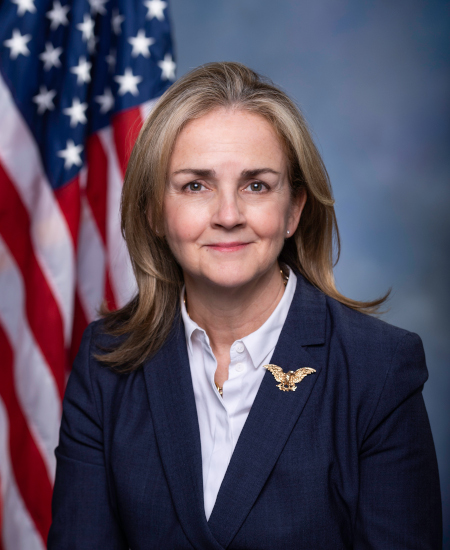
Rep. Madeleine Dean
Sponsored bills
Equal Access to Abortion Coverage in Health Insurance Act of 2021 or the EACH Act of 2021 This bill requires federal health care programs to provide coverage for abortion services and requires federal facilities to provide access to those services. The bill also permits qualified health plans to use funds attributable to premium tax credits and reduced cost sharing assistance to pay for abortion services.
Stop shielding Assets from Corporate Known Liability by Eliminating non-debtor Releases Act or the SACKLER Act This bill prohibits a bankruptcy court from releasing claims against non-debtors brought by states, tribes, municipalities, or the federal government. However, the bankruptcy court may issue a stay not exceeding 90 days regarding such a claim. Complex bankruptcies may involve creditor claims against non-debtors associated with the debtor, such as the debtor's officers, directors, or employees. Currently, in carrying out a bankruptcy plan, certain courts may release non-debtors from liability (there is a circuit split regarding this practice).
Help Extract Animals from Red Tape Act of 2021 or the HEART Act of 2021 This bill modifies notice requirements in a civil forfeiture proceeding that involves the seizure of an animal involved in animal fighting. Specifically, the government must notify interested parties of an animal's seizure within 30 days (currently, 60 days). The notice period may be extended only if a delay is warranted after considering certain factors, including the cost to the government of providing shelter for the animal, the health of the animal and the effect of a delay on its rehabilitation, any increased risk that a delay could necessitate the euthanasia of the animal, and any psychological harm incurred by the animal's owner due to the delay in disposition. Additionally, the bill authorizes amounts in the Department of Justice Assets Forfeiture Fund to be used to pay for costs associated with a seized animal, including transportation, shelter, care, veterinary services, and humane euthanasia.
Medication Access and Training Expansion Act of 2021 or the MATE Act of 2021 This bill requires health care providers, as a condition of receiving or renewing a registration to prescribe potentially addictive drugs, to complete a one-time training on managing patients with substance use disorders. In addition, the Department of Health and Human Services must award grants to health professional associations and education programs for integrating substance use disorder training into relevant curricula.
Access to Small Business Investor Capital Act This bill allows a registered investment company to exclude from the calculation of acquired fund fees and expenses those incurred indirectly from investment in a business development company. Instead, such fees and expenses may be disclosed in a footnote. Acquired fund fees and expenses is a required line item on a fund's fee schedule that provides the operating expenses of the fund.
Reducing Waste in National Parks Act This bill directs the National Park Service to establish a program for the National Park System to reduce disposable plastic products and, if applicable, eliminate the sale and distribution of disposable plastic products. Each regional office of the National Park Service must eliminate the sale of water in disposable plastic products and the sale and distribution of other disposable plastic products after consideration of several specified factors (e.g., the costs and benefits to overall operations). Each regional office must develop a proactive visitor education strategy to address visitor expectations of water availability and explain the rationale for the program and its implementation.
Revising and Expediting Actions for the Crisis Hotline for Veterans Act or the REACH for Veterans Act This bill requires the Department of Veterans Affairs (VA) to update training and procedures for call responders of the Veterans Crisis Line. Specifically, the VA must enter into an agreement with an outside organization to review the training for crisis line call responders. The VA must update the training if any deficiencies are identified after the review. Among other requirements, the VA must develop guidelines on retraining and quality management for when a call responder has an adverse event or needs improvement, annually perform a common cause analysis for identified callers to the crisis line who died by suicide in situations where the crisis line was the last point of contact, develop enhanced guidance and procedures to respond to calls to the crisis line related to substance use and overdose risk, review the current emergency dispatch standard operating procedure of the crisis line, and solicit feedback from veterans service organizations on how to conduct outreach regarding the move to 988 as the new suicide and mental health crisis hotline. Each call responder must be subject to at least two calls per month that are silently monitored by a supervisor to check for quality of conduct. The Veterans Crisis Line, Office of Mental Health and Suicide Prevention of the VA, and National Center for Patient Safety of the VA must establish quality management processes and expectations for staff of the crisis line.
This resolution expresses support for the designation of National Vitiligo Awareness Day. (Vitiligo is a chronic condition that results in the loss of pigment in patches on the skin, hair, eyes, and inside of the mouth; the condition may lead to discomfort, itching, and pain.)
Fair Drug Prices for Kids Act This bill allows states to apply the requirements of the Medicaid Drug Rebate Program to covered outpatient drugs under the Children's Health Insurance Program (CHIP).