

Safe Schools Improvement Act of 2021 This bill requires states to direct their local educational agencies (LEAs) to establish policies that prevent and prohibit bullying and harassment of elementary and secondary school students. In particular, these policies must prohibit bullying and harassment based on race, color, national origin, sex, sexual orientation, gender identity, disability, or religion. Further, LEAs must provide (1) students, parents, and educational professionals with annual notice of the conduct prohibited in their disciplinary policies; (2) students and parents with grievance procedures that target such conduct; and (3) the public with annual data on the incidence and frequency of that conduct at the school and LEA level. The Department of Education must conduct and report on an independent biennial evaluation of programs and policies to combat bullying and harassment in elementary and secondary schools. The National Center for Education Statistics must collect state data to determine the incidence and frequency of the conduct prohibited by LEA disciplinary policies.
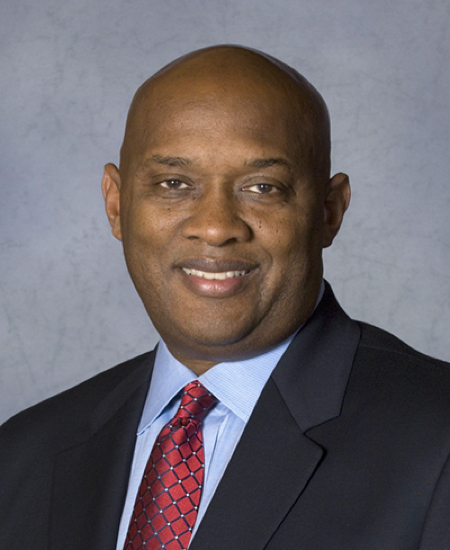
Rep. Dwight Evans
Sponsored bills
Connecting Youth to Jobs Act This bill establishes and provides funding through FY2031 for grant programs to address barriers to youth employment. The bill also excludes certain youth employment income from Supplemental Nutrition Assistance Program (SNAP) eligibility determinations. Specifically, the bill requires the Department of Labor to provide formula grants to states and local areas, and competitive grants to community-based organizations and other eligible entities, to assist in carrying out subsidized public employment programs for youth with barriers to employment. Funding to states and local areas must be used for programs that lead eligible youth to unsubsidized full-time employment or to attainment of at least one recognized postsecondary credential. Grants to eligible entities must be used to match youth with employment barriers to subsidized employment programs funded by the bill and to provide hands-on work experience. The Government Accountability Office must evaluate and report on the activities funded by the bill. The bill also excludes from SNAP income eligibility determinations any income earned by a household member who is younger than 22 years old, is an elementary or secondary school student, and lives with a parent.
Pet Safety and Protection Act of 2021 This bill revises requirements concerning the sources of dogs and cats used by research facilities. Specifically, the bill revises the list of permissible sources of dogs and cats used by research facilities to include dogs and cats obtained (1) from a licensed dealer, (2) from a publicly owned and operated pound or shelter that meets specified requirements, (3) by donation from a person who bred and raised the dog or cat or owned it for not less than one year, or (4) from a research facility licensed by the Department of Agriculture. The requirements pertaining to sources apply to dogs and cats obtained through sales, donations, or offers. Monetary penalties are established for violations.
Student Food Security Act of 2021 This bill expands the Supplemental Nutrition Assistance Program (SNAP) and establishes programs to address food insecurity among college students. Specifically, the bill permanently modifies the eligibility requirements to allow additional college students to receive SNAP benefits, and it establishes a demonstration program to allow college students to use SNAP benefits on college campuses instead of meal plans. The bill also advances implementation of certain data-sharing agreements and notifications to help students who apply for federal financial aid to also apply for and receive other federal means-tested benefits (e.g., Section 8 tenant-based housing assistance, Medicaid, and Supplemental Security Income). In addition, the bill (1) requires questions about food and housing insecurity to be incorporated into the National Postsecondary Student Aid Study, and (2) establishes a grant program to support research and address incidences of food and housing insecurity among college students.
Making Essentials Available and Lawful (MEAL) Act of 2021 This bill repeals a lifetime ban that prohibits individuals convicted of certain offenses related to the possession, use, or distribution of a controlled substance from receiving Supplemental Nutrition Assistance Program (SNAP) benefits or assistance under programs funded by Temporary Assistance for Needy Families (TANF) block grants. Any state law that imposes conditions on eligibility for SNAP benefits or TANF assistance based on an individual's conviction of such an offense shall have no force or effect. In addition, individuals who are incarcerated and scheduled to be released within 30 days shall qualify as individual households for purposes of SNAP eligibility. Under current law, unless specifically excepted, individuals residing in institutions do not constitute a household.
Supporting America's Young Entrepreneurs Act of 2021 This bill provides deferment and cancellation of federal student loans for certain founders and employees of small business start-ups. The bill also establishes a young entrepreneurs business center. First, the bill allows a founder of a small business start-up to defer student loan payments for up to three years. Next, the bill directs the Department of Education (ED) to cancel up to $20,000 in federal student loan debt for a borrower who (1) has made 24 monthly payments on the loan while employed as a founder of a small business start-up in a distressed area, (2) is approved for loan cancellation by the young entrepreneurs business center established by the bill, and (3) is not currently in default on the loan. Further, ED must cancel up to $3,000 in federal student loan debt for a borrower who (1) has made 12 monthly payments on the loan while employed full-time by a small business start-up, and (2) is not currently in default on the loan. The bill also excludes from an individual's gross income, for income tax purposes, the amount of such canceled student loan debt. Finally, the bill establishes a young entrepreneurs business center within the Small Business Administration to certify small business start-ups, identify distressed areas, and approve loan cancellations. To be certified by the center, a start-up must have a founder who is a recent graduate of an institution of higher education.
Taxpayer Protection and Preparer Proficiency Act of 2021 This bill authorizes the Department of the Treasury to regulate tax return preparers, including by sanctioning preparers for incompetence and disreputable behavior and by establishing minimum competency standards for preparers.
Tax-Free Pell Grant Act This bill excludes from gross income, for income tax purposes, any amount received as a federal Pell Grant. It also expands the definition of qualified tuition and related expenses under the American Opportunity and Lifetime Learning tax credit to include computer or peripheral equipment (up to a maximum of $1,000), child and dependent care expenses, and course materials.
Patriotic Corporations of America Act of 2021 This bill establishes new requirements for federal contracts, including Department of Defense contracts, with respect to issues of labor, environmental sustainability, taxes, and private equity firms. Specifically, the bill prohibits an executive agency from awarding a contract unless the offeror, among other requirements pays employees wages that meet certain minimums; agrees to sign a neutrality agreement with respect to efforts to form a labor organization and an agreement not to hire replacement workers in any strike; submits to the agency an actionable plan to address natural disasters and health crises, including policies and plans for paid family and medical leave and for whistleblower protections; and submits to the agency an actionable plan to recruit and promote people of color, women, LGBTQ+ people, people with disabilities, and veterans. The bill sets forth additional provisions to assure that the offeror meets specified requirements with respect to the payment of environmental penalties, federal income tax liability and financial performance, and a controlling private equity firm meeting certain labor and environmental requirements. The bill establishes specified contract preferences (e.g., in favor of an offeror that does not outsource jobs outside the United States and that has a collective bargaining agreement with employees).
Better Care Better Jobs Act This bill establishes programs and provides funds for state Medicaid programs to improve home- and community-based services (HCBS), such as home health care, personal care, case management, and rehabilitative services. Specifically, the bill provides funds for the Centers for Medicare & Medicaid Services to award planning grants, develop quality measures, and provide technical assistance to states regarding specified HCBS improvements, particularly with respect to access, utilization, and the associated workforce. The bill also increases the Federal Medical Assistance Percentage (i.e., federal matching rate) for HCBS in states that develop plans and meet specified benchmarks for improvements. The bill also makes permanent (1) the Money Follows the Person Rebalancing Demonstration Program (a grant program to help states increase the use of HCBS for long-term care and decrease the use of institutional care), and (2) certain provisions regarding Medicaid eligibility that protect against spousal impoverishment for recipients of HCBS.