

Maddy summaryThe Rebuild America's Schools Act of 2026 authorizes $20 billion annually from 2027 to 2031 to improve public school facilities nationwide. The bill provides grants to states to fund school construction, renovation, and modernization projects that focus on safety, energy efficiency, and accessibility, with priority given to schools serving high percentages of students eligible for free or reduced-price lunch. Funds cannot be used for routine maintenance, athletic facilities, or vehicles, and must meet specific environmental, safety, and energy efficiency standards. The bill also includes specific provisions for repairing school foundations affected by pyrrhotite, a mineral that causes concrete deterioration, and requires use of American-made materials for construction projects.
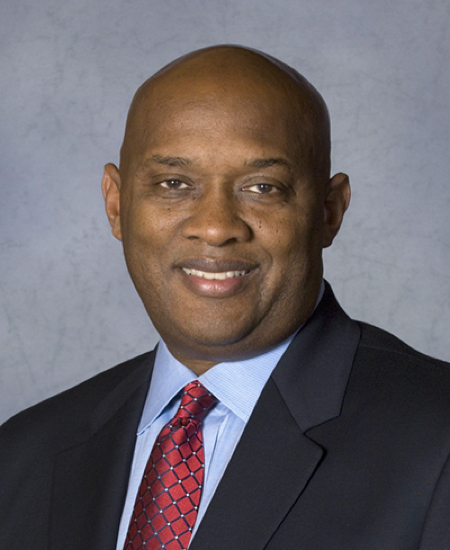
Rep. Dwight Evans
Sponsored bills
Maddy summaryHR 7265, the Vote by Mail Tracking Act, requires all government entities sending mail-in ballots for federal elections to use a standardized Postal Service barcode on ballot envelopes. This barcode enables tracking of each individual ballot, while also mandating specific envelope designs and machineability standards set by the Postal Service. The bill applies to all mail-in ballots for federal office elections starting in 2026, but excludes Federal write-in absentee ballots under the Uniformed and Overseas Citizens Absentee Voting Act. The Postmaster General must provide compliance guidance to government entities by June each year to implement the tracking system.
Maddy summaryHR 5658, the Child Care for Every Community Act, establishes a federal framework to create universal, high-quality child care and early learning programs available to all young children not yet required to attend school. The bill requires that covered children (children below compulsory school age) be entitled to participate in these programs, with no fees for low-income families and sliding-scale fees for others based on family income. Key provisions include requiring full-working-day, full-calendar-year care; setting national quality standards for staff qualifications and facilities; mandating comprehensive services including health, nutrition, and family support; and requiring coordination with schools to support children's transitions to kindergarten. The bill directly affects families seeking child care, child care providers, and local communities that would administer these programs through designated "prime sponsors."
Maddy summaryThis symbolic resolution honors school counselors' contributions and encourages Americans to observe National School Counseling Week (February 2-6, 2026) through public activities. It has no funding or policy changes - it simply expresses congressional support for recognizing school counselors' role in student development. The resolution acknowledges their work in academic, social-emotional, and career guidance but does not alter any existing laws or resources. It directly affects public awareness, not school counseling programs or budgets.
Maddy summaryHRES 973 is a House resolution stating that redesignating the John F. Kennedy Center for the Performing Arts as the "Donald J. Trump and the John F. Kennedy Memorial Center" violates the 1964 John F. Kennedy Center Act, which prohibits additional memorials at the site and designates it as the sole national memorial to President Kennedy. The resolution demands the restoration of the original signage and requires President Trump-appointed board members to resign, citing the lack of congressional authorization for the name change. It directly addresses the Kennedy Center's Board of Trustees and the Trump administration's actions, referencing the specific legal prohibition in Public Law 88-260. The resolution expresses the House's position but does not impose legal requirements.
Maddy summaryHR 6925, the Kennedy Center Protection Act, voids a December 2025 vote by the Kennedy Center's Board of Trustees that renamed the facility "The Donald J. Trump and John F. Kennedy Center for the Performing Arts." The bill mandates the immediate removal of all changed signage and restores the original name "John F. Kennedy Center for the Performing Arts" in all official references, documents, and records. It also permanently prohibits the Board from voting to rename the Center, amending existing law to restrict their authority in this regard. The bill requires the Board to report on any public or private funds used for the previous renaming effort within 30 days of enactment.
Maddy summaryThe Federal Property Integrity Act (HR 6926) prohibits federal agencies from naming, renaming, designating, or redesignating any federal building, land, or asset after the current President. This law directly affects the process of naming federal properties during a President's term in office. It would prevent the practice of honoring sitting Presidents with federal property names, such as naming a courthouse or park after the President while they are still in office. The bill does not apply to properties named before a President took office or to post-presidency naming.
Maddy summaryHR 6671, the REPAIR Infrastructure Act, reauthorizes $3 billion annually (2027-2031) for infrastructure projects that reconnect communities divided by highways or other "divisive roadway infrastructure" (like high-speed roads or viaducts). It directly affects local governments, tribes, and community groups seeking funding to rebuild access to jobs, healthcare, schools, and parks - especially in neighborhoods historically cut off by transportation projects. Key provisions prohibit using funds for new highway lanes, require projects to address historic inequities, and prioritize affordable housing, disability access, and community input. Projects must demonstrate how they prevent displacement, support low-income residents, and integrate with local land use (e.g., preserving affordable housing or limiting parking requirements).
Maddy summaryHR 7246 establishes two new bodies within the Financial Stability Oversight Council to address climate-related financial risks. It creates a Climate Financial Risk Committee to coordinate agency efforts and an Advisory Committee with 30 members (including climate scientists, financial experts, and consumer advocates, but excluding oil/gas industry representatives) to provide input. The bill requires annual reports assessing climate risks to financial stability, updates to banking supervisory guidance for institutions over $50 billion in assets, and detailed data collection on homeowners insurance underwriting by zip code. These provisions directly affect federal financial regulators (like the Fed, SEC, and FDIC), banks, insurers, and the broader financial system by mandating structured analysis of climate risks.
Maddy summaryThe Prison Libraries Act of 2026 establishes a federal grant program to fund library services in state and territorial correctional facilities, directly benefiting incarcerated individuals. It requires grantees (states/territories) to submit plans demonstrating need, including demographic data on prison populations, and prohibits using funds for non-library purposes like food or facility maintenance. Grant funds must support library services such as digital access, educational programming (including job training and post-secondary curriculum), literacy initiatives, and partnerships with public libraries. The program authorizes $10 million annually from 2026-2031, prioritizes measurable outcomes like increased literacy and post-release employment opportunities, and mandates free access to all library resources for incarcerated people.