

Law Enforcement Officers Equity Act This bill expands the definition of law enforcement officer under provisions of the Federal Employees Retirement System (FERS) and the Civil Service Retirement System (CSRS). Specifically, the bill expands the definition to include (1) federal employees whose duties encompass the investigation or apprehension of suspected or convicted criminals and who are authorized to carry a firearm; (2) Internal Revenue Service employees whose duties are primarily the collection of delinquent taxes and the securing of delinquent returns; (3) U.S. Postal Inspection Service employees; (4) Department of Veterans Affairs police officers; and (5) certain U.S. Customs and Border Protection employees who are seized-property specialists with duties relating to custody, management, and disposition of seized and forfeited property. The bill deems service performed by an incumbent law enforcement officer on or after the enactment date of this bill to be service performed as a law enforcement officer for retirement purposes. The past service of such incumbents shall be treated as service performed by a law enforcement officer for retirement purposes only if a written election is submitted to the Office of Personnel Management within five years after the enactment of this bill or before separation from government service, whichever is earlier. An incumbent who makes an election before the enactment of this bill may pay a deposit into the Civil Service Retirement and Disability Fund to cover prior service. A law enforcement officer shall not be subject to mandatory separation during the three-year period beginning on the enactment of this bill.
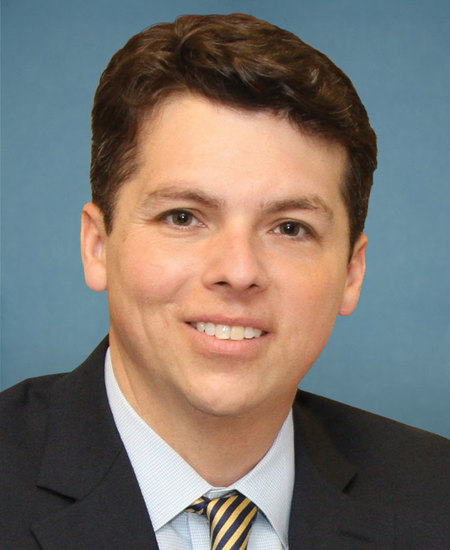
Rep. Brendan F. Boyle
Sponsored bills
COVID-19 Language Access Act This bill requires each federal agency that receives federal assistance related to the COVID-19 (i.e., coronavirus disease 2019) pandemic to translate any English language written material prepared for the general public relating to the pandemic, including COVID-19 vaccine distribution and education, into specified languages not later than seven days after such material is made available in English. Such languages shall include, at a minimum, the following: Spanish, Arabic, Cambodian, Chinese, Haitian Creole, French, Hindi, Hmong, Italian, Japanese, Korean, Laotian, Russian, Tagalog, Urdu, Vietnamese, Greek, Polish, Thai, and Portuguese.
"Six Triple Eight" Congressional Gold Medal Act of 2021 This bill directs the Speaker of the House of Representatives and the President pro tempore of the Senate to arrange for the award of a Congressional Gold Medal in honor of the women of the 6888th Central Postal Directory Battalion (commonly known as the Six Triple Eight) in recognition of their pioneering military service, devotion to duty, and contributions to increase the morale of personnel stationed in the European theater of operations during World War II. The medal shall be given to the Smithsonian Institution and made available for display and research.
Horse Transportation Safety Act of 20 21 This bill prohibits a person from transporting a horse in interstate commerce in a motor vehicle (except a vehicle operated exclusively on rail or rails) containing two or more levels stacked on top of one another. The bill prescribes civil penalties for knowing violations of such prohibition.
Saracini Enhanced Aviation Safety Act of 20 21 This bill requires the Federal Aviation Administration to issue an order requiring installation of a secondary cockpit barrier on commercial passenger aircraft.
American Family Act of 2021 This bill modifies the child tax credit to (1) make the credit fully refundable, (2) increase the amount of the credit and allow an additional credit for children who are under six years of age, (3) require the amount of the credit to be adjusted annually for inflation, and (4) require the Department of the Treasury to establish a program for making advance payments of the credit on a monthly basis.
Gym Mitigation and Survival Act of 2021 or the GYMS Act of 2021 This bill establishes a grant program to provide economic support to eligible fitness facilities in response to the COVID-19 (i.e., coronavirus disease 2019) pandemic. Specifically, the bill authorizes the Small Business Administration to make initial and supplemental grants to privately owned fitness facilities that primarily provide health or fitness services and that do not offer golf, hunting, sailing, or riding facilities. The total amount of grant funds for a recipient may not exceed $25 million, and the recipient must use these funds for payroll costs, rent or mortgage obligations, and other ordinary and necessary business expenses.
Gun Violence Prevention Research Act of 2021 This bill authorizes the Centers for Disease Control and Prevention to conduct or support research on firearms safety or gun violence prevention.
National Climate Emergency Act of 2021 or the Climate Emergency Act of 2021 This bill directs the President to declare a national emergency with respect to climate change. The President, in responding to the emergency, must ensure that the government invests in large scale mitigation and resiliency projects; makes investments that enable a racially and socially just transition to a clean energy economy by ensuring that at least 40% of investments flow to historically disadvantaged communities; avoids solutions that increase inequality or violate human rights; creates jobs that conform to labor standards that provide family sustaining wages and benefits and ensure safe workplaces; prioritizes local and equitable hiring and contracting that creates opportunities for marginalized communities; combats environmental injustice; and reinvests in existing public sector institutions and creates new public sector institutions to strategically mobilize and channel investments at the scale and pace required by the national emergency. The President shall report annually on actions taken in response to the national emergency.
This resolution calls on the President to take executive action to cancel up to $50,000 in federal student loan debt for borrowers. Further, it encourages the President to (1) ensure that borrowers have no tax liability from the debt cancellation, (2) ensure that the debt cancellation helps close racial wealth gaps, and (3) pause student loan payments and interest accumulation on federal student loans for the duration of the COVID-19 (i.e., coronavirus disease 2019) pandemic.