

Maddy summaryHR 7087, the MOMS Act, establishes a pilot program to provide evidence-based mental health support for pregnant and postpartum members of the U.S. Armed Forces and their beneficiaries (including family members). It requires the Defense Health Agency to integrate these prevention programs into existing maternal or pediatric care at military medical facilities, prioritizing diverse locations and removing barriers like childcare access. The bill mandates an advisory committee with military members, experts, and service organizations to guide implementation, along with annual reports tracking participation by demographics and a study on the program’s effectiveness. Funded at $5 million annually from 2025-2029, the pilot aims to reduce perinatal mental health conditions and improve military readiness.
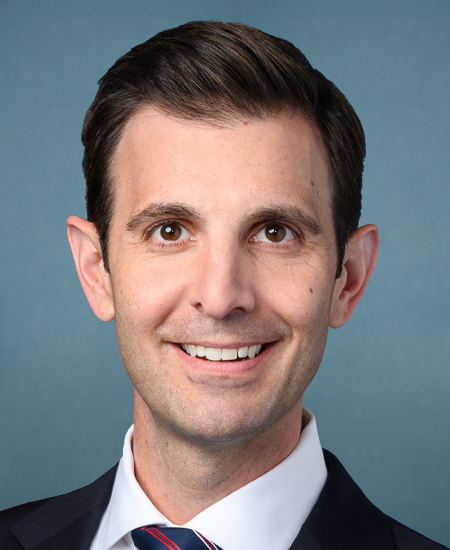
Rep. Christopher R. Deluzio
Sponsored bills
Maddy summaryHR 7056, the Access to Family Building Act, establishes federal rights for individuals to access assisted reproductive technology (ART) like IVF without unreasonable restrictions, directly affecting patients seeking fertility treatments and health care providers offering ART services. The bill prohibits states from imposing limitations on ART that are more burdensome than those for comparable medical procedures, fail to advance safety, or unduly restrict access, while allowing health and safety regulations that are necessary and least restrictive. It creates federal enforcement mechanisms, including lawsuits by the Attorney General or affected individuals to challenge violating state laws, and preempts conflicting state regulations. The bill explicitly preserves state authority over health/safety regulations and does not alter existing state insurance coverage laws for ART.
Maddy summaryThe Stronger Communities through Better Transit Act establishes a new federal grant program to improve public transportation service. It provides funding to urban areas, states, and Indian tribes to cover up to 50% of public transit operating costs (up to 80% in persistent poverty areas and 100% for Indian tribes), with requirements to report on service frequency, access to jobs, and conduct community surveys. The program mandates that a majority of funds must benefit underserved communities and areas of persistent poverty, defined as census tracts with high poverty rates or minority populations. Recipients must maintain their transit funding levels and report on improvements in access to essential services. The bill authorizes $20 billion annually for fiscal years 2024-2027.
Maddy summaryThis bill establishes federal funding to address gambling addiction through state grants and research. It directs 37.5% of annual gambling tax revenue (from Internal Revenue Code section 4401(a)(1)) to fund state programs for gambling addiction treatment and prevention, using the same allocation method as existing substance abuse block grants. It also allocates 12.5% of the same tax revenue to the National Institute on Drug Abuse for gambling addiction research. States must apply for these grants, and the Secretary of Health and Human Services must report on program effectiveness to Congress within three years of enactment. The bill directly affects states receiving funds and federal research agencies.
Maddy summaryHR 6981, the Preventing Private Paramilitary Activity Act of 2024, makes it a federal crime for unauthorized armed groups (defined as 3+ people with a command structure for public combat, security, or law enforcement-like activities) to engage in specific actions like patrolling, interfering with government operations, or intimidating people. It directly affects private paramilitary organizations not covered by exceptions, such as the National Guard, historical reenactment groups, or authorized training programs. Key provisions prohibit armed activities across state lines or using interstate commerce, with penalties including fines, up to 5 years in prison for causing bodily injury, and life imprisonment if death results. The law also allows the government or affected individuals to seek court orders to stop violations and seize related property.
Maddy summaryThe SHINE Act requires political committees (not party committees) to report large contributions of $1,000 or more received between 20 days and 48 hours before an election when they plan to spend money supporting or opposing candidates. It mandates written notice to the Federal Election Commission (FEC) about these contributions, aiming to increase transparency around last-minute funding. The requirement applies to contributions received within this narrow window before elections, regardless of whether the FEC has finalized regulations. This directly affects committees making election-related spending, ensuring disclosure of late, large contributions to help voters see who is funding campaigns at the final hour.
Maddy summaryThe Affordable Connectivity Program Extension Act of 2024 allocates $7 billion in funding for the Affordable Connectivity Program (ACP) during fiscal year 2024. The ACP provides subsidies to low-income households to help cover the cost of internet service and connected devices like laptops or tablets. This funding ensures the program can continue supporting eligible households throughout the year, with the money remaining available until fully spent. The bill extends existing program funding without changing eligibility criteria or service requirements.
Maddy summaryThis bill requires corporations to disclose political spending over $250 to shareholders in regular reports, including dates, amounts, and candidate or organization details. It also limits 501(c)(4) social welfare groups to spending no more than 10% of total expenditures (or $10 million, whichever is lower) on political activities. Corporations must file this information with the Federal Election Commission and post a link to it online within 24 hours. The rules apply to shareholder reports filed after a 90-day grace period and to taxable years beginning after enactment.
Maddy summaryHRES 946 is a symbolic House resolution recognizing "Gold Shield Families" - defined as the families of fallen police officers, firefighters, EMTs, correction officers, emergency dispatchers, and emergency service providers who died in the line of duty. The resolution formally honors their sacrifices and resilience, affirming that their hardships should not be forgotten. It includes no new funding, regulations, or policy changes; instead, it serves as a commemorative gesture expressing national gratitude. The resolution directs that a copy be sent to the President and made public to publicly recognize these families' contributions.
Maddy summaryHR 1147, the Whole Milk for Healthy Kids Act of 2023, allows schools participating in the National School Lunch Program to offer whole milk as an option during lunch. It amends the school lunch law to explicitly permit schools to serve flavored and unflavored whole milk alongside reduced-fat, low-fat, and fat-free milk choices for students. The bill also requires the Secretary of Agriculture to adjust meal regulations to account for saturated fat from whole milk, ensuring it doesn't count against meal fat limits. This change directly affects participating schools and the students who receive school lunches, expanding their milk beverage options.