Bear Protection Act of 2021 This bill prohibits the import, export, and commerce of bear viscera or related products except for limited acts carried out solely to enforce wildlife protection laws.
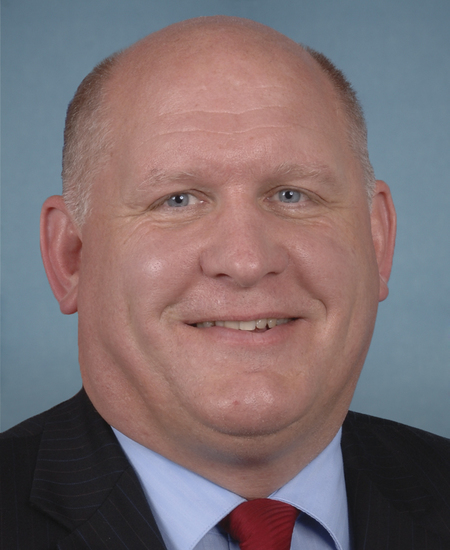
Rep. Glenn Thompson
Sponsored bills
Steel Industry Preservation Act This bill extends and modifies the production tax credit for steel industry fuel. (Under current law, steel industry fuel is a fuel that is (1) produced through a process of liquefying coal waste sludge and distributing it on coal, and (2) used as a feedstock for the manufacture of coke.) Specifically, the bill modifies the tax credit to (1) extend the credit period and the placed-in-service date for steel industry fuel producing facilities, (2) revise the definition of steel industry fuel to allow blends of coal and petroleum coke or other coke feedstock in the fuel, and (3) specify requirements for treating an owner as producing and selling steel industry fuel. The bill also allows a taxpayer that produces steel industry fuel to elect to accept an increased tax credit in lieu of certain deductions for expenses in connection with the production of steel industry fuel.
Say No to Indoctrination Act This bill prohibits the use of federal funds to teach or advance concepts that separate individuals based on race, color, or national origin; assign characteristics to individuals based on race, color, or national origin; or imply that the United States is an inherently racist country.
Recognizing and Ensuring Taxpayer Access to Infrastructure Necessary for GPS and Satellite Communications Act of 2021 or the RETAIN GPS and Satellite Communications Act of 2021 This bill places conditions on entities that deploy commercial terrestrial operations in the 1525-1559 megahertz (MHz) band or the 1626.5-1660.6 MHz band of the electromagnetic spectrum. These frequency bands are traditionally used for satellite operations, including the global positioning system (GPS). On April 19, 2020, the Federal Communications Commission approved an application for a low-power 5G wireless network in such bands despite concerns about the network interfering with GPS and other operations on adjacent bands. In its application, the entity committed to update, repair, or replace federal devices, platforms, or systems affected by its operations. This bill requires an entity (including the previously approved entity) that deploys terrestrial operations in the designated bands to reimburse a federal agency or a person for certain costs if the entity's operations interfere with or otherwise affect the operations of the agency or person. These costs may include necessary upgrades, repairs, or replacements to satellite communication devices and related equipment, as well as expenses for engineering studies and labor. Reimbursable costs owed by the entity transfer to any assignee, successor, or purchaser of its license to deploy terrestrial operations in the designated bands. The bill also expressly authorizes federal agencies to directly accept from the entity reimbursements for incurred costs.

School Milk Nutrition Act of 20 21 This bill revises requirements for milk provided by the National School Lunch Program of the Department of Agriculture. The bill permits schools participating in the program to offer students low-fat flavored milk.
This resolution denounces socialism and opposes the implementation of socialist policies in the United States.
Protecting Life on College Campus Act of 2021 This bill prohibits the award of federal funds to an institution of higher education (IHE) that hosts or is affiliated with a school-based service site that provides abortion drugs or abortions to its students or to employees of the IHE or the site. An IHE that hosts or is affiliated with a site must, in order to remain eligible for federal funds, annually certify that the site does not provide abortion drugs or abortions to students or employees.
Entrepreneurs Need Timely Replenishment (for) Eating Establishments Act or the ENTRÉE Act This bill provides FY2021 supplemental appropriations for the Restaurant Revitalization Fund and modifies requirements related to administration of the fund. The fund was established in response to COVID-19 to make grants to eligible food and beverage purveyors for covering specified costs such as payroll, operational expenses, and paid sick leave. The bill correspondingly rescinds unobligated amounts previously made available for the Economic Injury Disaster Loan Program and coronavirus state and local fiscal recovery funds. Further, the bill requires the Small Business Administration (SBA) to (1) review and process grant applications in the order in which they are received; (2) impose requirements on applicants that reduce waste, fraud, and abuse; and (3) submit and report monthly on an oversight and audit plan outlining the SBA's policies, procedures, and activities with respect to these grants.
Association Health Plans Act of 2021 This bill provides statutory authority for certain short-term, limited-duration health insurance plans and association health plans. The bill permits short-term, limited-duration plans to provide coverage for a period of less than 12 months, not including extensions. Under current law, such plans are exempt from certain market requirements of the Patient Protection and Affordable Care Act, such as coverage of individuals with preexisting conditions. The bill further permits groups or associations of employers to sponsor fully insured group health plans as if they were employers. Such plans may not discriminate based on the health factors of any prospective plan participant for the purpose of granting an employer's membership in the association or determining a participant's eligibility for benefits or premium amounts.
Helping Ensure Access to Local TeleHealth Act of 2021 or the HEALTH Act of 2021 This bill modifies requirements relating to Medicare coverage of telehealth services, including services that are furnished by federally qualified health centers (FQHCs) and rural health clinics (RHCs). Specifically, the bill expands coverage to include audio-only telehealth services. It also permanently allows FQHCs and RHCs to serve as the distant site (i.e., the location of the health care practitioner) for telehealth services and excludes such services from certain geographic restrictions. Payment must be made in the same manner as for non-telehealth services, rather than in accordance with a separate methodology determined by the Centers for Medicare & Medicaid Services.