

Maddy summaryThe Saracini Enhanced Aviation Safety Act of 2023 requires the Federal Aviation Administration (FAA) to mandate secondary cockpit barriers on all commercial passenger aircraft operating under standard airline regulations. Specifically, it directs the FAA to issue an order requiring installation of these barriers within 18 months of the law's enactment. This applies to most major airlines operating scheduled passenger flights in the U.S. The key provision is the new safety requirement for barriers to prevent unauthorized cockpit access during flights. The law directly affects commercial airlines and their aircraft, focusing on a concrete operational safety change without specifying cost or implementation details.
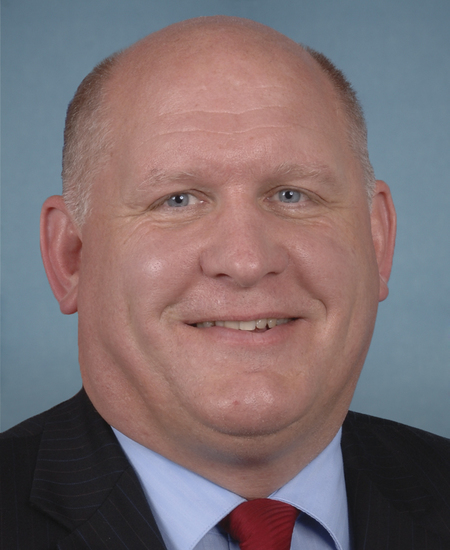
Rep. Glenn Thompson
Sponsored bills
Maddy summaryHR 800, the "DO NOT Call Act of 2023," amends the Telephone Consumer Protection Act of 1991 to increase penalties for intentional telemarketing violations. It adds criminal penalties of up to one year in prison or fines for willfully and knowingly making unwanted calls, with harsher penalties (up to three years) for severe offenses like sending over 100,000 calls in 24 hours, causing $5,000+ in damages, or committing calls to further a felony. The bill also raises civil penalties for providing false caller identification information from $10,000 to $20,000 per violation. This directly affects telemarketers, debt collectors, and businesses making unsolicited calls, increasing legal consequences for repeated or large-scale violations.
Maddy summaryHR 621, the PART Act, requires catalytic converters on vehicles to be stamped with a visible vehicle identification number (VIN) using special high-visibility paint to deter theft. It creates a federal grant program to help auto dealers, repair shops, and law enforcement implement this stamping at no cost to vehicle owners. The bill also mandates that sellers of catalytic converters retain buyer identification and vehicle details for two years, and adds new federal criminal penalties for stealing or trafficking in catalytic converters.
Maddy summaryHRES 111 is a non-binding resolution supporting the designation of February 8, 2023, as "Boy Scouts of America Day" to commemorate the organization's 113th anniversary. The resolution highlights the Boy Scouts of America's founding in 1910, its mission to develop youth character and leadership, and its community service contributions (including over 17.7 million service hours in 2022). It does not create new laws, impose obligations, or affect any specific group directly - it is purely a symbolic gesture by the House of Representatives.
Maddy summaryHR 936, the Tanning Tax Repeal Act of 2023, repeals a 10% federal excise tax on indoor tanning services that was originally enacted under the Affordable Care Act. This bill directly affects tanning salons and businesses providing indoor tanning services by eliminating their obligation to pay this tax on customer services. The repeal applies to services performed after the bill's enactment date, removing the tax provision from the Internal Revenue Code. The bill does not create new requirements or alter other tax policies, solely removing this specific tax.
Maddy summaryHR 914, the Simplifying Grants Act of 2023, requires federal agencies to simplify grant application processes for small local governments (defined as those in areas with fewer than 50,000 people, per Census standards). Within 180 days of enactment, agencies must review and simplify complex grant requirements for existing programs and ensure new programs are designed with simplicity from the start. Agencies must also publish public checklists for each grant step and report annually to Congress on implementation progress, including how much technical assistance was provided and how many grants were awarded to small communities versus larger ones. This bill directly affects counties, towns, and other small local governments that receive federal grants but face bureaucratic hurdles.
Maddy summaryHRES 110 is a non-binding resolution supporting the designation of "Career and Technical Education (CTE) Month" to recognize CTE's role in preparing students for high-demand careers. It encourages educators, school counselors, and parents to promote CTE as a respected pathway for students seeking credentials in fields like healthcare, technology, and skilled trades. The resolution highlights CTE's benefits, including reducing high school dropout rates and aligning education with workforce needs, without creating new funding or policy changes. It directly affects schools, educators, and students by affirming CTE's value in workforce development.
Maddy summaryThis bill (HR 333) corrects an inaccurate title and updates military retirement pay rules for veterans. It allows military retirees with service-connected disabilities (including those rated under 50%) to receive both their full military retirement pay and VA disability compensation without reduction. Specifically, it removes the requirement that veterans must have a 50% disability rating to keep both payments and adjusts calculations for retirees with fewer than 20 years of service. The change directly affects military retirees receiving VA disability benefits who previously had their retirement pay reduced. The bill takes effect after enactment for payments starting in the following month.
This resolution condemns Iranian state-sponsored terrorist attacks against U.S. citizens and officials and Iranian dissidents. The resolution also expresses support for the people of Iran who are legitimately defending their rights for freedom against repression and condemns the killing of Iranian protesters by the Iranian regime.
Maddy summaryHCONRES 13 is a concurrent resolution expressing Congress's support for maintaining the current policy that prohibits imposing new fees on local radio stations for playing music. It states that Congress should not impose any performance fee, tax, royalty, or charge on local radio stations for broadcasting sound recordings over the air, or on businesses like bars and restaurants that play music publicly. The resolution argues that such fees would harm local radio stations - critical sources for emergency information and community programming - and jeopardize the economic model that has supported both radio and the music industry for decades. This resolution does not create new law but formally opposes potential legislative changes to the existing fee structure.