Maddy summaryHRES 1453 is a symbolic resolution designating September 2024 as "National Workforce Development Month." It expresses the House of Representatives' support for recognizing efforts to strengthen workforce skills and career opportunities across the U.S. The resolution highlights workforce challenges (like unfilled jobs and unemployment disparities) but does not create new laws, allocate funds, or change existing programs. It serves only to acknowledge the importance of workforce development for economic growth and worker stability.
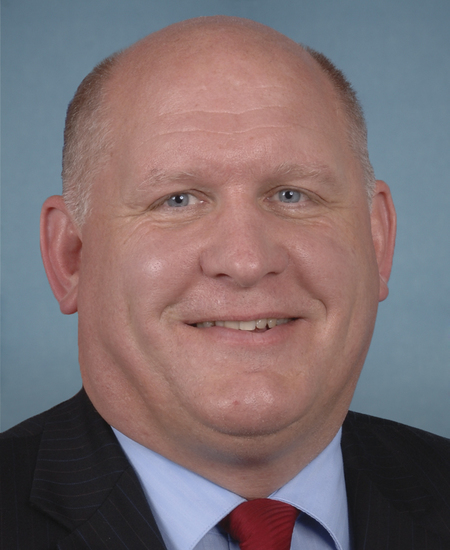
Rep. Glenn Thompson
Sponsored bills
Maddy summaryHRES 1447 is a non-binding resolution expressing support for designating the week of September 22-28, 2024, as "Gold Star Families Remembrance Week." It directly honors families who lost loved ones while serving in the U.S. military (referred to as "Gold Star Families") and families of veterans. The resolution encourages Americans to observe the week by performing community service and celebrating the sacrifices of fallen service members, without creating new laws or obligations. It aligns with existing recognition of Gold Star Mother’s Day (the last Sunday in September) but expands the focus to all affected families.
Maddy summaryHRES 1442 is a symbolic resolution expressing the U.S. House of Representatives' support for designating the week beginning September 8, 2024, as "Celebrate Community Week." It recognizes the collaborative community service efforts of four international nonprofit organizations: Kiwanis International, Lions Clubs International, Optimist International, and Rotary International. The resolution formally acknowledges these groups' annual week of service projects focused on youth development, health, education, and community needs, without creating new laws or funding. It serves as a non-binding gesture of appreciation for their volunteer work, which collectively involves millions of service projects globally.
Maddy summaryThis symbolic resolution expresses congressional support for designating September 29, 2024, as "Veterans of Foreign Wars of the United States Day" to honor the organization's 125th anniversary. It requests the President issue a proclamation encouraging government agencies and the public to observe the day with ceremonies, though it creates no new laws or policy changes. The resolution recognizes the VFW's historical service to veterans but does not directly affect any individuals or programs.
Maddy summaryThis bill increases the tax credit for railroad track maintenance from $3,500 to $6,100 per mile of track. It adds an inflation adjustment starting in 2026, linking future credit amounts to the cost-of-living index. The bill also extends the qualifying period for maintenance expenditures from January 1, 2015, to January 1, 2024. These changes apply to tax years beginning after December 31, 2024, directly affecting railroad companies that maintain tracks.
Maddy summary# Summary of Proposed Digital Assets and Financial Technology Legislation This comprehensive legislation establishes a new regulatory framework for digital assets and financial technology in the United States, creating a balanced approach that promotes innovation while protecting consumers and maintaining market integrity. Key components include: 1. **Digital Asset Regulatory Structure**: - New requirements for digital commodity exchanges, including transparency standards, customer asset protection, and operational safeguards - Qualified digital commodity custodians with specific regulatory requirements - Digital commodity brokers and dealers with registration and operational standards 2. **New Regulatory Bodies**: - FinHub (Strategic Hub for Innovation and Financial Technology) within the SEC to foster responsible innovation - LabCFTC within the CFTC to serve as an information platform for financial technology innovation - CFTC-SEC Joint Advisory Committee on Digital Assets to promote regulatory harmonization 3. **Mandatory Studies**: - Study on decentralized finance (DeFi) examining its nature, risks, benefits, and integration with traditional markets - Study on non-fungible digital assets (NFTs) analyzing their market structure, benefits, and risks - Study on financial market infrastructure improvements to facilitate tokenized securities and derivatives 4. **Modernization of Regulatory Approach**: - Updates to SEC's mission to explicitly include "innovation" alongside "efficiency" - Enhanced information sharing between agencies - Clearer definitions of ancillary activities that don't require full regulatory registration The legislation aims to create a regulatory environment that encourages responsible innovation in digital assets while maintaining market integrity, consumer protection, and financial stability. It establishes a comprehensive framework for regulating digital commodities as a distinct asset class with specific requirements for market participants.

This resolution supports the designation of National FFA Week. It also (1) recognizes the important role of the National FFA Organization (Future Farmers of America) in developing the next generation of globally conscious leaders who will change the world; and (2) celebrates the 10th anniversary of the Give the Gift of Blue program, which has donated more than 17,000 FFA blue jackets to FFA members in need.
Maddy summaryThis bill amends the Older Americans Act to explicitly address loneliness among seniors by adding it to existing provisions about social isolation. It requires the federal government to prepare a report within five years, examining how current programs tackle loneliness's health impacts, geographic prevalence, and preventive services. The report must also analyze multigenerational family connections' role in reducing loneliness and recommend policy improvements. The bill directly affects older individuals served by programs under the Older Americans Act, focusing on health outcomes linked to social isolation. It does not create new funding but directs existing programs to coordinate services addressing loneliness.
Maddy summaryThis resolution aims to block a rule issued by the National Highway Traffic Safety Administration (NHTSA) that sets new fuel efficiency standards for passenger cars, light trucks (starting in 2027), and heavy-duty pickup trucks/vans (starting in 2030). If passed, it would prevent this specific rule from taking effect by disapproving it under a congressional review process. The rule directly affects vehicle manufacturers by requiring them to meet these updated fuel economy targets for future model years. This is a procedural resolution, not a new law, focused solely on halting the implementation of the existing NHTSA rule.
Maddy summaryHJRES 127 is a congressional disapproval resolution targeting a Securities and Exchange Commission (SEC) rule requiring public companies to standardize climate-related financial disclosures. It seeks to block the SEC’s March 2024 rule (89 Fed. Reg. 21668), which would mandate consistent reporting on climate risks for investors. If passed, this resolution would prevent the SEC rule from taking effect, directly affecting publicly traded companies required to comply with the proposed disclosure standards. The bill uses a specific congressional process under Title 5, U.S. Code, to nullify the rule without creating new regulations.