

Maddy summaryHR 1502 authorizes the creation of a Congressional Gold Medal to honor the volunteers and communities (primarily from Nebraska, Colorado, and Kansas) who supported the North Platte Canteen during World War II. The bill directs the Treasury Secretary to design and strike the medal, which will be presented to the individuals who contributed to the canteen’s operations and then permanently displayed at the Lincoln County Historical Museum in North Platte, Nebraska. It also permits the sale of bronze duplicates to cover production costs, with proceeds going to the U.S. Mint. This is a commemorative measure recognizing historical service, not a policy change affecting current laws or programs.
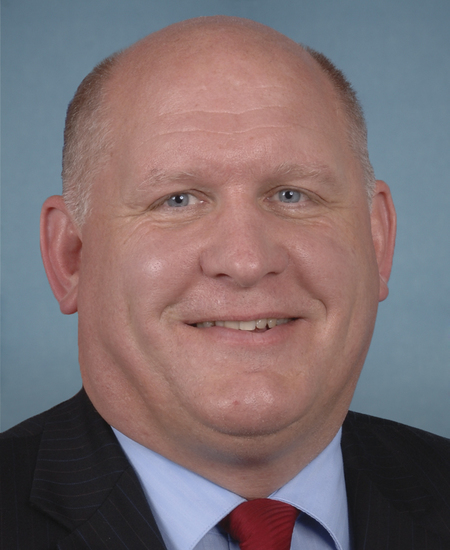
Rep. Glenn Thompson
Sponsored bills
Maddy summaryHR 1490, the TRIO Access Act, allows colleges to use tax return information from FAFSA applications for specific federal student support programs. It amends tax law (Internal Revenue Code §6103) and the Higher Education Act to permit institutions to share this data with students applying for TRIO programs like Student Support Services (Section 402D) and the McNair Post-Baccalaureate Program (Section 402E). The bill clarifies that tax information collected for financial aid may also be used to determine eligibility for these TRIO programs. This change directly affects colleges and students seeking support through these specific federal initiatives.
Maddy summaryThis bill makes permanent Medicare telehealth services that allow patients to receive care from home, removing temporary pandemic-era restrictions. It eliminates geographic limitations and expands where telehealth can originate, so beneficiaries in rural or remote areas can consistently access virtual care without needing to travel. The key change modifies Medicare rules to remove expiration dates tied to public health emergencies, ensuring home-based telehealth remains covered indefinitely. This directly affects Medicare beneficiaries, particularly seniors and people with mobility challenges in underserved communities. The policy change simplifies access to routine care without requiring in-person visits.
Maddy summaryHR 1363 designates the "Honor and Remember Flag" (created by Honor and Remember, Inc.) as the official symbol honoring U.S. military members who died in service. It requires federal locations - including the Capitol, White House, military memorials, VA medical centers, and all post offices - to display this flag on specific days like Memorial Day, Veterans Day, and Flag Day. The bill mandates visible public display at these locations and sets deadlines for implementing the requirement (180 days for regulations, 30 days for flag procurement). It does not alter military benefits or create new programs, focusing solely on symbolic recognition through flag display.
This concurrent resolution declares that Congress should not impose any new performance fee, tax, royalty, or other charge relating to the public performance of sound recordings on a local radio station for broadcasting sound recordings over the air, or on any business for such public performance of sound recordings.
Maddy summaryHRES 133 is a symbolic House resolution supporting the designation of February 15-22, 2025, as "National FFA Week." It recognizes the National FFA Organization’s role in developing student leadership through agricultural education and celebrates two milestones: the 90th anniversary of the New Farmers of America (which served Black students until merging with FFA in 1965) and the 75th anniversary of FFA’s federal charter (granted by Congress in 1950). The resolution has no policy impact or funding provisions - it simply expresses congressional support for these observances. It directly affects no individuals or entities, as it is a non-binding gesture honoring an educational organization.
Maddy summaryHR 1303, the Protecting America’s Seniors’ Access to Care Act, would block the federal government from enforcing a 2024 rule requiring nursing homes to meet minimum staffing standards and mandating Medicaid programs to report payment transparency details. This bill directly affects long-term care facilities and Medicaid programs by preventing the implementation of these specific requirements. The legislation prohibits the Secretary of Health and Human Services from carrying out the rule published on May 10, 2024, which was designed to improve care quality and accountability in senior healthcare. It stops the rule from taking effect without creating new policies or regulations.
Maddy summaryHR 1301, the Death Tax Repeal Act, would eliminate the federal estate tax and generation-skipping transfer tax for estates of individuals dying on or after its enactment date. It directly affects individuals inheriting significant assets, as it removes taxes on estates exceeding $10 million (adjusted for inflation) and repeals taxes on large transfers between generations. The bill modifies the gift tax by establishing a $10 million lifetime exemption with annual inflation adjustments, replacing previous tax brackets. It applies to estates, gifts, and transfers occurring on or after the bill's effective date.
Improving Care and Access to Nurses Act or the I CAN Act This bill allows other health care providers besides physicians (e.g., nurses) to provide certain services under Medicare and Medicaid. Among other changes, the bill (1) allows a nurse practitioner or physician assistant to fulfill documentation requirements for Medicare coverage of special shoes for diabetic individuals; (2) expedites the ability of physician assistants, nurse practitioners, and clinical nurse specialists to supervise Medicare cardiac, intensive cardiac, and pulmonary rehabilitation programs; and (3) allows nurse practitioners to certify the need for inpatient hospital services under Medicare and Medicaid.
Maddy summaryHR 1341, the DRILL Now Act, prevents three regional river basin commissions (Susquehanna, Delaware, and Potomac) from creating or enforcing their own regulations on hydraulic fracturing. The bill amends existing law to require these commissions to rely solely on state-level regulations for fracking, overriding their previous authority under basin compacts. This directly affects the commissions and states within the Susquehanna, Delaware, and Potomac River basins by shifting regulatory control from regional bodies to individual states. The key provision prohibits the commissions from finalizing, implementing, or enforcing any fracking-related rules issued under their own authority.