

Maddy summaryHRES 760 is a symbolic House resolution supporting the designation of September 22-26, 2025, as "National Hazing Awareness Week." It does not create new laws or requirements but formally acknowledges the harm of hazing in college settings and encourages ongoing prevention efforts. The resolution references existing laws like the Stop Campus Hazing Act (2024) and highlights statistics on hazing prevalence and its deadly consequences, including listed cases of student deaths. It urges the public to observe the week by promoting hazing awareness and prevention. This resolution directly affects college communities and aims to foster safer campus environments through awareness, not policy change.
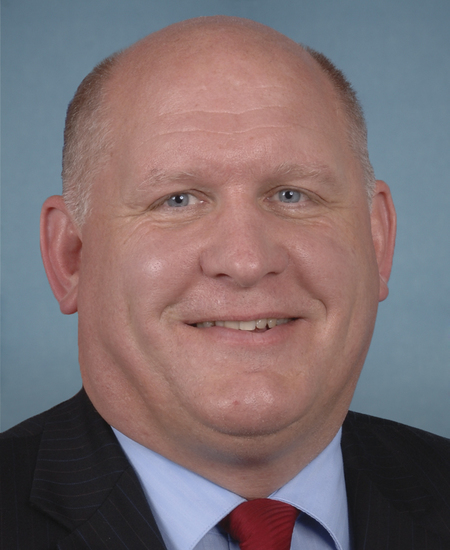
Rep. Glenn Thompson
Sponsored bills
Maddy summaryThis bill amends existing law to expand access to mental health services for students in career-focused education programs. It updates the definition of "covered institution" to include both area career and technical education schools (under the Perkins Act) and traditional colleges, ensuring these schools qualify for the same federal mental health and substance use disorder services already available to other higher education institutions. The change directly affects CTE students by making their schools eligible for existing federal funding and support mechanisms. The bill makes no new funding commitments but adjusts legal language to include CTE programs in current service provisions.
Maddy summaryHCONRES 49 is a non-binding resolution expressing Congress's view that future U.S. trade agreements should include provisions for reasonable access and collaboration with partner nations to aid in locating and recovering U.S. military personnel still missing from past conflicts. It directly affects countries negotiating new trade deals with the U.S., requiring them to facilitate search and recovery efforts for service members unaccounted for since wars like Vietnam, WWII, and the Korean War. The key mechanism is mandating that trade agreements incorporate these recovery access provisions as a standard requirement. This resolution does not create new legal obligations but urges future trade negotiations to prioritize this humanitarian effort.
Maddy summaryHRES 719 is a House resolution honoring Charles "Charlie" James Kirk, the founder of Turning Point USA who was assassinated on September 10, 2025. The resolution condemns his assassination and all political violence, extends condolences to his family, and calls on Americans to reject violence while promoting civil discourse. It specifically recognizes Kirk's legacy as a defender of constitutional principles and his role in inspiring youth through free speech and faith-based civic engagement. As a commemorative resolution, it does not enact policy changes but formally expresses the House's stance on honoring his life and legacy.
Maddy summaryThis bill authorizes the posthumous presentation of a Congressional Gold Medal to Welles Remy Crowther, a volunteer firefighter and equities trader who died saving others during the September 11, 2001, attacks. The medal, designed by the Treasury Secretary, will be given to Crowther’s mother, Alison Crowther, following a formal presentation by congressional leaders. The bill also permits the U.S. Mint to sell bronze duplicates of the medal at cost to cover production expenses. It is a purely commemorative measure with no legislative or regulatory impact.
Maddy summaryThis bill requires health plans and insurers to create a clear, timely process for patients or doctors to request exceptions when step therapy protocols (which force patients to try cheaper drugs first) might harm them. It mandates approval for exceptions in six specific cases, such as when prior treatments failed, delaying care risks severe harm, or the required drug causes adverse reactions. Plans must respond within 72 hours (24 hours for emergencies) and cover the requested drug for at least one year if approved. Additionally, health plans must report annual data on exception requests, approvals, denials, and reasons to the government for transparency.
Maddy summaryHRES 744 is a non-binding House resolution supporting the designation of September 21-27, 2025, as "Gold Star Families Remembrance Week." It honors families who lost members in military service (Gold Star Families) and families of veterans, recognizing their sacrifices. The resolution encourages Americans to observe the week through community service and by celebrating the lives of those who died defending the U.S. It does not create new laws or policies but formally recognizes these families annually. This is a commemorative measure, not a legislative change.
Maddy summaryHRES 742 is a ceremonial resolution recognizing the 250th anniversary of the U.S. Navy's founding on October 13, 1775, when the Continental Congress established the first U.S. naval force. It formally acknowledges the Navy's historical role in protecting American interests and its current global presence (over 290 ships, 3,700 aircraft, and 500,000 personnel). The resolution expresses appreciation for Navy personnel past and present and reaffirms congressional support for the Navy as a key element of national defense and global stability. As a commemorative resolution, it has no policy or funding impact - it serves only to honor the Navy's legacy.
Maddy summaryThis bill, the Protect Adoptees and American Families Act (PAAF Act), automatically grants U.S. citizenship to certain internationally adopted children who meet specific criteria. It directly affects children adopted by U.S. citizen parents before age 18, who were living in the U.S. under legal custody before turning 18, and who were not already U.S. citizens. The key mechanism provides automatic citizenship for those already residing in the U.S. on the bill's effective date, and for those outside the U.S. upon lawful entry, subject to a criminal background check for visa issuance. It clarifies citizenship eligibility under immigration law without requiring additional naturalization steps for qualifying adoptees.
Maddy summaryThis bill permanently expands Medicare telehealth coverage for Federally Qualified Health Centers (FQHCs) and Rural Health Clinics (RHCs). It allows audio-only telehealth visits (not requiring video) to be covered under Medicare and removes the previous rule requiring patients to be at specific locations (like clinics) to access these services. As a result, Medicare beneficiaries in rural or underserved areas served by FQHCs/RHCs can now receive covered telehealth care from any location, including their homes, without location restrictions. The bill also ensures these clinics receive standard reimbursement rates for telehealth services, treating them the same as in-person visits for payment purposes.