

Foreign Gain-of-Function Research Prevention Act of 2021 This bill prohibits the use of federal funds to conduct or support gain-of-function research involving potential pandemic pathogens by China, Russia, Iran, North Korea, or other foreign adversaries. Gain-of-function research is any research that is anticipated to confer an attribute on a pathogen to enhance its pathogenicity or transmissibility in mammals. If the Department of State finds that an entity has used funds for prohibited research, the entity may not receive any federal funding for a period of five years.
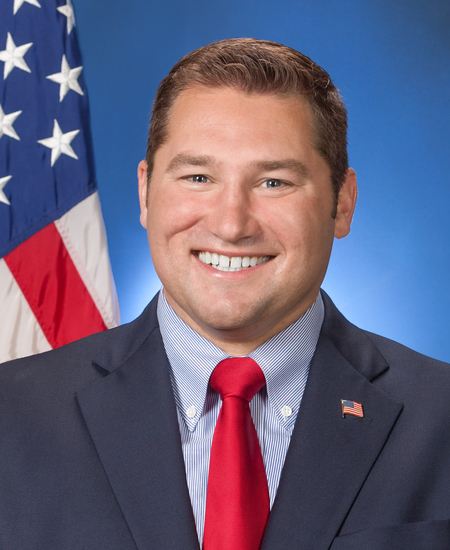
Rep. Guy Reschenthaler
Sponsored bills
Puppy Protection Act of 2021 This bill requires the Department of Agriculture to expand standards that govern the humane handling, care, treatment, and transportation of animals to include new requirements for commercial dog dealers. Specifically, the standards must require dog dealers to provide to dogs adequate housing, exercise, and veterinary care; appropriate and nutritious food; continuous access to potable water; and meaningful socialization with humans and compatible dogs for at least 30 minutes each day. The standards must also include requirements for breeders to use safe breeding practices and make all reasonable efforts to find humane placement for retired breeding dogs.
Traditional Cigar Manufacturing and Small Business Jobs Preservation Act of 2021 This bill exempts traditional large and premium cigars from Food and Drug Administration (FDA) regulation and FDA-assessed user fees.
National Strategic and Critical Minerals Production Act of 2021 This bill sets forth environmental review requirements for the mine permitting process and limits the review to 30 months. Under the bill, projects that provide minerals vital to job creation, energy infrastructure, coastal resilience and restoration, economic competitiveness, and national security must be considered to be infrastructure projects as described in Executive Order 13807, titled Establishing Discipline and Accountability in the Environmental Review and Permitting Process for Infrastructure Projects and dated August 15, 2017.This order directed agencies to ensure that the environmental review and permitting process for infrastructure is coordinated, predictable, and transparent. The Bureau of Land Management (BLM)or the Forest Service must appoint a project lead for the mine permitting process to coordinate with other agencies to ensure that the agencies minimize delays, set and adhere to timelines for completion of the permitting process, set clear permitting goals, and track progress against goals. The project lead must also determine the amount of financial assurance required for reclamation of a mineral exploration or mining site. The bill considers the requirements of the National Environmental Policy Act of 1969to be satisfied if the BLM or the Forest Service determines that the agency issuing the permit will address specified factors, such as environmental impacts of the permit or alternatives to issuance of the permit. Additionally, the bill exempts projects on National Forest System land from regulations that prohibit timber tree cutting and road construction in areas without roads.
Reopening to address Every COmplete Record request for Devoted Servicemembers Act of 2021 or the RECORDS Act of 2021 This bill directs the Office of the Archivist of the United States to take specified steps to address record request backlogs. Specifically, the office must take actions to ensure that (1) the number of individuals employed by the National Personnel Records Center is equal to or exceeds the number of such individuals employed on March 2, 2020, and (2) the percentage of such individuals regularly reporting to work in person is equal to or exceeds the percentage of such individuals regularly reporting to work in person on that date. The office shall submit to specified congressional committees a report that provides a comprehensive plan to address the record request backlog of the National Personnel Records Center and improve the efficiency and responsiveness of operations at the center, identifies measurable goals with respect to the comprehensive plan and metrics for tracking progress toward such goals, and describes strategies to prevent future record request backlogs.
Taiwan Defense Act of 2021 This bill establishes that it shall be U.S. policy to maintain the ability of the U.S. Armed Forces to defeat attempts by China to invade and seize control of Taiwan before U.S. forces can respond effectively.
Shark Fin Sales Elimination Act of 20 21 This bill addresses the sale of shark fins and the inclusion of rays and skates in the Seafood Traceability Program. The Seafood Traceability Program has data reporting and recordkeeping requirements at the time of entry for imported fish or fish products entered into U.S. commerce. The bill makes it illegal to possess, buy, or sell shark fins or any product containing shark fins, except for certain dogfish fins. A person may possess a shark fin that was lawfully taken consistent with a license or permit under certain circumstances. Penalties are imposed for violations under the Magnuson-Stevens Fishery Conservation and Management Act. The Department of Commerce must revise its regulations to include rays and skates as species that are subject to the Seafood Traceability Program.
This bill establishes the Alzheimer's Research and Caregiving Trust Fund to pay for research regarding the treatment or cure of Alzheimer's disease and for education, counseling, respite, and other supportive services for individuals with Alzheimer's disease and their families, caregivers, and health care professionals. The bill allows taxpayers an election to contribute a whole dollar amount to the trust fund when they file their tax returns.
Trillion Trees Act This bills establishes a variety of requirements and incentives to plant trees and conduct other land management practices for the purposes of capturing and storing carbon in domestic and international trees and forests. Additionally, the bill provides incentives to research or develop other carbon sequestration tools. Specifically, the bill directs the Department of Agriculture (USDA) to set targets to increase forest carbon stock through January 1, 2100, for the purposes of sequestering and storing carbon in U.S. forests. It also establishes and provides funding for the Trillion Trees Challenge Fund to provide grants to nonfederal entities for activities related to reforestation efforts on public or private lands. In addition, it raises the cap on the Reforestation Trust Fund to enhance forest health in the National Forest System and requires the USDA to establish a Tree City USA Grant Program. The bill also allows the U.S. Agency for International Development to enter into an agreement with a nonprofit organization to establish an International Forest Foundation to promote reforestation and prevent deforestation. Additionally, it establishes requirements and incentives to address seedling shortages and support nurseries. Finally, the bill provides market incentives to research or develop other carbon sequestration tools relating to biochar, sustainable building practices, biochemical and bioplastic products, and biomass energy.
Flexible Financing for Rural America Act This bill allows rural utility service providers to submit to the Department of Agriculture (USDA) a request to adjust the interest rate or modify the terms of certain loans. The request shall include a report summarizing how the adjustment or modification will assist the borrower in providing critical utility services to a rural community. Specifically, on receipt of a request, USDA or the Department of the Treasury (in the case of a loan owned by the Federal Financing Bank) must adjust the interest rate on the loan to match certain interest rates for obligations of comparable maturity to the term remaining on the loan (or a higher rate requested by the borrower), and make modifications to the loan terms as necessary to address changes in the financial position of the borrower due to the COVID-19 public health emergency and to promote the financial sustainability of the borrower. In carrying out the adjustments or modifications, USDA or Treasury shall not impose or collect any fee from, or impose any penalty on, a borrower. The bill also provides funding to implement the adjustments and modifications and for the liquidation of residual intragovernmental amounts owed by the Federal Financing Bank in connection with certain loans.