

Back the Blue Act of 2021 This bill establishes new criminal offenses for killing, assaulting, and fleeing to avoid prosecution for killing a judge, law enforcement officer, or public safety officer. Additionally, the bill expands the list of statutory aggravating factors in death penalty determinations to also include the killing or attempted killing of a law enforcement officer, judge, prosecutor, or firefighter or other first responder; broadens the authority of federal law enforcement officers to carry firearms; and limits federal court review of challenges to state court convictions for killing a public safety officer or judge. Finally, it directs the Department of Justice to make grants to law enforcement agencies and nongovernmental organizations to promote trust and improve relations between law enforcement agencies and the communities they serve.
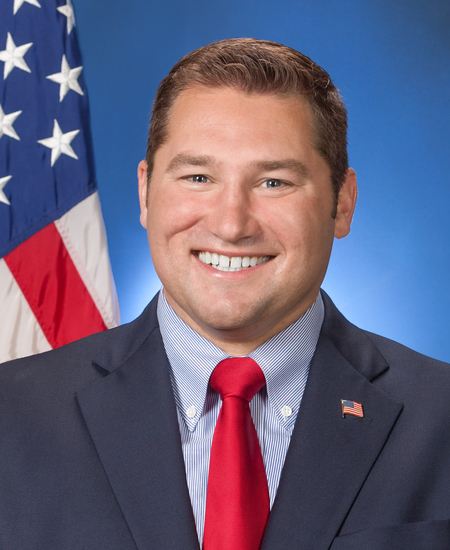
Rep. Guy Reschenthaler
Sponsored bills
Confidentiality Opportunities for Peer Support Counseling Act or the COPS Counseling Act This bill sets forth requirements related to peer support counseling programs. A peer support counseling program is a program provided by a law enforcement agency that provides counseling services from a peer support specialist to a law enforcement officer of the agency. Among other things, the bill does the following: generally prohibits the disclosure of the contents of a peer support communication, and requires the Department of Justice to develop best practices and professional standards for peer support counseling programs.
Chinese Communist Party (CCP) Politburo Accountability Act This bill authorizes the President to impose visa- and property-blocking sanctions on certain senior officials of the Chinese Communist Party (CCP) and addresses related issues. The President may impose sanctions on senior CCP officials who have engaged in or provided support for (1) any malign disinformation campaign or political warfare operation against the United States; (2) the theft of intellectual property belonging to a U.S. individual or entity; (3) actions undermining Taiwan's sovereignty; or (4) restrictions against the practice of religion in China, including the forced closure of any place of worship. The President must impose sanctions on four named senior CCP officials. The Department of State must report to Congress on whether any CCP Politburo members meet the criteria for sanctions under various authorities. (The Politburo and the Politburo Standing Committee are China's highest decision-making bodies.)
Public Safety Officer Support Act of 2021 This bill extends death and disability benefits under the Public Safety Officers' Benefits Program (PSOB) to certain public safety officers and survivors of public safety officers who are diagnosed with post-traumatic stress disorder or acute stress disorder following a stressful situation while on duty. The PSOB program provides death, disability, and education benefits to public safety officers and survivors of public safety officers who are killed or injured in the line of duty.
Fiscal State of the Nation Resolution This concurrent resolution requires the congressional budget committees to conduct an annual joint hearing to receive a presentation from the Comptroller General regarding (1) the Government Accountability Office's audit of the financial statement of the executive branch, and (2) the financial position and condition of the federal government.
Equal Treatment of Public Servants Act of 2021 This bill phases in a new funding formula for determining benefit amounts under the windfall elimination provision (WEP). The WEP reduces Social Security retirement and disability benefits for those who receive pensions for certain non-covered employment. The new formula adjusts an individual's total lifetime earnings based on the proportion of those earnings subject to Social Security payroll taxes. It applies to individuals who (1) become eligible for Social Security benefits after 2061, and (2) have earnings from non-covered service performed in a year after 1977. Beneficiaries who become eligible for benefits between 2023 and 2061 receive the higher of their benefit calculated under the existing WEP or the new formula. In addition, certain beneficiaries currently impacted by the WEP receive an additional payment. The Social Security Administration must include non-covered earnings in Social Security account statements and must study the feasibility of partnering with certain pension systems to address data sharing issues related to non-covered pensions.
No Vaccine Mandate Act This bill prohibits certain funding made available for the Departments of Labor, Health and Human Services, and Education and related agencies from being used for implementing or enforcing a rule that requires a COVID-19 vaccine.
Maddy summaryHRES 754 is a non-binding resolution expressing the House of Representatives' opposition to proposed "punitive natural gas taxes" on U.S. businesses, families, and workers. It cites claims that such taxes would raise average energy bills by 17%, reduce GDP by $9 billion, and eliminate 90,000 jobs, while disproportionately harming low-income households. The resolution argues that opposing these taxes supports U.S. energy security, national security, and continued leadership in reducing emissions through domestic natural gas production. As a procedural resolution, it does not create law but formally states the House's position against this policy approach.
This bill prohibits the use of federal funds to require a member of the Armed Forces to receive a COVID-19 vaccination. The bill also prohibits adverse action (e.g., punishment) being taken against a member of the Armed Forces because the member refuses to receive a COVID-19 vaccination.
State, Local, Tribal, and Territorial Fiscal Recovery, Infrastructure, and Disaster Relief Flexibility Act This bill allows states, tribes, territories, and localities to use certain COVID-19 relief funds for new categories of spending, including for natural disasters and infrastructure projects. It also makes changes to expenditure deadlines and other aspects of this funding. Specifically, recipients may use funds for emergency relief from natural disasters and associated negative economic impacts of natural disasters. In addition, recipients may use a portion of their COVID-19 relief funds for designated infrastructure projects, such as nationally significant freight and highway projects. Furthermore, the bill allows recipients to expend COVID-19 relief funds on these types of infrastructure projects until September 30, 2026. Under current law, recipients must expend the funds by December 31, 2024. Other changes in the bill include (1) modifying eligibility and allocation requirements for funding set aside for counties and Indian tribes that are near public lands, (2) allowing Indian tribes an additional year to expend their COVID-19 relief funds, and (3) establishing a process for government entities to decline COVID-19 relief funds and requiring any declined funds to be used to reduce the federal deficit.