

Caribbean Basin Security Initiative Authorization Act This bill authorizes the allocation of certain funds for purposes related to the Caribbean Basin Security Initiative, requires the Department of State to develop a strategy for prioritizing efforts to increase disaster response and resilience in the Caribbean, and establishes monitoring and reporting requirements. Funds for carrying out the initiative shall be used for purposes that include (1) promoting citizen safety, security, and the rule of law in the Caribbean; (2) prioritizing efforts to combat corruption; and (3) promoting the rule of law in the Caribbean and countering influence from authoritarian regimes. The State Department shall develop a strategy that incorporates specific, measurable benchmarks demonstrating a prioritization of efforts to increase disaster response and resilience through carrying out specified coordination, resilience, and preparedness programs in beneficiary countries. The State Department must also submit an implementation plan that includes a timeline and stated objectives for such actions to be taken.
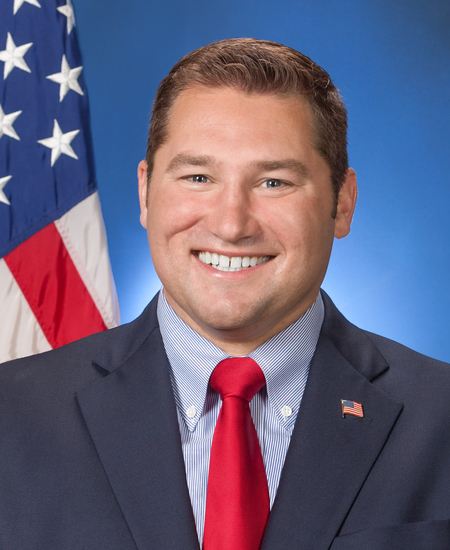
Rep. Guy Reschenthaler
Sponsored bills
Maddy summaryThis bill prohibits using federal funds to establish a Disinformation Governance Board under the Department of Homeland Security. It directly affects the DHS by blocking any allocation of taxpayer money for creating this board. The key provision is a funding restriction that prevents the board's formation, requiring Congress to specifically authorize such spending if desired. The bill does not address disinformation policies or content, only the funding mechanism for the proposed board.
Protecting Free Speech Act This bill terminates the Disinformation Governance Board of the Department of Homeland Security (DHS) and prohibits using DHS funding for the activities of any other entity that is substantially similar to the board.
This resolution acknowledges that Specialist Bishop E. Evans was discovered, deceased, along the Rio Grande, near Eagle Pass, Texas. The resolution also honors the life and service of Specialist Evans and recognizes that his actions resulted in the survival of two migrants.
This joint resolution nullifies the rule issued by the Centers for Disease Control and Prevention on February 3, 2021, that requires the use of face masks on planes, trains, buses, and other public conveyances and at transportation hubs to prevent the transmission of COVID-19.
Prescription Information Modernization Act of 2022 This bill allows health care providers to receive prescribing information for drugs electronically rather than in paper form from manufacturers.
This concurrent resolution expresses the sense of Congress that the President should consider the effect on Pennsylvania when conducting domestic and international energy policy, including pipeline approvals and permits for energy and mineral development.
Cost of Mental Illness Act of 2022 This bill requires a study on the direct and indirect costs associated with serious mental illness (i.e., a mental, behavioral, or emotional disorder resulting in a serious, functional impairment that substantially interferes with major life activities). It also requires periodic surveillance surveys of individuals with schizophrenia. Specifically, the Department of Health and Human Services (HHS) must study health care, housing, public safety, and other costs incurred by federal, state, tribal, and local governments and nongovernmental entities to address serious mental illness. HHS must consult with the Department of Justice, the Department of Labor, and the Department of Housing and Urban Development on the study. Additionally, the Substance Abuse and Mental Health Services Administration (SAMHSA) must periodically conduct a surveillance survey to collect information about individuals with schizophrenia, such as their demographic characteristics and health status. SAMHSA must coordinate with the Centers for Disease Control and Prevention, the National Institute of Mental Health, and other federal agencies on the survey. SAMHSA may also award grants or other assistance to nonprofits for convening stakeholder meetings and other activities to support the survey.
Maddy summaryHR 7477, the CERTS Tax Exemption Act, ensures that grants provided under the Coronavirus Economic Relief for Transportation Services Act are tax-free for eligible transportation service providers. The bill directly affects companies and organizations providing transportation services that receive these specific federal grants. Key provisions state that grant amounts cannot be counted as taxable income, deductions related to grant-funded costs cannot be denied, and tax attributes (like basis increases) must be treated as tax-free for partnerships and S corporations. This change simplifies tax treatment for recipients by preventing unintended tax liabilities on relief funds.
Postal Service Reform Act of 202 2 This bill addresses the finances and operations of the U.S. Postal Service (USPS). The bill requires the Office of Personnel Management (OPM) to establish the Postal Service Health Benefits Program within the Federal Employees Health Benefits Program under which OPM may contract with carriers to offer health benefits plans for USPS employees and retirees. The bill provides for coordinated enrollment of retirees under this program and Medicare. The bill repeals the requirement that the USPS annually prepay future retirement health benefits. Additionally, the USPS may establish a program to enter into agreements with an agency of any state government, local government, or tribal government, and with other government agencies, to provide certain nonpostal products and services that reasonably contribute to the costs of the USPS and meet other specified criteria. The USPS must develop and maintain a publicly available dashboard to track service performance and must report regularly on its operations and financial condition. The Postal Regulatory Commission must annually submit to the USPS a budget of its expenses. It must also conduct a study to identify the causes and effects of postal inefficiencies relating to flats (e.g., large envelopes). The USPS Office of Inspector General shall perform oversight of the Postal Regulatory Commission.