

Protecting Pain-Capable Unborn Children from Late-Term Abortions Act This bill establishes a new criminal offense for performing or attempting to perform an abortion if the probable gestational age of the fetus is 15 weeks or more. A violator is subject to criminal penalties—a fine, a prison term of up to five years, or both. The bill provides exceptions for an abortion (1) that is necessary to save the life of the pregnant woman, or (2) when the pregnancy is the result of rape or incest. A physician who performs or attempts to perform an abortion under an exception must comply with specified requirements. A woman who undergoes a prohibited abortion may not be prosecuted for violating or conspiring to violate the provisions of this bill.
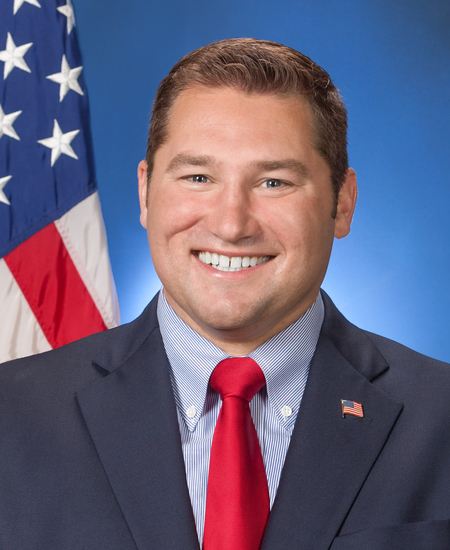
Rep. Guy Reschenthaler
Sponsored bills
Providing Resources, Officers, and Technology to Eradicate Cyber Threats to Our Children Act of 2022 or the PROTECT Our Children Act of 2022 This bill reauthorizes through FY2024 the National Strategy for Child Exploitation Prevention and Interdiction.
Protect Children's Innocence Act This bill places restrictions on the provision of gender affirming care. Gender affirming care includes performing surgery, administering medication, or performing other procedures for the purpose of changing the body of an individual to correspond to a sex that differs from the individual's biological sex. Specifically, the bill makes it a felony to perform any gender affirming care on a minor and it permits a minor on whom such care is performed to bring a civil action against each individual who provided the care. Additionally, the bill prohibits the use of federal funds for gender affirming care or for health insurance that covers such care. Such care may not be provided in a federal health care facility or by a federal employee. The bill also prohibits qualified health plans from including coverage for gender affirming care. Further, plans that include coverage for such care are not eligible for federal subsidies. Finally, the bill prohibits institutions of higher education from offering instruction in gender affirming care. It also makes any non-U.S. national ( alien under federal law) who performs gender affirming care on a minor deportable and inadmissible to the United States. The restrictions under this bill do not apply to the provision of care under certain circumstances such as when an individual does not have normal sex chromosome structure, sex steroid hormone production, or sex steroid hormone action.
American Confidence in Elections Act or the ACE Act This bill addresses election administration and security, campaign finance, and other related provisions. Among other provisions, the bill reduces certain election assistance payments for states and local jurisdictions that allow noncitizens to vote in state and local elections, establishes certain requirements related to election and political mail, prohibits foreign nationals from making contributions or donations in connection with state or local ballot initiatives or referenda, repeals certain limits on coordinated party expenditures and aggregate contributions by individuals, terminates the Presidential Election Campaign Fund and requires remaining funds to be transferred to the 10-Year Pediatric Research Initiative Fund, and prohibits the use of federal funds to establish a Disinformation Governance Board.
Disclosing Foreign Influence in Lobbying Act This bill requires registered lobbyists to disclose any foreign countries or political parties that are involved in the direction, planning, supervision, or control of the lobbyist's activities.
Protect Minors from Medical Malpractice Act of 2022 This bill makes a medical practitioner who performs a gender-transition procedure on an individual who is less than 18 years of age liable for any physical, psychological, emotional, or physiological harms from the procedure for 30 years after the individual turns 18. Additionally, if a state requires medical practitioners to perform gender-transition procedures, that state shall be ineligible for federal funding from the Department of Health and Human Services. Gender-transition procedures generally include certain surgeries or hormone therapies that change the body of an individual to correspond to a sex that is discordant with the individual's biological sex. They exclude, however, interventions to treat (1) individuals who either have ambiguous external biological sex characteristics or lack a normal sex chromosome structure, sex steroid hormone production, or sex steroid hormone action; (2) infections, injuries, diseases, or disorders caused by a gender-transition procedure; or (3) a physical disorder, injury, or illness that places an individual in imminent danger of death or impairment of a major bodily function.
Right to Trial Act This bill addresses the constitutional right to a jury trial, including by (1) outlining additional factors that a court shall consider when imposing a sentence, and (2) authorizing a court to impose a sentence below the mandatory minimum.
Eliminating Limits to Justice for Child Sex Abuse Victims Act of 2022 This bill eliminates the statute of limitations for a minor victim of a human trafficking offense or federal sex offense to file a civil action to recover damages.
Sanctioning Supporters of Slave Labor Act This bill expands existing sanctions on foreign individuals and entities responsible for human rights abuses (e.g., such as torture or forced labor) against members of Muslim minority groups or other persons in the Xinjiang Uyghur Autonomous Region in China. Specifically, this bill requires sanctions on foreign individuals and entities that knowingly (1) provide material support to the parties subject to the existing sanctions for human rights abuses in Xinjiang, or (2) engage in a significant transaction relating to such human rights abuses.
Secure Every School and Protect Our Nation’s Children Act or the STOP II Act This bill reauthorizes and supports various grants to enhance school safety and security initiatives. It also provides statutory authority for the federal clearinghouse of school safety resources. (The clearinghouse identifies and publishes best practices and recommendations for school safety for use by state and local educational and law enforcement agencies, institutions of higher education, health professionals, and the public.)