

Maddy summaryHR 4300, the Real Emergencies Act, prohibits the President from declaring national emergencies, major disasters, or public health emergencies under three specific federal laws *based on climate change*. It directly affects the President and federal agencies that manage emergency declarations under the National Emergencies Act, the Stafford Act, and the Public Health Service Act. The bill's key provision explicitly bans using climate change as a justification for these emergency declarations, without altering existing emergency powers for other reasons. This is a procedural restriction on executive authority, not a change to climate policy or emergency response mechanisms.
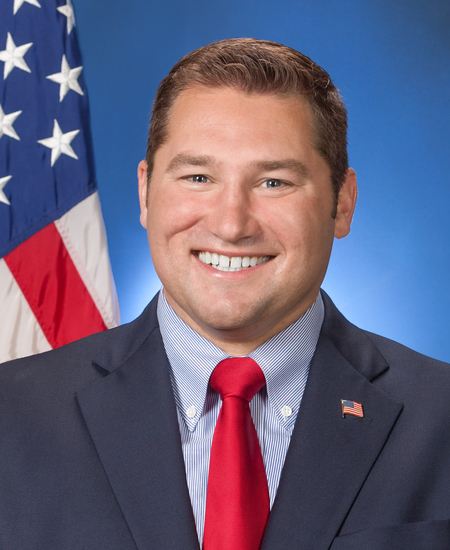
Rep. Guy Reschenthaler
Sponsored bills
Maddy summaryThe SAFE Act of 2023 extends a 2018 law that prohibits slaughtering animals for human consumption to include horses, donkeys, and other equine animals, such as ponies. It amends Section 12515 of the Agriculture Improvement Act of 2018 by updating the language to replace "dog or cat" with "dog, cat, or equine" in both the section title and the main prohibition. This change directly affects the livestock industry and slaughter facilities by banning the processing of equines for food. The bill modifies existing law without adding new enforcement mechanisms, closing a gap in animal protection.
Maddy summaryThe Mountain Valley Pipeline Completion Act (HR 3500) requires federal agencies to expedite permits and approvals for the Mountain Valley Pipeline project within 21 days of enactment. It mandates the Army, Agriculture, and Interior secretaries to issue necessary permits for construction and operation, while blocking all legal challenges to these approvals through judicial review. The bill directly affects the pipeline project by overriding existing legal barriers and agency decisions related to its completion. Key provisions include ratifying prior approvals, expediting permits, and prohibiting lawsuits seeking to invalidate agency actions for this specific pipeline. This law aims to accelerate the pipeline's construction to meet regional natural gas demand, as stated in the bill.
Maddy summaryHJRES 44 is a congressional resolution seeking to block a 2021 rule by the Bureau of Alcohol, Tobacco, Firearms, and Explosives (ATF). The rule classified firearms with stabilizing braces as "short-barreled rifles," which would have required additional licensing and regulation. This resolution uses a specific legal process (under Title 5, U.S. Code) to formally disapprove the ATF rule, meaning the rule would no longer be in effect. It directly affects firearm owners, manufacturers, and dealers who would have been subject to the rule’s requirements.
Maddy summaryThis resolution (HRES 461) expresses the U.S. House of Representatives' disapproval of using public elementary or secondary school facilities to shelter individuals not admitted to the United States. It specifically references incidents in New York City where school gymnasiums were used for this purpose, arguing such use diverts educational resources, compromises student safety, and disrupts school routines. As a non-binding resolution, it does not create new laws or directly affect anyone but serves as a formal statement of opposition to the practice. The bill focuses on condemning the use of school facilities for sheltering non-admitted individuals, without proposing policy changes.
Maddy summaryHJRES 45 is a congressional disapproval resolution targeting a specific Department of Education rule about federal student loans. It seeks to block the rule implementing "One-Time Federal Student Loan Debt Relief" (including modifications to Perkins, FFEL, and Direct Loan programs) by invoking the Congressional Review Act. If passed, this resolution would nullify the rule, preventing the Department of Education from using it to modify or waive student loan obligations. The bill directly affects borrowers who might have qualified for debt relief under the targeted rule.
Maddy summaryHR 277 would require Congress to approve major federal regulations before they take effect. Major rules are defined as those with significant economic impact ($100 million+ annually), major cost increases for consumers or industries, or significant adverse effects on competition, employment, or innovation. Agencies must submit detailed information about these rules to Congress, including cost-benefit analyses, before they can take effect. Congress would have 70 session days to approve the rule with a joint resolution; if they don't act within that timeframe, the rule would not take effect. This would increase congressional oversight of federal regulations and require more detailed information about proposed rules before they become law.
Secure E-Waste Export and Recycling Act This bill prohibits the export or reexport of electronic waste, such as computers, televisions, and consumer electronics, subject to certain exemptions (e.g., items that meet specific criteria designed to ensure they do not become the source of counterfeit products).
Maddy summaryHR 4076 establishes a joint U.S.-Israel program to fund health technology development, authorizing $4 million annually (2024-2026) through the U.S. Health and Human Services Department. It requires Israel to match U.S. funding and focuses on collaborative projects in artificial intelligence, vaccines, telemedicine, diagnostic tests, and data-driven personalized medicine for emerging infectious diseases. The program can either build on an existing U.S.-Israel agreement or create a new one under a 2008 science cooperation framework. This bill directly affects U.S. federal health agencies and the Israeli government, with funds restricted to joint projects meeting specific technological and health priorities.
Maddy summaryHR 4038, the POPP Act, blocks the Environmental Protection Agency (EPA) from finalizing, implementing, or enforcing a specific proposed rule about greenhouse gas emissions from power plants. This rule, published in May 2023, aimed to set new standards for emissions from fossil fuel-fired power plants and replace an earlier rule. The bill prohibits the EPA from moving forward with this rule or any substantially similar rule, directly affecting the EPA's regulatory authority and power plant operators who would have been subject to the proposed standards. The bill bases this prohibition on arguments that the proposed rule violates the Clean Air Act by not demonstrating that required emission reduction technologies are commercially viable and cost-effective.