

Maddy summaryHR 4745, the Delivering for Rural Seniors Act of 2023, creates a pilot program to expand home delivery of food packages under the Commodity Supplemental Food Program (CSFP) for low-income seniors in rural areas. The bill authorizes $10 million annually (2024-2026) for competitive grants to state agencies, which must prioritize rural service providers to cover costs like transportation, staffing, and outreach for home delivery. It requires grantees to report on delivery metrics, costs, and effectiveness annually. The program directly affects rural CSFP participants facing transportation barriers to accessing food assistance.
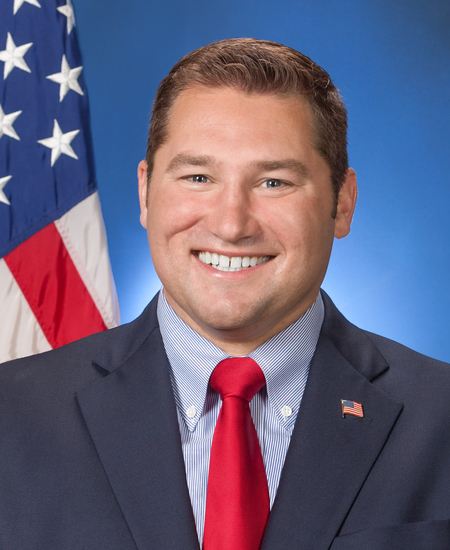
Rep. Guy Reschenthaler
Sponsored bills
Maddy summaryHR 5195, the Seat of Government Act, repeals the District of Columbia Home Rule Act. This repeal would eliminate the District of Columbia's authority to govern itself on local matters, ending the system of elected mayors and city councils. Residents of Washington, D.C. would directly lose their current local government structure and self-governance powers. The bill removes the foundational law enabling D.C.'s home rule without specifying alternative governance mechanisms.
Maddy summaryHR 5073, titled the "Promoting Domestic Energy Production Act," is a tax code amendment affecting oil and gas companies. It changes how businesses calculate adjusted financial statement income by removing specific deductions related to intangible drilling and development costs from their financial reports. The bill requires companies to disregard depreciation and depletion expenses taken into account on their financial statements for these costs when computing taxable income. This applies to tax years beginning after December 31, 2022, directly impacting oil and gas producers who use these accounting methods. The bill does not create new energy policies but alters tax accounting rules for the industry.
Maddy summaryHR 5020 prohibits the U.S. Department of Health and Human Services (HHS) from funding or conducting animal testing research in China, Iran, North Korea, Russia, or other countries designated as "of concern" after consultation with the State and Defense Departments. It blocks federal grants, contracts, or support for such research conducted by foreign entities or facilities owned by these countries. HHS must submit detailed reports to Congress within 60 days when adding new countries to the list, explaining its reasoning.
Maddy summaryThis bill adds spotted lanternfly control to the list of high-priority research initiatives funded by the USDA. It enables federal grants for developing and sharing practical tools to combat this invasive insect pest, directly affecting agricultural researchers and farmers in affected areas (like Pennsylvania, where the pest causes significant crop damage). The key provision modifies existing law to specifically include lanternfly research under funding programs, without changing current grant rules. The bill also extends the funding authorization period for such initiatives through 2028.
Maddy summaryHCONRES 57 is a non-binding concurrent resolution expressing Congress's support for Israel. It states three key points: (1) that Israel is not a racist or apartheid state, (2) that Congress rejects antisemitism and xenophobia, and (3) that the U.S. will remain a steadfast supporter of Israel. This resolution does not create new laws or alter policies - it simply records the expressed sentiment of Congress. It directly affects the U.S. government's public stance on Israel, with no legal effect on citizens or other entities.
Maddy summaryHCONRES 60 is a symbolic congressional resolution calling for the immediate release of Marc Fogel, a U.S. citizen and former teacher imprisoned in Russia since 2021. It states Fogel was sentenced to 14 years for carrying medical marijuana (prescribed in Pennsylvania for his chronic pain) in his luggage, which the resolution deems an unjust and disproportionate sentence compared to typical Russian penalties for similar offenses. The resolution urges the Russian government to release Fogel, respect his human rights, and allow consular access, while also demanding the release of other detained U.S. citizens like Paul Whelan and Evan Gershkovich. It emphasizes Fogel’s health decline and the U.S. State Department’s failed humanitarian request for his release. As a non-binding resolution, it expresses congressional support but does not alter U.S. policy or law.
Maddy summaryHRES 614 is a procedural resolution that sets rules for how the House will debate and vote on three specific legislative items. It provides for consideration of H.R. 4366 (a bill funding military construction and veterans' programs for fiscal year 2024), S.J. Res. 9 (a resolution to disapprove a U.S. Fish and Wildlife Service rule regarding the lesser prairie-chicken), and S.J. Res. 24 (a resolution to disapprove a rule regarding the northern long-eared bat). The resolution establishes time limits for debate, waives procedural objections, and outlines procedures for amending these measures. It does not change policy but streamlines the legislative process for these three items.
Preserving Family Farms Act of 2023 This bill amends the Internal Revenue Code to increase to $13 million (currently, $750,000) the limitation on the special use valuation for farmland or other trades or businesses for estate tax purposes. The increased amount is adjusted for inflation for estates of decedents dying after 2023.
Maddy summaryThis bill authorizes the U.S. President to sell up to two nuclear-powered attack submarines (Virginia-class) from the U.S. Navy inventory to Australia over a 15-year period to support the AUKUS security partnership. It requires Australia to cover all costs, including repairs performed at U.S. shipyards, and mandates detailed certifications to Congress on national security impacts, U.S. industrial capacity, and Australia's ability to operate the submarines. The bill also requires annual reports for 15 years on submarine transfers, defense service exports, and production schedules. This directly affects Australia's naval capabilities and U.S.-Australia defense cooperation under the AUKUS framework.