

Maddy summaryHR 345, the TRUST in Congress Act, requires Members of Congress, their spouses, and dependent children to place certain investments into a "blind trust" within 90 days of taking office or after the bill's enactment. It directly affects current and future lawmakers and their immediate family members by mandating that covered investments - such as stocks, commodities, or derivatives (excluding Treasury bonds and some mutual funds) - be placed in a trust they cannot manage. Members must certify the trust setup to House or Senate officials within 15 days, and trusts cannot be dissolved until 180 days after leaving office. The law excludes investments providing primary income (e.g., from a spouse's job) but requires transparency through public website disclosures of certifications.
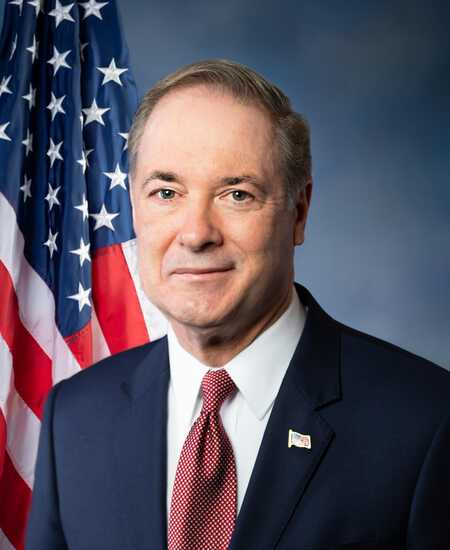
Rep. John Joyce
Sponsored bills
Maddy summaryThis concurrent resolution (HCONRES 4) expresses congressional support for U.S. law enforcement agencies and condemns efforts to defund or dismantle them. It does not create new funding or policy changes but formally rejects "misguided and dangerous efforts to defund and dismantle" police departments, citing officer safety concerns and rising fatalities. The resolution specifically references the 2021 increase in law enforcement deaths (458 officers killed) and opposes rhetoric that "vilifies" officers, while emphasizing their role in community safety and crisis response. It is a symbolic statement with no binding legal or financial impact.
Maddy summaryHCONRES 5 is a symbolic Congressional resolution expressing support for law enforcement officers and condemning calls to defund or dismantle local police departments. It highlights officer safety concerns, references rising fatalities in 2021, and argues that reduced funding would harm community safety. The resolution does not alter funding, create new laws, or change policy - it solely states Congress's position through non-binding language. It was introduced in January 2023 by a bipartisan group of House members.
Maddy summaryThis bill amends the tax code to prevent abortion expenses from being counted as deductible medical costs. It directly affects taxpayers who pay for abortions, as they can no longer include these expenses when calculating their medical deduction on federal tax returns. The key provision adds a new rule to the Internal Revenue Code stating that "amounts paid for abortion shall not be taken into account" under medical expense deductions. This change applies to tax years beginning after the bill's enactment date.
Maddy summaryThis bill establishes nationwide recognition for valid concealed carry permits. It allows permit holders from any state to carry concealed handguns in states that either issue such permits or don't ban concealed carry, provided they carry a photo ID and their valid permit. Key provisions include making presentation of a valid permit and ID prima facie evidence of compliance, shifting the burden of proof to prosecutors if challenged, and requiring courts to award attorney fees to successful defendants. It does not override state laws prohibiting concealed carry on private property or government lands, nor does it affect restrictions on federal lands like national parks.
Maddy summaryHR 146, the "Old Glory Only Act," prohibits U.S. diplomatic and consular posts from flying any flag other than the U.S. flag above the buildings. This law directly affects all U.S. embassies, consulates, and other official diplomatic facilities abroad. The Secretary of State is required to ensure compliance with this rule, mandating that only the U.S. flag be displayed at these locations. The bill makes no exceptions for foreign flags or other symbols at these specific government properties.
Maddy summaryHR 53 (FIND Act) requires federal contractors to certify they do not refuse to work with firearm manufacturers, dealers, ammunition sellers, or related safety device companies based on bias. It prohibits main contractors from awarding subcontracts exceeding 10% of a contract’s value to entities that fail to make this certification, and bans efforts to circumvent the rule through complex subcontract tiers. The law applies to all federal procurement contracts, directly affecting businesses bidding on government work. Violations risk contract termination and suspension from future government contracts.
Maddy summaryThis bill requires large district attorney offices (serving jurisdictions of 380,000+ people) that receive federal Byrne grant funds to submit annual reports to the Attorney General. The reports must detail prosecution decisions for 10 specific violent crimes and gun offenses (including murder, rape, robbery, aggravated assault, burglary, and firearm violations), such as cases declined, plea agreements, and defendant histories. The Attorney General must establish uniform reporting standards and share all collected data publicly with Congress and on a government website. This policy change directly affects major prosecutors' offices receiving federal crime-fighting funds, aiming to increase transparency in how they handle serious offenses.
This act designates the facility of the United States Postal Service located at 345 South Main Street in Butler, Pennsylvania, as the Andrew Gomer Williams Post Office Building.
This act designates the facility of the United States Postal Service located at 850 Walnut Street in McKeesport, Pennsylvania, as the First Sergeant Leonard A. Funk, Jr. Post Office Building.