Deterring Enemy Forces and Enabling National Defenses Act of 2022 or the DEFEND Act of 2022 This bill requires the Department of Defense to seek to cooperate with Middle East allies and partners (i.e., countries of the Gulf Cooperation Council, Iraq, Israel, Jordan, Egypt, and other countries in the region as appropriate) to identify and develop an approach for such allies and partners to implement an integrated air and missile defense capability to protect against attacks from Iran and groups linked to Iran.
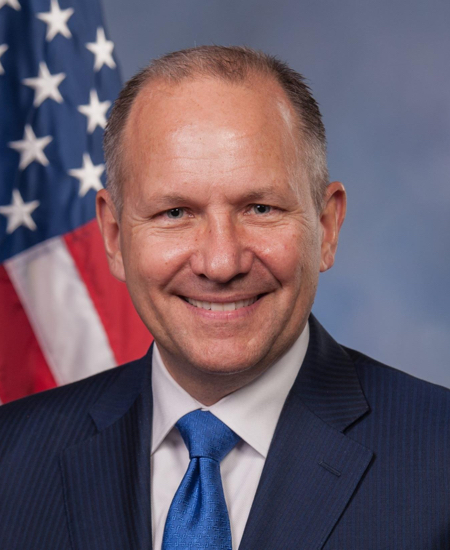
Rep. Lloyd Smucker
Sponsored bills
This resolution recognizes domestically produced natural gas as affordable, green , and necessary for energy independence while asserting that the United States should take a broad approach to meet energy needs.
Relief for Restaurants and other Hard Hit Small Businesses Act of 2022 This bill addresses support for restaurants, arts and entertainment venues, and small businesses impacted by the COVID-19 pandemic. The bill provides an additional $42 billion in FY2021 for the Restaurant Revitalization Fund and gives priority to previous applicants who have not received a grant. The Small Business Administration (SBA) must provide to applicants an explanation for denied applications, establish a reconsideration process for denied applications, and institute an audit and oversight plan with respect to grant recipients. Additionally, the bill establishes the Hard Hit Industries Award Program for small businesses that suffered a pandemic-related revenue loss of 40% or more. Aggregate grant amounts are capped at $1 million. Funds may be used for expenses including mortgage, rent, and utility payments and payroll. SBA must prioritize entities that have experienced significant pandemic-related revenue loss, with first priority going to those that experienced a loss of at least 80%, and second priority going to those that experienced a loss of at least 60%. Finally, the bill extends to March 11, 2023 (or a later date as determined by the SBA), the time frame during which Shuttered Venue Operators Grant recipients may use grant funds to cover their expenses.
Maddy summaryThis bill prohibits the use of federal funds to establish or operate a Disinformation Governance Board under the Department of Homeland Security. It directly affects the Department of Homeland Security by blocking funding for this specific board, preventing its creation or activities. The measure restricts how existing federal appropriations can be applied, without altering other funding mechanisms.
This concurrent resolution expresses the sense of Congress that the President should consider the effect on Pennsylvania when conducting domestic and international energy policy, including pipeline approvals and permits for energy and mineral development.
Protecting American Innovation Act This bill establishes certain limitations on modifying trade agreements, including those related to the TRIPS Agreement (i.e., the Agreement on Trade-Related Aspects of Intellectual Property Rights). The TRIPS Agreement contains obligations for World Trade Organization members to protect patents and other intellectual property rights. Specifically, the bill prohibits the President (or any U.S. official, employee, or agent) from negotiating or concluding any withdrawal, suspension, or modification to a trade agreement that adversely affects the rights of the United States or U.S. persons under a trade agreement with China or Russia. Additionally, the bill states that a TRIPS waiver to address the COVID-19 pandemic shall not take effect if (1) the President does not submit required reports from the Department of Commerce and the Department of Defense (DOD), (2) the Commerce report concludes that the TRIPS waiver will not result in an increase in global vaccine access, or (3) the DOD report concludes that the TRIPS waiver would adversely impact U.S. national security. Prior to entering into a negotiation with a trading partner concerning a suspension of or modification to a trade agreement, the bill requires (1) the U.S. Trade Representative to publish certain information in the Federal Register and allow for public comment, and (2) the President to provide written notice and consult with Congress. Further, the President shall not enter into any suspension of or modification to a trade agreement unless the President has complied with such consultation requirements and receives congressional approval.

Ensuring Lasting Smiles Act This bill requires private health insurance plans to cover diagnosis and treatment of congenital anomalies and birth defects, such as reconstructive services and items. Coverage must include services and items that functionally improve, repair, or restore any body part that is medically necessary for normal bodily functions or appearance, as determined by the treating physician. Coverage limits and cost-sharing requirements for such services and items may not be more restrictive than those applicable to all medical and surgical benefits under the plan.
This resolution calls on the Biden administration and its officials to maintain the sanctions on the repressive regimes in Venezuela and Iran. The resolution also expresses the sense of the House of Representatives that American energy independence should be achieved again for the sake of U.S. national security and the security of U.S. allies; and President Biden should immediately rescind his Executive Orders that prohibit the approval of new leases on federal lands and waters, and should immediately take actions to reestablish American energy independence.
Supply Chain Disruptions Relief Act This bill modifies the treatment of liquidations of new motor vehicle inventory as qualified LIFO (last in first out accounting method) inventory. It allows new motor vehicle dealers to elect to wait until the end of 2025 to replace their inventory for purposes of determining income attributable to the sale of such inventory during 2020 and 2021.
Securing a Strong Retirement Act of 2022 This bill makes various changes with respect to employer-sponsored retirement plans, including providing for the automatic enrollment of employees in certain plans and increasing the age at which participants are required to begin receiving mandatory distributions.