

Maddy summaryHR 8505, the Household Goods Shipping Consumer Protection Act, requires household goods motor carriers, brokers, and freight forwarders to designate a "principal place of business" and disclose recent ownership relationships during registration. It gives states the option to use federal grant funds to enforce federal household goods shipping regulations for both interstate and intrastate transport, if state laws align with federal rules. The bill also ensures states retain fines and penalties collected from shipping companies for violations, rather than forwarding them to the federal government. These changes aim to improve regulatory oversight and accountability in the household goods shipping industry.
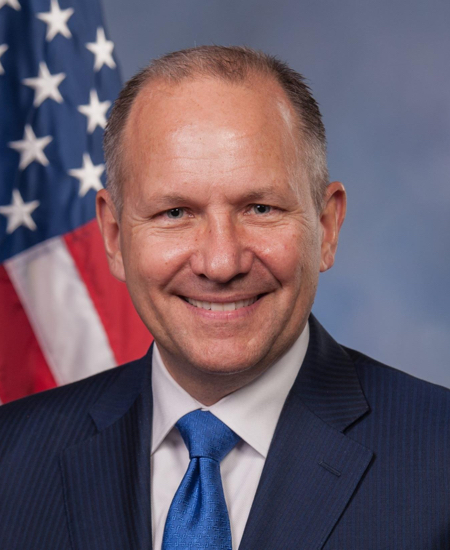
Rep. Lloyd Smucker
Sponsored bills
Maddy summaryHR 3269, the Law Enforcement Innovate to De-Escalate Act, exempts specific less-than-lethal projectile devices from federal firearm taxes and National Firearms Act restrictions. The bill defines these devices as those firing projectiles at under 500 feet per second and designed not to cause death or serious injury. This directly affects law enforcement agencies using such devices and manufacturers producing them, by removing tax burdens and registration requirements. The key change is creating a clear legal exemption for these devices under federal law, streamlining their use for de-escalation purposes.
Maddy summaryThe FOCA Act of 2023 requires federal agencies to stop mandating or banning contractor agreements with labor organizations (like union contracts) in construction project bids and contracts. It directly affects federal contractors, subcontractors, and agencies managing construction projects funded by the government. The bill prohibits favoring or penalizing contractors based on their labor affiliation status, aiming to promote fair competition and reduce costs. It also mandates updates to federal contracting rules within 60 days of enactment to implement these changes.
Maddy summaryThis bill temporarily caps Medicare payments for high-cost long-term care hospital patients, limiting fixed loss amounts to $50,000 for fiscal years 2025 and 2026. It also creates a temporary exception (2025-2027) allowing standard Medicare payments for patients with severe wounds (like stage 3/4 wounds, infections, or osteomyelitis) instead of site-neutral rates. The bill requires two studies: one on reforming high-cost outlier payment methodology and another analyzing whether the severe wound payment exception should become permanent. These changes directly affect long-term care hospitals treating Medicare beneficiaries with high resource needs or severe wounds. The studies will inform future policy decisions but do not alter current payment rules beyond the specified temporary periods.
Maddy summaryHR 9125, the Patient Access to LTCH Care Act, adjusts Medicare payments for long-term care hospitals (LTCHs) treating patients with complex medical conditions. It increases payment rates by 5% or 10% for LTCHs based on the number of major complications or comorbidities a patient has, with specific thresholds tied to Medicare coding. The bill also sets annual caps on payment increases ($50,000 for 2025-2026, 110% of prior year for later years) and creates exceptions to ensure patients with severe wounds, specific diagnoses (like septicemia or pulmonary issues), or post-COVID care receive appropriate coverage. This directly affects LTCHs and Medicare beneficiaries with high-acuity conditions requiring specialized care.
Maddy summaryThis bill creates a new Medicare payment model for emergency medical services (EMS) that allows coverage when ambulance providers deliver critical care on-site without transporting patients to a hospital. It directly affects Medicare beneficiaries receiving such on-site emergency care and ambulance providers who would previously not be reimbursed for non-transport services. The key provision requires Medicare to pay for these services at rates matching what would have been paid for transport, based on state protocols and emergency call responses, for a 5-year trial period. A report due 4 years after implementation will evaluate impacts on patient outcomes, system efficiency, and regional access.
Maddy summaryHR 8849, the TIMED Act of 2024, sets a 10-year limit on Medicare coverage for items or services approved under "coverage with evidence development" (CED), requiring the Medicare Secretary to review these decisions after a decade unless exceptions apply (e.g., if the item is deemed necessary or the provider requests an extension). The bill also mandates that Medicare explain why a coverage request was rejected, specifying missing information within 90 days, and requires local coverage decisions to align with national policies, laws, and coding rules. It allocates $1 million for fiscal year 2024 to implement these changes, including posting annual data on CED-covered items on Medicare’s public website. This directly affects Medicare beneficiaries and healthcare providers relying on CED approvals for new treatments or technologies.
Maddy summaryThis bill requires the HHS Secretary to produce a report within 18 months of enactment about children who re-enter foster care after adoption or legal guardianship was finalized. The report will analyze data on adoption disruptions (including factors like pre/post-adoption services and child age) using existing systems like AFCARS, and detail state-level post-adoption services - covering their evidence-based status, availability, and funding sources like the Promoting Safe and Stable Families program. It directly affects children who experience disrupted adoptions and the states providing post-adoption support services. The report aims to inform Congress about gaps in oversight and support systems for these families.
Maddy summaryThis bill requires the federal government to reduce paperwork for state and tribal child welfare agencies receiving funds under the Social Security Act. It directs the Secretary of Health and Human Services to eliminate duplicate reporting, aim for a 15% reduction in required paperwork hours, and adjust requirements based on agency input. Agencies must be notified of changes within two years, and the Secretary must report progress to Congress within three years. The law directly affects child welfare programs managing federal grants, aiming to free staff time for direct service work.
Maddy summaryHR 8745, the Child Welfare Workforce Development Act, modifies federal funding rules to help states improve their child welfare workforce. It removes penalties for states that don’t immediately meet certain workforce standards and directs states to use funds for specific, concrete actions: reducing caseloads, modernizing technology systems, enhancing caseworker safety, implementing mentoring programs for stress, and launching recruitment campaigns. These changes apply to states receiving federal child welfare funds starting October 1, 2026, with flexibility for states needing to pass new laws first. The bill directly affects state child welfare agencies and their ability to retain and support frontline workers.