

Maddy summaryHR 7 prohibits federal funds from being used for abortions or health insurance plans covering abortion, with exceptions for pregnancies resulting from rape, incest, or when a woman's life is endangered. It blocks federal premium tax credits under the Affordable Care Act for health plans covering abortion (except in specified cases) and requires clear disclosure of abortion coverage and related surcharges in plan materials. The bill allows individuals or employers to purchase separate abortion coverage using non-federal funds, such as out-of-pocket payments, without affecting federal subsidies. It directly affects federal health programs, ACA marketplace plans, and health insurance issuers offering coverage that includes abortion services.
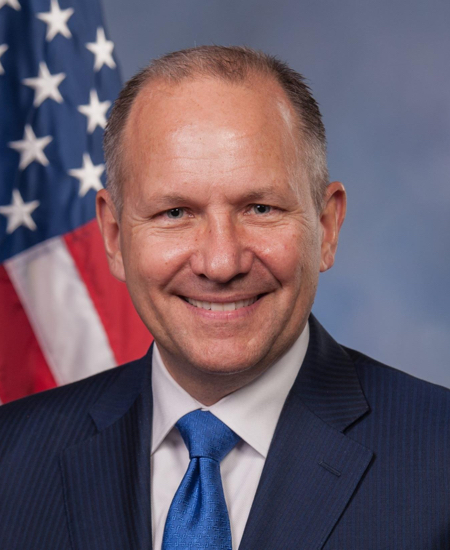
Rep. Lloyd Smucker
Sponsored bills
Maddy summaryThis bill clarifies the definition of "numismatic material" to explicitly include coins, tokens, paper money, medals, and related objects under U.S. import rules. It requires importers to provide sworn declarations confirming such items were lawfully acquired, are of a known type (as documented in published numismatic references), and are not linked to illicit excavations. Customs officers must accept this documentation alone unless they have probable cause to suspect fraud, preventing unnecessary additional requirements. The changes primarily affect collectors, dealers, and importers of numismatic items by streamlining lawful import procedures.
Maddy summaryThe ALIGN Act (HR 574) allows businesses to immediately deduct the full cost of certain qualifying equipment and property (like machinery or tools) instead of spreading the deduction over several years. This permanent tax change directly affects businesses that invest in eligible property placed in service after September 2017. The key provision eliminates the previous depreciation rules for these assets, providing an immediate tax benefit to encourage capital investment. It does not change tax rates or apply to all business expenses, only specific types of equipment meeting the defined criteria.
Maddy summaryThis bill requires the Treasury Secretary to regularly report to Congress about foreign countries that impose taxes on U.S. businesses or individuals considered unfair (extraterritorial or discriminatory taxes). For countries identified in these reports, it authorizes the U.S. to increase tax rates on income and withholdings from those countries, starting at 5% and increasing up to 20% over time. The bill also allows the U.S. to prohibit federal government purchases from entities in those countries and to consider these tax policies when negotiating tax treaties or trade agreements. It would directly affect U.S. businesses and individuals doing business with countries that have these tax policies, as well as those countries' businesses operating in the U.S.
Maddy summaryThis bill makes permanent the increased standard deduction amounts for individual income tax filers. It raises the single filer standard deduction from $4,400 to $18,000 and the married filing jointly amount from $3,000 to $12,000 under the Internal Revenue Code. The bill also requires annual inflation adjustments to these amounts, using a specific formula based on the cost-of-living adjustment. These changes directly affect millions of American households that use the standard deduction instead of itemizing deductions on their federal tax returns.
Chiropractic Medicare Coverage Modernization Act of 2025 This bill expands Medicare coverage of chiropractic services to include all services provided by chiropractors, rather than only subluxation corrections through manual manipulation of the spine.
Maddy summaryThis bill creates special tax rules for certain Taiwanese residents with income from U.S. sources, primarily addressing double taxation concerns. It reduces withholding tax rates on interest, dividends, and royalties from 30% to 10% (or 15% for certain dividends) for qualified Taiwanese residents, and eliminates tax on certain wages paid to Taiwanese workers in the U.S. It also sets a $30,000 annual limit on tax-free income from entertainment or athletic activities. To qualify, individuals must meet specific residency and ownership criteria, and the bill requires reciprocal tax benefits from Taiwan before taking effect. This legislation is designed to facilitate economic activity between the U.S. and Taiwan without requiring a formal tax treaty.
Healthcare Freedom and Choice Act This bill nullifies a rule regarding short-term, limited-duration health insurance plans. The rule was promulgated by the Internal Revenue Service, Employee Benefits Security Administration, and Department of Health and Human Services; is titled Short-Term, Limited-Duration Insurance and Independent, Noncoordinated Excepted Benefits Coverage ; and was published April 3, 2024. Short-term, limited-duration health insurance plans are plans that may only offer coverage for a limited amount of time and are exempt from the market requirements of the Patient Protection and Affordable Care Act (e.g., coverage of individuals with preexisting conditions). The rule limits the length of the initial contract period for such a plan to no more than three months and, taking into account any renewals or extensions, the maximum coverage period to no more than four months. The rule also includes within the maximum renewal period limitation a new plan sold by the same issuer, or any issuer that is a member of the same controlled group, to the same policyholder within a 12-month period. Regulations in effect prior to the rule this bill nullifies permitted short-term, limited-duration health insurance plans with an initial contract period of fewer than 12 months and a maximum coverage period of up to 36 months, including renewals and extensions.
Maddy summaryHR 354, the Small Business Growth Act, increases tax deduction limits for small businesses purchasing equipment. It raises the annual deduction cap from $1 million to $2 million and the phaseout threshold from $2.5 million to $3.5 million under Section 179 of the tax code. These changes directly affect small businesses that buy qualifying depreciable assets like machinery or vehicles, allowing them to deduct more of the cost upfront. The provisions apply to property placed in service after December 31, 2025, with inflation adjustments updated to reference 2025 and 2026.
Legal Workforce Act This bill directs the Department of Homeland Security (DHS) to create an electronic employment eligibility confirmation system modeled after and to replace the E-Verify system, which allows employers and recruiters to verify the immigration status of individuals. The bill also mandates the use of such a system, where currently only some employers, such as those with federal contracts, are required to use E-Verify. The bill specifies documents that can establish an individual's identity and employment authorization. During the period starting when a job offer is made until three business days after hiring, the individual must attest to his or her employment authorization, and the employer or recruiter must attest that it has examined the individual's required documents. Employers shall reverify certain types of employees who were not previously verified using E-Verify. The Social Security Administration shall notify employees if their Social Security number has been used multiple times in an unusual manner. DHS shall establish programs for blocking and suspending misused numbers. Employers that are required to use the verification system shall not be liable for any employment-related action based on a good-faith reliance on the system. The bill establishes a phased-in participation deadline for different sizes and categories of employers, including agricultural employers. The bill increases civil penalties related to hiring individuals without work authorization. It also preempts state laws relating to hiring and employment eligibility verification, but states may use their authority of business licensing to penalize employers for failing to comply with the bill's provisions.