

Maddy summaryThe PAST Act of 2025 amends the Horse Protection Act to ban harmful practices known as "soring," which deliberately cause pain to horses to exaggerate their gait for shows. It specifically prohibits devices like action devices (e.g., boots causing friction) and weighted shoes on Tennessee Walking Horses, Racking Horses, and Spotted Saddle Horses at events. The bill increases penalties, including escalating disqualifications for repeat offenses (180 days → 1 year → 3 years) and raises fines for violations to $5,000 per offense. It also requires stricter licensing for inspectors and mandates public posting of violation records to help event organizers enforce rules.
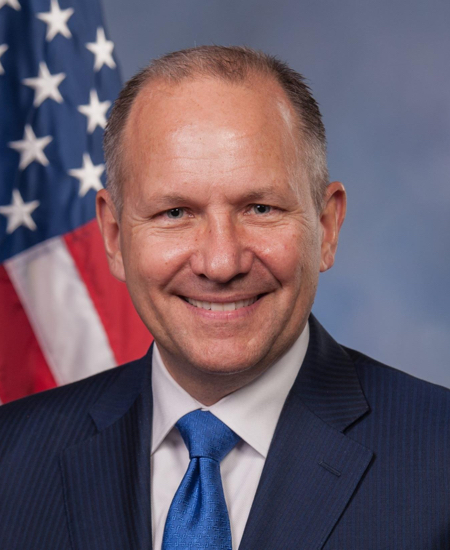
Rep. Lloyd Smucker
Sponsored bills
Maddy summaryThis bill awards a Congressional Gold Medal to the 761st Tank Battalion (known as the "Black Panthers"), the first predominantly Black armored unit in World War II's European Theater. It recognizes their combat service from 1944-1946, including key roles in the Battle of the Bulge and breaking the Siegfried Line, despite facing racial prejudice during and after the war. The medal will be displayed at the National Museum of African American History and Culture, with bronze duplicates available for sale to cover costs. The bill commemorates the battalion's 130,000 enemy casualties inflicted, 50% casualty rate, and their 1978 Presidential Unit Citation. It does not create new laws or affect current policies.
Maddy summaryHR 1633, the Workforce Reentry Act, creates federal grants to help formerly incarcerated individuals (ex-offenders) find and maintain jobs after release. It provides two funding mechanisms: pay-for-performance contracts (using at least 30% of funds) where grantees earn payments based on meeting specific job placement and earnings targets, and competitive grants for skills training, job placement, and mentoring services. Grantees must coordinate with existing workforce systems, use evidence-based programs, and cannot directly fund housing or treatment (only coordinate with other providers). The bill requires annual reporting on participant outcomes like program completion and employment rates, plus a 5-year independent evaluation to assess recidivism reduction and job success.
Maddy summaryHR 1532, the Scientific EXPERT Act of 2025, creates a new process for FDA to host annual "science-focused drug development meetings" (EL-SFDD meetings) specifically for rare diseases. The bill requires the Reagan-Udall Foundation to convene at least four such meetings yearly, bringing together FDA staff, drug developers, medical experts, patient groups, and scientific organizations to discuss scientific challenges and align on approaches like clinical trial designs and endpoints. The FDA must publicly summarize meeting outcomes and explain how input influenced drug approvals, while also reporting annually on meeting impact. This directly affects rare disease drug developers, FDA review divisions, and patient advocacy groups participating in these structured scientific discussions. The bill does not change drug approval standards but aims to streamline development through better scientific alignment.
Maddy summaryHR 1502 authorizes the creation of a Congressional Gold Medal to honor the volunteers and communities (primarily from Nebraska, Colorado, and Kansas) who supported the North Platte Canteen during World War II. The bill directs the Treasury Secretary to design and strike the medal, which will be presented to the individuals who contributed to the canteen’s operations and then permanently displayed at the Lincoln County Historical Museum in North Platte, Nebraska. It also permits the sale of bronze duplicates to cover production costs, with proceeds going to the U.S. Mint. This is a commemorative measure recognizing historical service, not a policy change affecting current laws or programs.
Maddy summaryHR 1492 amends the Social Security Act to extend the negotiation period for standard drug manufacturers under the federal drug pricing program. Specifically, it changes the timeframe from 7 years to 11 years for small-molecule drugs (like traditional pills) to negotiate prices with the government, aligning it with the existing 12-year period for complex biologic drugs (like insulin or monoclonal antibodies). This adjustment directly affects pharmaceutical companies that produce small-molecule drugs, giving them a longer window to negotiate pricing terms. The bill makes this change effective as if it had been part of the 2022 law that established the program.
Maddy summaryThis bill would require states to create a simplified process for out-of-state healthcare providers to join Medicaid and CHIP programs. Qualified providers (those already enrolled in Medicare or another state's program with low fraud risk) could enroll without excessive screening and would be approved for five years. It directly affects children under 21 enrolled in Medicaid or CHIP by expanding access to providers outside their state, particularly in underserved areas. The change applies to all states' Medicaid programs but takes effect three years after enactment.
Maddy summaryHR 1436, the ENABLE Act, makes permanent key tax provisions for ABLE accounts - tax-advantaged savings accounts for people with disabilities. It removes the 2026 expiration date for increased contribution limits to ABLE accounts and allows rollovers from 529 college savings plans into ABLE accounts without tax penalties. These changes directly affect individuals with disabilities who use ABLE accounts for qualified expenses like housing, education, and medical costs. The bill ensures these financial tools remain available long-term, streamlining access to savings without requiring new legislative action each year.
Maddy summaryHR 1301, the Death Tax Repeal Act, would eliminate the federal estate tax and generation-skipping transfer tax for estates of individuals dying on or after its enactment date. It directly affects individuals inheriting significant assets, as it removes taxes on estates exceeding $10 million (adjusted for inflation) and repeals taxes on large transfers between generations. The bill modifies the gift tax by establishing a $10 million lifetime exemption with annual inflation adjustments, replacing previous tax brackets. It applies to estates, gifts, and transfers occurring on or after the bill's effective date.
Maddy summaryHR 1347, the AIMM Act, permanently extends a tax provision allowing businesses to deduct depreciation, amortization, or depletion when calculating their business interest expense limit. This change directly affects manufacturers and other businesses that use these deductions for tax purposes. The bill amends the tax code to remove the previous expiration date (which applied only to years before 2022), making the deduction rule permanent for all future taxable years. The key change is eliminating a temporary provision, providing ongoing certainty for business tax calculations.