Repealing Illegal Freedom and Liberty Excises Act or the RIFLE Act This bill repeals the excise tax on the transfer of firearms. The bill shall not be construed as placing any regulated firearms under the jurisdiction of the U.S. Consumer Product Safety Commission.
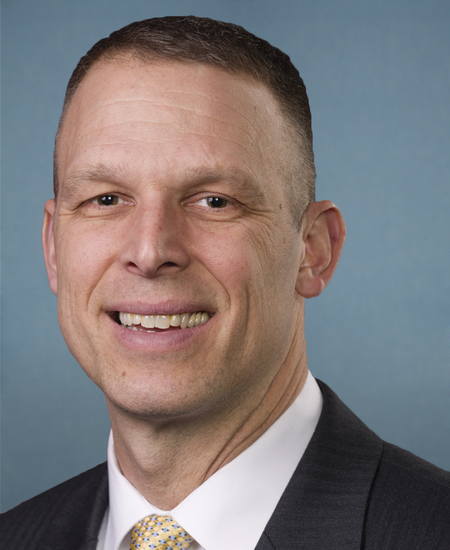
Rep. Scott Perry
Sponsored bills
Rolling Stock Protection Act This bill eliminates the exemption from the prohibition on procurement of rail rolling stock for use in public transportation with respect to executed contracts between public transportation agencies and certain rolling stock manufacturers. Such prohibited manufacturers include ones that, among other things, are owned or controlled by a company based in a nonmarket economy country that is flagged for monitoring by the United States Trade Representative.
Assuring that Robust, Thorough, and Informed Congressional Leadership is Exercised Over National Emergencies Act or the ARTICLE ONE Act This bill terminates a declaration of national emergency made by the President after 30 days unless Congress votes to extend the declaration. (Currently, Congress can cancel an emergency declaration only by passing a resolution that can withstand a presidential veto.) The bill establishes procedures for congressional review of declarations of national emergencies. The President shall (1) transmit specified information to Congress with any proclamation declaring or renewing a national emergency, including a description of the circumstances necessitating the declaration or renewal of a national emergency declaration and its estimated duration; and (2) report periodically on the status of the emergency.

America's Infrastructure Modernization Act This bill reallocates a portion of unobligated funds made available under various COVID-19 relief laws to support surface transportation infrastructure, including for ports, highways, or airports. The funds shall be allocated using the same method specified for the Surface Transportation Block Grant program.
This concurrent resolution commemorates the 30th anniversary of Operation Provide Comfort (the humanitarian operation to defend and deliver aid to Kurdish refugees fleeing attacks by the Hussein regime), and it reaffirms the strong American-Kurdish partnership.
Putting Americans First Act This bill prohibits the termination of U.S. sanctions against Iran unless and until the President certifies that all U.S. citizens imprisoned in Iran have been released into U.S. custody.
USPIS Surveillance Protection Act This bill prohibits the use of federal funds to implement, conduct, or otherwise carry out the Internet Covert Operations Program (commonly referred to as iCOP) operated by the U.S. Postal Inspection Service or any other domestic surveillance program with politically motivated targets.
No Taxpayer Funding for the U.N. Population Fund This bill prohibits the use of funds to provide contributions directly or indirectly to the United Nations Population Fund (UNFPA). The UNFPA is a United Nations agency that supports access to sexual and reproductive health services, including voluntary family planning, maternal health care, and sexuality education.
No Funding for Terrorists Act This bill prohibits the use of specified funds for the West Bank and Gaza that directly benefits the Palestinian Authority. Current law authorizes foreign aid for economic assistance to be made available for the West Bank and Gaza if the Department of State certifies that the Palestinian Authority is taking specified actions to end violence in the region. The bill repeals this authorization and prohibits the use of economic assistance funds for the West Bank and Gaza in a manner that directly benefits the Palestinian Authority.
Nickel Plan Act This bill modifies the federal budget process to establish and enforce new spending caps. The bill establishes an outlay cap (less net interest payments) for FY2022 of $4.298 trillion, less 5%. For each year from FY2023-FY2026, the bill reduces the outlay cap by 5% of the previous year's outlay cap. For FY2027 and subsequent years, total outlays may not exceed 18% of the gross domestic product (GDP) for that year as estimated by the Office of Management and Budget (OMB). Beginning in FY2028, total projected outlays for any year may not be less than the total projected outlays for the preceding year. The OMB must enforce the spending caps using a sequester to eliminate any excess spending through automatic cuts. The bill eliminates the existing exemptions from sequestration. If the OMB projects a sequester, the congressional budget committees may report a resolution directing congressional committees to change existing law to achieve the spending reductions necessary to meet the outlay limits. The bill also establishes procedures for Congress to enforce the outlay caps established by this bill.