

Eliminating the RFS and Its Destructive Outcomes Act This bill repeals the Environmental Protection Agency's Renewable Fuel Standard program, which requires transportation fuel to contain a minimum volume of renewable fuel.
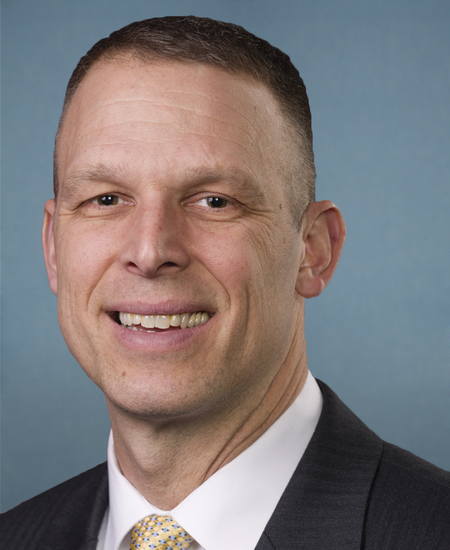
Rep. Scott Perry
Sponsored bills
This bill directs the President to withdraw the United States from the United Nations Framework Convention on Climate Change (the entity tasked with supporting the global response to climate change). The bill also prohibits the use of funds to carry out U.S. obligations under the framework following this withdrawal.
Maddy summaryHR 2779 would repeal the federal corporate average fuel economy (CAFE) standards, which require automakers to meet specific fuel efficiency targets for new vehicles. This bill directly affects automobile manufacturers by removing their legal obligation to comply with these fuel efficiency regulations. The key provision eliminates Chapter 329 of Title 49, U.S. Code - the section that established the CAFE program - without creating new requirements. If enacted, it would end the current federal mandate for vehicle fuel economy, shifting regulatory oversight away from the government.
Maddy summaryHR 2743 prohibits large financial institutions (over $100 billion in assets) from denying banking services to lawful businesses based on subjective political reasons, industry type, or reputational concerns. It requires these institutions to use objective, risk-based assessments for service decisions and provide written justifications for denials. The law applies to banks, credit unions, and payment networks, with civil penalties for violations including fines up to $10,000 per incident. It specifically ensures businesses operating legally under federal law receive fair access to financial services without discrimination. The bill mandates that denials be based on documented risk factors, not political bias or category-based exclusion.
Maddy summaryHJRES 27 is a congressional resolution seeking to block a federal rule that redefined which waterways fall under the Clean Water Act's protections. It targets a rule submitted by the Army Corps of Engineers, Department of Defense, and Environmental Protection Agency (EPA) on January 18, 2023, which aimed to revise the "Waters of the United States" definition. The resolution would formally disapprove this rule under a specific federal procedure (Chapter 8 of Title 5), preventing it from taking effect. This would directly affect how federal agencies regulate pollution and development near water bodies, including wetlands and smaller streams.
Maddy summaryHJRES 53 seeks to block an Environmental Protection Agency (EPA) rule that would establish new emissions standards for heavy-duty vehicles like trucks and buses. If passed, the resolution would prevent the EPA's rule from taking effect by invoking a congressional disapproval process under Title 5 of U.S. law. The rule, published in the Federal Register on January 24, 2023, aimed to reduce air pollution from new heavy-duty engine standards. This disapproval would halt the implementation of those specific vehicle emissions requirements.
This resolution expresses the sense of the House of Representatives that (1) Congress should conduct investigations to determine the impacts of offshore wind development, (2) Congress should use the findings of the investigations to develop legislation to mitigate potential negative environmental or economic impacts of such development, and (3) a moratorium should be placed on leasing and construction of offshore wind farms along the Atlantic coast until the investigations and their findings are presented to Congress and the public.
Maddy summaryThis bill terminates the national emergency declared by the President on March 13, 2020, under the National Emergencies Act. It ends the executive branch's authority to use emergency powers related to that specific declaration. The resolution passed both chambers in early 2023 and took effect April 10, 2023, without creating new policies or affecting specific groups.
Maddy summaryThe Safe Students Act (HR 2502) repeals the Gun-Free School Zones Act of 1990, which had prohibited possessing firearms in federally designated school zones under federal law. It also amends related sections of Title 18 (U.S. Code) to remove references to the repealed law and adjust section numbering. This bill does not establish a new federal rule for school zones; it solely eliminates the existing federal prohibition on firearms in school zones. The repeal means the federal government would no longer enforce this specific ban, though state laws may continue to regulate firearms in schools.
Maddy summaryHR 1465, "Violet’s Law," requires federal research facilities to establish standards for placing eligible animals (dogs, cats, primates, guinea pigs, hamsters, rabbits) no longer needed for research with animal rescue organizations, sanctuaries, shelters, or individuals. Federal departments and agencies operating such facilities must create these placement standards within one year of the law's enactment. The law mandates that animals must be vet-certified as healthy (free of infectious disease or physical issues) before placement and prohibits facilities from using animals for commercial trade, breeding, or public exhibitions. This policy directly affects federal research facilities and aims to provide permanent homes for research animals through defined, safe pathways.