

Maddy summaryHR 764, the "Trust the Science Act," requires the Secretary of the Interior to reissue a specific 2020 rule removing gray wolves from the endangered species list within 60 days of the bill's enactment. This directly affects gray wolf populations by changing their federal conservation status. The bill's key provision mandates that this reissuance cannot be challenged in court, eliminating judicial review of the decision. The bill focuses solely on procedural implementation of a prior rule, not broader scientific policy.
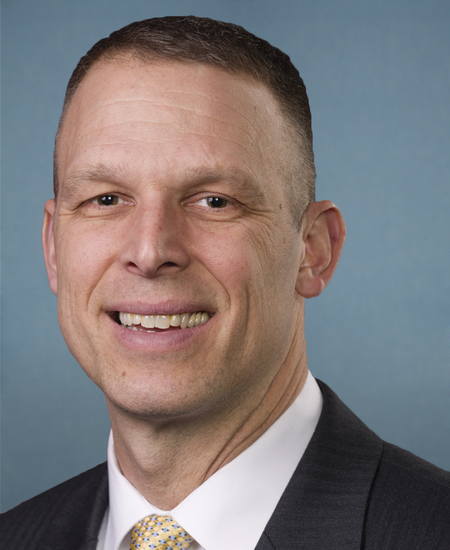
Rep. Scott Perry
Sponsored bills
Maddy summaryHJRES 132 is a congressional disapproval resolution targeting a specific federal rule. It seeks to block a rule issued by the Department of Defense, General Services Administration, and NASA that would have required federal construction projects to use Project Labor Agreements (PLAs) - pre-hire agreements between contractors and labor unions. If passed, this resolution would nullify the rule (88 Fed. Reg. 88708, Dec. 22, 2023), preventing it from taking effect. The bill directly affects federal construction projects covered by the Federal Acquisition Regulation, as it would remove a requirement for contractors to negotiate PLAs with unions. This is a procedural measure focused on reversing an agency rule, not creating new policy.
Maddy summaryHR 8147 repeals the Corporate Transparency Act, which required certain businesses (typically those with more than 20 employees) to report beneficial ownership details to the Treasury Department. This bill eliminates the requirement for companies to disclose who ultimately owns or controls them, directly affecting business owners and financial institutions that previously submitted this information. The bill also makes minor technical changes to Title 31 of the U.S. Code to remove references to the repealed provisions. The repeal would end the existing financial transparency reporting obligation for covered entities.
Maddy summaryHR 8091 would prohibit federal funding for National Public Radio (NPR) and related activities, directly affecting NPR and public radio stations that rely on federal support for their operations. The bill bans federal funds for NPR's core activities, including producing, distributing, and acquiring radio programs for noncommercial educational stations, as defined in the bill. It explicitly excludes funding restrictions for the U.S. Agency for Global Media and the Defense Media Activity. This policy change would redirect existing federal funding streams away from NPR's program development and content acquisition, altering how public broadcasting receives federal support.
Maddy summaryHR 8053, the "No Propaganda Act," would terminate all federal funding for the Corporation for Public Broadcasting (CPB), which supports PBS and NPR. The bill prohibits the CPB from receiving any federal funds after the law's enactment and rescinds unobligated balances from recent appropriations bills. It amends the Communications Act to bar the CPB from accepting federal money, effectively ending its federal budget. This directly affects the CPB's operations, requiring it to seek alternative funding sources.
Maddy summaryHJRES 130 is a congressional resolution seeking to block a Federal Railroad Administration (FRA) rule that would have required minimum train crew sizes for safety. It directly affects railroads and safety regulators by preventing the FRA's April 2024 rule (89 Fed. Reg. 25052) from taking effect. The bill uses a standard disapproval process under federal law to halt the rule without creating new requirements. This resolution does not change existing safety standards but stops the specific FRA proposal from becoming law. The measure targets the "Train Crew Size Safety Requirements" rule published on April 9, 2024.
Maddy summaryHR 8051, the Earmark Elimination Act of 2024, prohibits the House of Representatives from considering any bill, amendment, or conference report containing a congressional earmark, limited tax benefit, or limited tariff benefit. This directly affects lawmakers who attempt to include specific spending requests for particular projects, entities, or small groups of beneficiaries (e.g., a grant for a single local project or a tax break for 10 or fewer companies). The bill establishes a procedural rule where a point of order can be raised to strike such provisions from a measure if sustained by the House. It defines "earmarks" as targeted spending requests made at a member’s request, excluding those from formula-driven processes, and similarly defines limited tax/tariff benefits affecting few beneficiaries.
Maddy summaryHR 6046, the Standing Against Houthi Aggression Act, requires the Secretary of State to designate Ansarallah (the Houthis) as a Foreign Terrorist Organization within 90 days of enactment and mandates the President to impose sanctions under existing authorities (Executive Orders 13224 and 13780) against Ansarallah and its members, agents, or affiliates. The bill directly affects Ansarallah and any foreign entities linked to it by triggering U.S. sanctions. Key provisions set strict 90-day deadlines for both the designation and sanctions implementation. The law focuses on reversing a prior designation revocation and enforcing existing legal mechanisms against the group.
Maddy summaryHR 5947 terminates specific U.S. waivers and licenses related to Iran, ending a 2023 waiver that allowed funds transfer from South Korea to Qatar. It prohibits the Treasury Department from reissuing similar waivers or licenses for the same purpose and blocks the President from granting Iran access to certain designated financial accounts established under prior laws. The bill directly affects U.S. foreign policy implementation by restricting how Treasury handles Iran-related financial transactions. It enacts concrete policy changes by ending existing authorizations and preventing future approvals for Iran to access specific accounts.
Maddy summaryThis bill prohibits the use of federal funds to establish, implement, or enforce any requirement for wearing facial coverings to prevent COVID-19 spread. It directly affects federal agencies and any entities receiving federal funding that might enforce mask mandates. The key provision blocks all federal financial support for mask mandate enforcement, meaning no government money could be used to require or support such rules. This is a funding restriction, not a ban on mask mandates themselves, and applies only to federal resources.