

Maddy summaryHR 9191, the "No Union Time on the Taxpayer's Dime Act," amends 5 U.S.C. § 7131 to eliminate paid "official time" for federal employees performing union-related activities. The bill requires that any work employees do for labor organizations must occur during non-duty hours, not during regular work time. This directly affects federal workers who are union members, as it would end the practice of using paid work hours for union business. The key provision changes the existing rule to ensure union activities are conducted outside of standard work schedules, shifting the cost from taxpayers to employees' personal time.
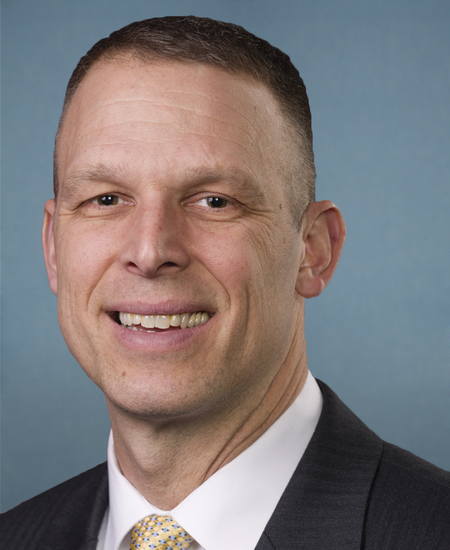
Rep. Scott Perry
Sponsored bills
Maddy summaryHJRES 165 is a congressional resolution seeking to block a Department of Education rule issued in April 2024 that updated protections against sex discrimination in schools receiving federal funding. The resolution aims to disapprove this specific rule (published as 89 Fed. Reg. 33474), which would have required schools to address sex-based discrimination in educational programs. If passed, the rule would no longer be in effect, meaning schools would not need to comply with its requirements. This resolution directly affects all schools and educational programs receiving federal financial assistance, as it targets the implementation of the new nondiscrimination standard.
Maddy summaryThe SAVE Act (HR 8281) requires U.S. citizens to provide documentary proof of citizenship when registering to vote in federal elections. It defines acceptable proof as documents like passports, REAL ID-compliant IDs, military IDs, or birth certificates, and mandates that states verify citizenship using information from government agencies like DHS and Social Security. States must establish processes for voters without required documentation to provide an attestation under penalty of perjury. The law also requires states to remove noncitizens from voter rolls when verified evidence shows they're not citizens. This bill directly affects all applicants registering to vote in federal elections and state election officials who must implement these requirements.
Maddy summaryThe GOOD Act requires all federal agencies to publish their non-binding policy guidance documents (like memos, letters, or blog posts) on a single, centralized online repository within 180 days of enactment. It directly affects every federal agency by mandating that all such documents - excluding those already exempt under the Freedom of Information Act - be organized into clear categories on agency websites. Key provisions include designating a central website by the Office of Management Budget Director, maintaining rescinded guidance with clear disclaimers, and ensuring public access to all published guidance. The bill focuses solely on improving transparency in how agencies share interpretive guidance, not on changing policy substance.
Maddy summaryThis is a commemorative resolution (HRES 1369) honoring Corey Comperatore, a volunteer firefighter, U.S. Army Reserves veteran, and community leader from Sarver, Pennsylvania, who died on July 13, 2024. The resolution formally mourns his passing and celebrates his life, noting he left behind his wife, Helen, and two daughters, Allyson and Kaylee. It recognizes his service to the Buffalo Township Volunteer Fire Department, his military service, and his role as a devoted member of Cabot Methodist Church. As a ceremonial resolution, it has no policy impact or direct effect on legislation or constituents beyond this formal acknowledgment.
Maddy summaryHJRES 164 is a congressional resolution seeking to block a rule issued by the Department of Commerce regarding firearms license requirements. It directly targets the rule published in the Federal Register (89 Fed. Reg. 34680), which would have revised licensing procedures for firearms dealers. If passed, the resolution would prevent this rule from taking effect by invoking the congressional disapproval process under federal law. The bill does not create new regulations but aims to halt an existing rule affecting gun license applicants and dealers.
Maddy summaryHR 4848, the Censorship Accountability Act, allows individuals to sue federal employees who, while acting in their official capacity, deny others their First Amendment rights (such as free speech or assembly). It directly affects federal employees (excluding the President/Vice President) who may restrict protected expression under federal law. Key provisions create a private right of action for victims to seek legal redress in court, with courts able to award attorney fees to the winning party. The bill explicitly excludes lawsuits against the federal government for employment-related conduct and clarifies that unconstitutional sections won’t invalidate the rest of the law.
Maddy summaryHR 4132 would require the U.S. to impose sanctions on Chinese officials responsible for forced organ harvesting from Falun Gong practitioners, including blocking their property and denying visas. It mandates a report on China's organ transplant system within one year, assessing organ sources, procurement timelines, and whether persecution of Falun Gong constitutes an atrocity. The bill directs the U.S. to avoid all cooperation with China's organ transplantation system while the Chinese Communist Party remains in power. It cites findings of systemic persecution and alleged organ harvesting as justification for these policy measures.
Maddy summaryThis bill requires states receiving Medicaid funds to not prohibit in vitro fertilization (IVF) services, applying to both state programs and local governments within the state. It directly affects Medicaid programs and state/local governments by removing legal barriers to IVF access for Medicaid recipients. The law explicitly states it does not compel any provider or organization to offer IVF services, nor does it restrict states from enforcing health and safety standards for IVF. This creates a clear policy change: Medicaid eligibility cannot be denied based on IVF bans, but it does not mandate IVF provision.
Maddy summaryHRES 1305 is a procedural resolution that formally rescinds subpoenas issued by the January 6th Select Committee to four individuals (Stephen Bannon, Mark Meadows, Daniel Scavino Jr., and Peter Navarro) and withdraws the committee’s recommendations finding them in contempt of Congress. The bill specifically cancels subpoenas from September 2021, October 2021, and February 2022, along with related contempt resolutions adopted in 2021-2022. It does not alter legal proceedings but withdraws the committee’s authority to enforce these actions. The resolution is supported by House members who argue the committee was partisan and illegitimate, though the bill itself only addresses the committee’s procedural actions.