

Maddy summaryHR 473, the SHOW UP Act of 2025, requires federal executive agencies to return to pre-pandemic telework policies within 30 days of enactment, limiting work-from-home options to those in place on December 31, 2019. Agencies must then conduct a 6-month study analyzing pandemic-era telework impacts - including effects on mission performance, costs from underused office space, and employee productivity tools - and submit a plan to Congress if they seek to expand telework beyond these baseline levels. The plan requires certification from the Office of Personnel Management confirming it will improve mission performance, reduce real estate costs, lower locality pay expenses, and ensure secure remote work capabilities without increasing agency costs. This bill directly affects all federal executive agencies (excluding the Government Accountability Office) and their employees by restricting telework flexibility and imposing strict requirements for any future expansion.
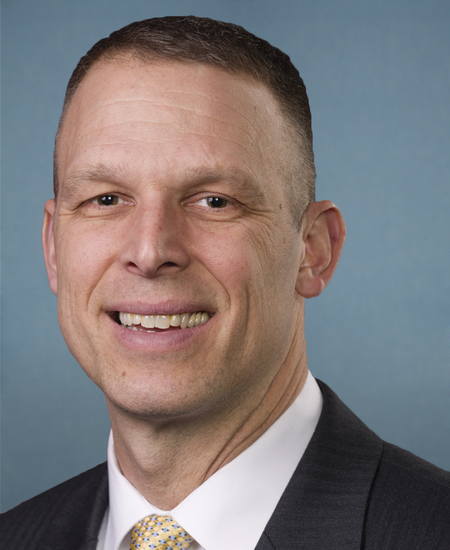
Rep. Scott Perry
Sponsored bills
Maddy summaryThis bill creates a new tax deduction for cash tips received by workers in specific service occupations that traditionally accepted tips before 2024 (like servers, barbers, and beauticians). It allows a deduction of up to $25,000 per year for qualified tips included on employer statements, but excludes employees who earned over a certain threshold ($220,000 in 2023) from the same employer the previous year. The deduction applies to taxable years beginning after December 2024 and is designed to reduce taxable income for eligible workers. It directly affects service industry workers in qualifying tip-dependent jobs who receive cash tips, not the general public.
Maddy summaryHR 551, the "Make the Migrant Protection Protocols Mandatory Act of 2025," would require U.S. border officials to apply the Migrant Protection Protocols (MPP) to all eligible asylum seekers at the southern border, rather than allowing discretion. The bill amends the Immigration and Nationality Act to change the language from "may" to "shall" in Section 235(b)(2)(C), meaning officials must send asylum seekers back to Mexico to await their immigration hearings. This directly affects asylum seekers who would no longer have the option of remaining in the U.S. during processing. The key mechanism is a technical legal change to make the existing MPP policy mandatory for all applicable cases.
Maddy summaryHR 417, the "End U.N. Censorship Act," prohibits federal funding for U.S. government departments or agencies to support the United Nations' iVerify tool or any effort labeling speech as misinformation. It blocks funds from being used to develop, implement, or contribute to the U.N. or other international organizations for initiatives that seek to categorize speech as "mal-, mis-, or disinformation." The bill mandates that any funds withheld under this provision be permanently rescinded and deposited into the U.S. Treasury, not repaid to the U.N. It directly affects federal agencies like the Department of State that manage international funding. The policy change is strictly a funding restriction, not a direct ban on U.N. activities.
Maddy summaryHR 404, the "Hearing Protection Act," reclassifies firearm silencers (devices that reduce gunfire noise) as firearms for federal tax and regulatory purposes. It imposes a 10% federal tax on silencers, requires the destruction of all existing federal silencer registration records within one year, and preempts state laws that tax or regulate silencers. The bill clarifies that silencers are treated as firearms under federal law, including for licensing and marking requirements, and defines "firearm silencer" to include specific components. Note: The bill’s title is misleading - it addresses firearm silencer regulation, not hearing protection for people.
Maddy summaryThe TRUST in Congress Act requires current and new Members of Congress, along with their spouses and dependent children, to place certain investments - such as stocks, commodities, and derivatives - into a blind trust within 90 to 180 days of taking office. It excludes U.S. Treasury securities and widely held mutual funds from this requirement and exempts investments tied to a spouse’s or dependent child’s primary job. Members must certify the trust’s setup to the House Clerk or Senate Secretary within 15 days, with these records posted publicly online. The act also prohibits dissolving such trusts until 180 days after a member leaves office.
Maddy summaryThis bill repeals multiple tax credits for renewable energy projects, including solar, wind, and clean transportation fuels, which currently provide financial incentives to businesses. It directly affects companies that claim these credits, such as renewable energy developers and manufacturers, by eliminating their eligibility for these tax benefits starting in 2025. Key provisions remove specific sections of the tax code (like Sections 45, 45Q, and 48) and adjust related references to reflect the repeal. The changes apply to taxable years beginning after December 31, 2024, with no new provisions added - only the removal of existing credits.
Maddy summaryHR 312, the Restoring Vehicle Market Freedom Act of 2025, repeals five tax credits related to clean and alternative fuel vehicles from the Internal Revenue Code. Specifically, it eliminates credits for previously owned clean vehicles, alternative motor vehicles, alternative fuel refueling property, new plug-in electric vehicles, and commercial clean vehicles. This change means individuals and businesses purchasing or installing qualifying vehicles or infrastructure will no longer be eligible for these tax incentives. The repeal applies to vehicles or property acquired or placed in service after the bill's enactment date.
Maddy summaryHR 311, the Restoring Fuel Market Freedom Act of 2025, repeals multiple existing federal tax credits for fuel producers and importers. It specifically eliminates tax credits for alcohol fuels (Section 40), biodiesel (Section 40A), sustainable aviation fuel (Section 40B), clean fuel production (Section 45Z), and alternative fuel mixtures (Section 6426). These repeals apply to fuels produced, sold, or used after the bill's enactment date, removing current tax incentives for these fuel types. The bill directly affects businesses producing or importing these fuels, as they will no longer qualify for the repealed credits.
Maddy summaryThis bill grants the Secretary of Homeland Security authority to temporarily suspend entry of certain individuals at U.S. borders to achieve "operational control" (defined as effective border management). It specifically applies to people seeking entry without proper documentation who would be denied entry under current law (e.g., lacking visas or asylum eligibility). The Secretary must block entry if they cannot detain or process these individuals as required by existing immigration law. States may also sue the government if they believe border security rules are violated.