

Maddy summaryHR 1233 prohibits federal agencies from using taxpayer money to fund specific research programs. It bans spending on disinformation research grants, Secure and Trustworthy Cyberspace grants, and the National Science Foundation's Track F program focused on "Trust and Authenticity in Communications Systems." This directly affects federal departments and agencies that would otherwise allocate funds for these research areas, as well as researchers or institutions seeking such grants. The bill makes a concrete change by blocking federal funding for these particular research initiatives, without altering broader disinformation policies or creating new regulations.
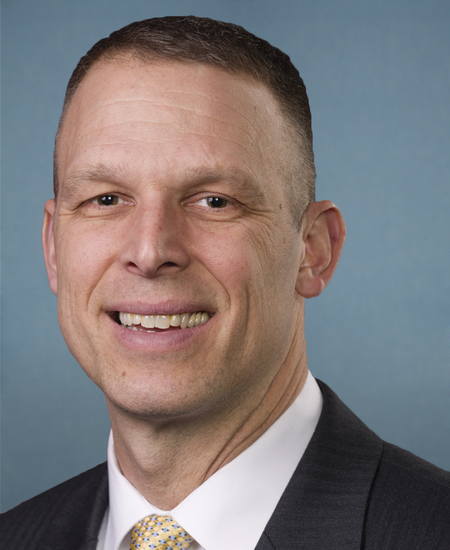
Rep. Scott Perry
Sponsored bills
Security And Fairness Enhancement for America Act of 2025 or SAFE for America Act of 2025 This bill eliminates the diversity visa program. This program provides up to 55,000 visas annually to individuals from countries with low rates of immigration to the United States.
Maddy summaryHR 1211, the "No Propaganda Act," prohibits all future federal funding for the Corporation for Public Broadcasting (CPB) starting on the bill's enactment date. It amends the Communications Act to block federal money from being allocated to CPB and requires the organization to stop accepting such funds. The bill also rescinds unobligated funds previously allocated to CPB in 2023 and 2024 appropriations acts. This directly affects CPB, which relies on federal funding for public broadcasting services like PBS and NPR. The policy change ends all direct federal financial support for CPB without altering its operational structure.
Maddy summaryThis bill, titled "Emergency Border Control Resolution," is actually a budget resolution establishing fiscal year 2025-2034 budget levels for the U.S. government. It sets detailed revenue, spending, and deficit targets across various government functions, including defense, health, and social programs. The resolution includes reconciliation instructions for committees to adjust laws within their jurisdictions to meet deficit targets. The title appears to be a political label rather than an accurate description of the bill's content, as it contains no actual border control provisions.
Maddy summaryThis bill would abolish the United States Agency for International Development (USAID) by ending all federal funding for its operations. Starting on the bill's enactment date, no funds may be used for USAID's functions under the Foreign Assistance Act or other laws, and any unused funds as of the day before enactment would be rescinded. All remaining USAID assets and liabilities would be transferred to the Secretary of State. The bill directly affects USAID's ability to carry out international development and humanitarian assistance programs.
Maddy summaryHR 1137, the "No Kill Switches in Cars Act," repeals Section 24220 of the Infrastructure Investment and Jobs Act (Public Law 117-58), which previously required vehicle manufacturers to implement advanced impaired driving technology. This bill directly affects car manufacturers by removing a mandate to integrate specific safety technology designed to detect driver impairment. The key provision is the repeal itself, eliminating the requirement without creating new obligations or altering existing vehicle safety standards.
Maddy summaryHR 1125, the LOCAL Act, mandates that the Bureau of Land Management (BLM) headquarters relocate to Grand Junction, Colorado, and requires all existing BLM employees stationed there to remain in place. The bill also requires the Secretary of the Interior to study relocating additional BLM positions to Grand Junction or other western states within one year, assessing impacts on Federal land management, community coordination, and activities like tourism and conservation. The study must be reported to Congress within 365 days of the bill's enactment. This legislation directly affects BLM operations and employee locations in western states, with no changes to substantive land management policies.
Maddy summaryHCONRES 8 is a non-binding congressional resolution urging the U.S. President to end the current "One China Policy" and recognize Taiwan as an independent country. It specifically calls for resuming normal diplomatic relations (including appointing ambassadors), negotiating a bilateral free trade agreement with Taiwan, and advocating for Taiwan's full membership in international organizations like the UN and WHO. The resolution argues that Taiwan has maintained democratic governance and independence for over 70 years, separate from the People's Republic of China. This resolution does not change U.S. law but expresses Congress's position on foreign policy toward Taiwan.
Maddy summaryHJRES 37 proposes a constitutional amendment to change how U.S. Representatives are apportioned among states. It would require counting only U.S. citizens in each state when determining representation, rather than the current total population (including non-citizens). This would directly affect states with large non-citizen populations, potentially reducing their number of House seats. The amendment, if ratified, would replace the current constitutional standard for apportionment. It is a procedural proposal seeking constitutional change, not an enacted law.
Maddy summaryHR 1081, the Preventing SBA Assistance from Going to China Act, amends the Small Business Act to bar certain businesses from qualifying as small business concerns for SBA programs. It prohibits businesses located or incorporated in China, or those with over 25% voting stock owned by Chinese affiliates, from accessing SBA loans, contracts, or other assistance. This directly affects U.S. businesses with significant Chinese ownership or ties that would otherwise qualify for federal small business support. The key mechanism is a new definition in the law that blocks eligibility based on foreign ownership or location.