

Maddy summaryThe Ending Trading and Holdings in Congressional Stocks (ETHICS) Act requires members of Congress, their spouses, and dependent children to divest or place most personal investments in qualified blind trusts. It bans the purchase of covered investments (including stocks, commodities, and derivatives) after enactment, with current members having 90 days to sell existing holdings and new members having 90 days after taking office to divest. The bill includes specific exceptions for diversified mutual funds, Treasury securities, and certain family business investments while establishing enforcement mechanisms including civil penalties of up to 10% of the value of noncompliant holdings. The law applies to members serving terms beginning after January 31, 2023, and mandates public online disclosure of financial information through updated government databases.
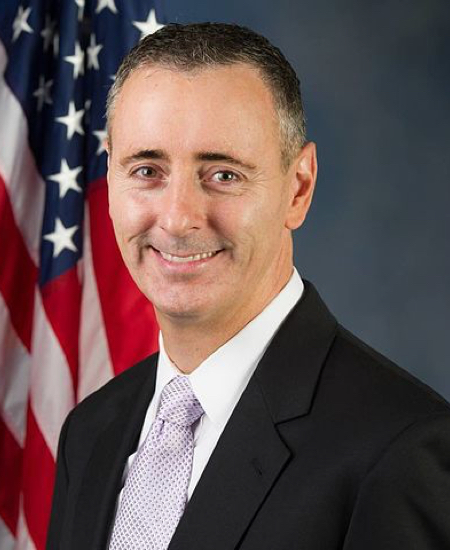
Rep. Brian K. Fitzpatrick
Sponsored bills
Maddy summaryHR 4903, the Plastic Health Research Act, directs federal agencies to fund and coordinate research on the health effects of plastic exposure, including microplastics and nanoplastics. It authorizes $10 million annually (2026-2030) for grants to academic institutions and nonprofits to develop standardized testing methods, improve research comparability, and fill gaps in understanding plastic-related health impacts. The bill also creates "Centers of Excellence" to advance this research, requiring annual public reports on findings and coordination with agencies like the EPA and FDA. This legislation directly affects researchers, federal health agencies, and public health policy by prioritizing scientific rigor in studying plastic exposure sources (e.g., food packaging, waste disposal) and health outcomes.
Maddy summaryThe Wildfire Emergency Preparedness Act of 2025 establishes a national training plan for structural firefighters to respond to wildfires and wildland-urban interface fires, with $5 million annually for training grants. It creates an Under Secretary of Agriculture for Fire Coordination to improve federal-state-local coordination in wildfire response and authorizes $20 million annually for research on firefighter health, including PFAS exposure in firefighting equipment. The bill also provides $100 million for supplemental grants to fire departments and EMS organizations for wildfire response equipment and training, and sets criteria for mental health support for first responders. It requires reports to Congress on training effectiveness and coordination challenges within one year of enactment.
Maddy summaryThe CREATE Act increases tax credit limits for film and television productions, raising the annual spending cap from $15 million to $30 million for qualified productions and adjusting related thresholds from $20 million to $40 million. It adds an annual inflation adjustment mechanism to these limits starting in 2026, automatically increasing them based on the cost-of-living index. The bill extends the program's expiration date from December 31, 2025, to December 31, 2030. This directly affects producers of eligible entertainment projects by expanding available tax credits and providing long-term stability for the industry. The changes apply to productions starting in taxable years ending after December 31, 2025.
Maddy summaryHR 4831 (ENFORCE Act) strengthens federal enforcement against specific child exploitation crimes. It removes the statute of limitations for offenses involving obscene visual representations of child sexual abuse, adds these crimes to sex offender registration requirements, and mandates courts to handle related evidence in ways that protect victims (e.g., keeping depictions with the government or court). The bill also creates a presumption for pretrial detention and extended supervised release for violations of these specific provisions. These changes directly affect individuals convicted under sections 1466A, 2252A, and related child exploitation laws, as well as federal courts handling such cases.
Maddy summaryThe Advancing Research on Agricultural Soil Health Act of 2025 requires the U.S. Department of Agriculture to develop a standardized method for measuring soil carbon within 270 days of enactment. It establishes a national Soil Carbon Inventory and Analysis Network to track soil carbon changes across agricultural lands and create predictive models showing how farming practices affect carbon sequestration. The bill includes provisions for voluntary reporting of soil carbon data by farmers and ranchers, with technical assistance provided in multiple languages and formats. It authorizes $2 million annually for methodology development and $17.5 million for the Soil Carbon Inventory and Analysis Network, with requirements for stakeholder consultation including socially disadvantaged farmers and ranchers.
Maddy summaryHRES 621 is a symbolic resolution recognizing August 5 as "National Night Out," an annual event where communities across the U.S. unite with local law enforcement to promote public safety. It encourages law enforcement departments to strengthen community relationships and directs public safety agencies to educate residents on contacting emergency services and understanding their roles. The resolution highlights that over 38 million people in 17,000 communities have participated in this 40-year tradition, including U.S. territories and military bases, to foster safer neighborhoods. It does not create new laws or funding but formally acknowledges the event’s role in building community safety awareness.
Maddy summaryThe College Transparency Act requires the federal government to create a new student data system that collects and shares information about college enrollment, costs, completion rates, and post-graduation outcomes. This system will directly affect colleges and universities (which must submit data), students (whose information is collected with privacy protections), and families (who will access the data to make informed education decisions). The bill mandates the development of a public website providing customizable, aggregate data on student demographics, costs, and outcomes, while prohibiting the collection of sensitive information like health records or political affiliation. The system aims to reduce reporting burdens on institutions by consolidating data collection and making information more transparent for prospective students. It includes strong privacy and security requirements to protect student information, with the data system to be developed within four years of the bill's enactment.
Maddy summaryThis bill would create a single online hub for small businesses to find all necessary federal, state, and local permits and licenses. The Small Business Administration’s Director must establish and maintain this website within one year of enactment. The site will organize requirements by business location and type, simplifying how small business owners navigate complex regulatory systems. This directly affects small businesses operating across multiple jurisdictions, replacing scattered information with a centralized resource.
Maddy summaryHR 4784, the Don Young American Grown Act, requires that cut flowers and cut greens displayed officially in federal buildings - specifically in the Executive Office of the President, State Department, or Defense Department - must be grown in the United States. This affects federal facilities and their display practices, not the general public or commercial markets. The bill includes an exception allowing federal employees to use imported items for personal displays. It defines "produced in the United States" to include all states, the District of Columbia, territories, and federally recognized tribal lands. The rule takes effect one year after enactment.