

Maddy summaryHR 6753, the Campus Housing Affordability Act, removes a prohibition that previously barred federal housing assistance from being provided to students. It directly affects eligible students enrolled in higher education institutions who live in campus housing and qualify for tenant-based housing assistance under the U.S. Housing Act of 1937. The bill adds a new provision (Section 8(o)(23)) allowing the Secretary to waive income requirements for these students, ensuring federal housing aid does not count as income when determining eligibility for other federal financial aid, work-study programs, service allowances, or child support obligations. This change streamlines access to housing support without reducing other student financial benefits.
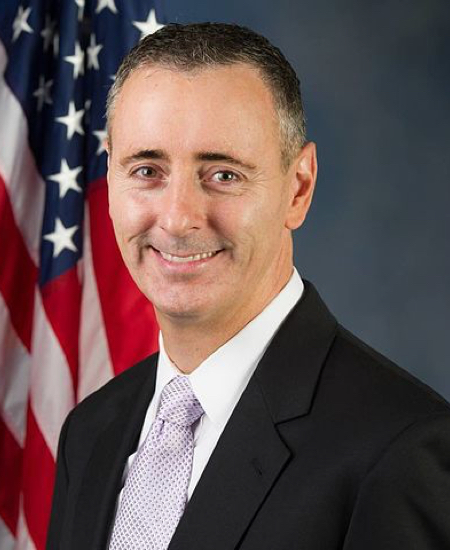
Rep. Brian K. Fitzpatrick
Sponsored bills
Maddy summaryHR 3962, the ESTUARIES Act, extends a deadline within the National Estuary Program. It amends Section 320(i)(1) of the Federal Water Pollution Control Act by changing the year "2026" to "2031" in a requirement related to program management. This change directly affects the National Estuary Program, which oversees coastal water quality protection and restoration efforts. The bill makes a specific procedural adjustment to the program's timeline without altering its core policies or funding.
Maddy summaryHR 6718, the Professional Student Degree Act, amends the Higher Education Act to clarify the definition of a "professional degree" for federal education purposes. It replaces the previous definition with a new section listing specific degrees that meet the criteria, including Pharmacy (Pharm.D.), Law (J.D.), Medicine (M.D.), Dentistry (D.D.S.), Veterinary Medicine (D.V.M.), and others like Nursing (D.N.P.) and Business Administration (M.B.A.). This definition requires degrees to signify both completion of academic requirements for professional practice (often requiring licensure) and skills beyond a bachelor's level. The bill directly affects students pursuing these designated degrees by formally recognizing them under federal education law, without creating new programs or changing funding.
Maddy summaryThe Protect America's Workforce Act cancels an executive order issued on March 27, 2025, that excluded certain groups from federal labor-management relations programs, making it legally unenforceable. It also ensures that all collective bargaining agreements between federal agencies and labor unions, which were active as of March 26, 2025, remain fully effective until their agreed terms expire. This directly affects federal agencies, labor unions, and the employees covered by these agreements. The bill prevents federal funds from being used to implement the canceled executive order while preserving existing labor agreements.
Maddy summaryThe Restoring American Mineral Security Act of 2025 aims to reduce U.S. dependence on China for critical minerals by creating a "Critical Minerals Security Alliance" with other countries. The bill would encourage countries to impose higher tariffs on minerals from China and other "foreign countries of concern," while offering those countries duty-free access to the U.S. market for their critical minerals and derivative products like batteries and magnets. It establishes a trust fund using duties collected on minerals from China to support U.S. mining and processing projects through the Department of Energy, Department of Defense, and U.S. International Development Finance Corporation. This legislation directly affects U.S. mineral industry stakeholders, foreign trade partners, and companies producing critical minerals and related products, focusing on trade policy rather than direct regulation of mineral production.
Maddy summaryThis bill exempts multiemployer pension plans from automatic enrollment requirements under the Internal Revenue Code. Specifically, it amends Section 414A(c)(3) to explicitly exclude multiemployer plans (defined under Section 414(f)) from rules requiring automatic enrollment in retirement plans. This change directly affects workers enrolled in union-sponsored multiemployer pension plans, allowing these plans to avoid automatic enrollment obligations. The amendment applies to taxable years beginning after December 31, 2024.
Veteran Fraud Reimbursement Act of 2025 This act modifies the procedures by which the Department of Veterans Affairs (VA) reissues misused benefits to a beneficiary, including by requiring the VA to establish methods and timing with respect to determining whether an instance of misuse by a fiduciary is the result of negligence by the VA. The act also provides that if a beneficiary predeceases a reissuance, the VA must pay the amount to a surviving beneficiary in the same method as certain other VA benefits are paid upon the death of a beneficiary. Under the act, the VA may not withhold the reissuing of a benefit payment by reason of a pending determination regarding the VA's negligence in relation to the instance of misuse by a fiduciary. Additionally, the VA is not required to make a determination regarding its negligence for each instance of misuse by a fiduciary of all or part of an individual's benefit paid to such fiduciary.
Miracle on Ice Congressional Gold Medal Act This act provides for the award of Congressional Gold Medals to the members of the 1980 U.S. Olympic men's ice hockey team in recognition of the team's achievement at the 1980 Winter Olympic Games.
Maddy summaryThe HIRRE Prosecutors Act of 2025 establishes a federal grant program to help state, local, tribal, and territorial prosecutor offices hire, retain, and train prosecutors and support staff. It authorizes $10 million annually (2026-2030) for competitive grants, covering up to 75% of eligible costs, with preference given to rural, tribal, and areas rehiring laid-off prosecutors. Grantees must cover the remaining 25% of costs (or qualify for a waiver), and funds cannot replace existing state/local funding but must supplement it. All funded projects require data tracking and annual performance evaluations by the Attorney General.
Maddy summaryHR 6670 creates a new nonimmigrant visa category ("family purpose visas") allowing relatives of U.S. citizens or lawful permanent residents to visit temporarily for family events. It requires applicants to provide proof of financial support, short-term medical insurance covering U.S. travel, and a sworn statement to depart within 90 days per calendar year. The bill restricts petitioners from previously sponsoring relatives who overstayed their visas, and explicitly states that these visits do not count toward permanent residency eligibility. This directly affects extended family members (including grandparents, siblings, and nieces/nephews) seeking short-term U.S. visits for social or major life events.